Tourist Arrivals and Resident Ratios Around the World
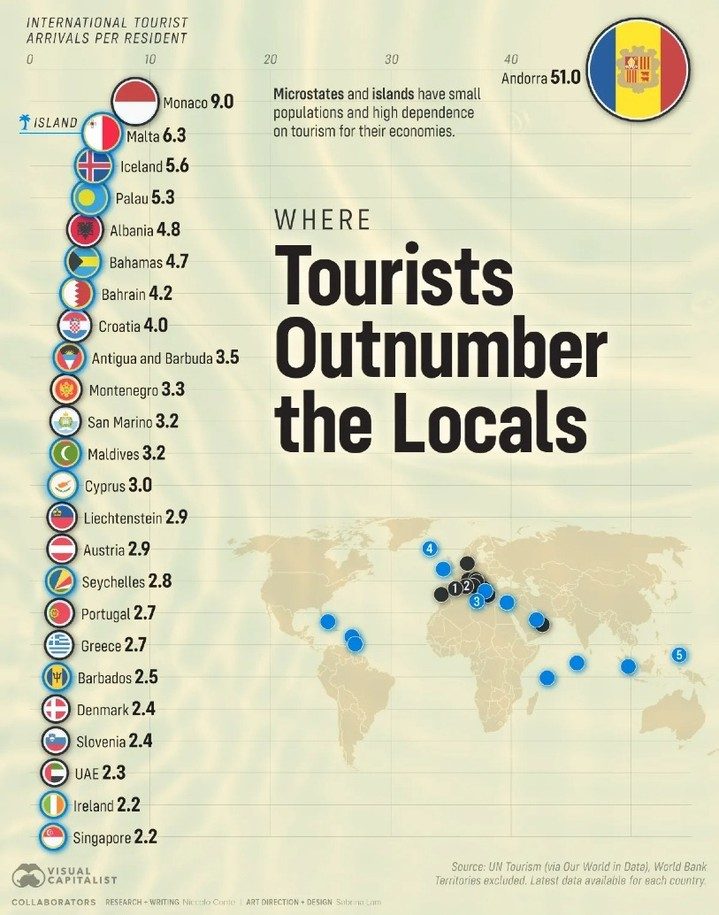
Tourism is a vital component of many countries' economies, and it is particularly pronounced in nations where the number of international tourists surpasses the local population. Andorra, for example, has an astonishing ratio of 51 international tourists for every resident, making it the highest in the world. This dynamic is not unique to Andorra; many other countries also attract a significant number of tourists relative to their resident populations.
Context: Why This Matters
Tourism is a major economic driver for many countries. It generates revenue, creates jobs, and fosters cultural exchange. For nations where tourism significantly outpaces the local population, understanding these ratios provides valuable insights into how these economies function and the reliance on international visitors.
Understanding the Ratios
Andorra: The Global Leader
Andorra leads the world with 51 international tourists for every resident, a staggering figure that underscores the country's dependence on tourism. This small landlocked nation in the Pyrenees mountains attracts visitors with its ski resorts, duty-free shopping, and picturesque landscapes. The high ratio is a testament to Andorra's success in drawing tourists, but it also highlights potential challenges like seasonality and infrastructure strain.
Monaco: Luxury Meets High Ratios
Monaco comes in second with a ratio of 9.0. Known for its affluent lifestyle, luxurious casinos, and the annual Monaco Grand Prix, the principality attracts a large number of high-net-worth individuals and tourists seeking a glamorous experience. The high ratio indicates that Monaco's economy is heavily reliant on tourism, but it also benefits from a diversified revenue stream from its wealthy residents.
Iceland and Small Nations
Iceland follows with a ratio of 6.3. The country's natural wonders, including geysers, volcanoes, and the Northern Lights, have made it a popular destination for adventure and nature enthusiasts. The high ratio reflects the impact of tourism on Iceland's economy, which has seen rapid growth in recent years, though it also faces challenges like overcrowding and environmental impact.
Palau, Albania, and the Bahamas are also notable, with ratios of 5.3, 4.8, and 4.7, respectively. Each of these countries leverages its unique attractions to draw a high number of tourists. For Palau, it's the stunning coral reefs and clear waters; for Albania, the historic sites and natural beauty; and for the Bahamas, the tropical beaches and vibrant culture.
Moderate Ratios in Europe
Several European nations also rank high, including Croatia, Antigua and Barbuda, Montenegro, and San Marino, with ratios of 4.0, 3.5, 3.3, and 3.2, respectively. These countries attract tourists with their rich cultural heritage, beautiful landscapes, and historical sites. Croatia, for example, has seen a surge in tourism following the popularity of Game of Thrones, while Montenegro and San Marino offer unique architectural and historical experiences.
Mediterranean Highlights
The Mediterranean region is well-represented, with countries like the Maldives, Cyprus, Liechtenstein, Austria, and Seychelles having significant ratios. The Maldives and Seychelles, known for their pristine beaches and luxury resorts, attract affluent tourists seeking exclusive experiences. Austria, meanwhile, benefits from its rich cultural heritage, alpine landscapes, and vibrant cities like Vienna and Salzburg.
Other Notable Countries
Portugal, Greece, and Barbados also have notable ratios of 2.7, 2.7, and 2.6, respectively. These countries have successfully positioned themselves as attractive tourist destinations, combining natural beauty with cultural richness and historical sites. Denmark, the UAE, Ireland, and Singapore round out the list with ratios ranging from 2.4 to 2.2. These countries leverage their unique selling points, from Denmark's fairy-tale charm and hygge culture to Singapore's blend of modernity and tradition.
Practical Tips for Travelers
For travelers, understanding these ratios can provide insights into the best times to visit and what to expect in terms of crowds and infrastructure. Here are some practical tips:
Plan Ahead
Choose off-peak seasons to avoid the highest congestion. For example, visiting Iceland during the winter months can offer a quieter but equally enchanting experience, with fewer tourists and lower prices. Similarly, plan trips to the Maldives or Seychelles during the shoulder season to balance cost and crowd levels.
Consider Off-the-Beaten-Path Destinations
Explore lesser-known areas within these countries. For instance, while Croatia's coastal cities can be crowded, inland regions like Plitvice Lakes National Park offer stunning natural beauty with fewer tourists.
Engage with Locals
Engage with local communities to gain a deeper understanding of the culture and avoid the tourist trap experience. In smaller nations like Andorra or San Marino, interacting with locals can provide unique insights and memorable experiences.
Be Environmentally Conscious
Respect the local environment and support sustainable tourism practices. In countries like Palau, where natural beauty is the primary draw, being mindful of environmental impact can help preserve these attractions for future generations.
Important Takeaways
Tourism is a double-edged sword for countries with high tourist-to-resident ratios. It provides economic benefits but also poses challenges related to infrastructure, environmental impact, and cultural preservation. Understanding these ratios helps in planning trips, appreciating the local culture, and contributing to sustainable tourism.
Conclusion
Tourism is a critical economic driver for many countries, particularly those where the number of international tourists outnumbers the local population. From Andorra's stunning 51:1 ratio to countries like Monaco, Iceland, and Portugal, each nation leverages its unique attractions to draw a significant number of visitors. By understanding these ratios and the context behind them, travelers can make more informed decisions, engage more deeply with local cultures, and contribute to sustainable tourism practices.
Watch the Reel
Questions readers ask
What makes Andorra a top tourist destination despite its small size?
Andorra's appeal lies in its high-end shopping, duty-free prices, and stunning landscapes. With over 51 tourists for every resident, it's a prime example of a small country with a robust tourism economy, offering ample opportunities for businesses and jobs. The country’s emphasis on winter sports and outdoor activities also drives significant tourist traffic year-round.
How does Monaco's small population affect its tourism industry?
Monaco, much like Andorra, benefits from a high ratio of tourists to residents. The country attracts a vast number of visitors annually. This influx creates significant opportunities for economic growth. However, the tourism boom also means that Monaco must manage infrastructure challenges and maintain its high standard of living for residents.
What are some of the most visited small countries in the world?
Countries such as Andorra, Monaco, the Vatican City, and San Marino are among the most visited despite their small size. These nations attract tourists due to their unique cultural, historical, and natural attractions. Additionally, Malta, Liechtenstein, Luxembourg, and Malta, are also popular tourist destinations, offering a wealth of experiences in compact areas.
What challenges do countries where tourists outnumber locals typically face?
These countries often grapple with seasonal fluctuations in tourist arrivals, which can strain local infrastructure and resources. Additionally, seasonal spikes can lead to congestion, environmental impact, and potential disruptions for residents. Effective management of tourism flow and sustainable practices are crucial for maintaining a balance between economic benefits and quality of life for locals.
How does tourism impact the economies of countries where tourists outnumber locals?
Tourism significantly boosts these economies, generating substantial revenue and creating numerous job opportunities. However, it also poses challenges, such as the need for continuous investment in infrastructure to accommodate large visitor numbers. Balancing the positive economic impacts with the need to preserve local culture and environment is a key consideration for these countries.
What are some reasons behind Portugal's high tourist numbers?
Portugal’s rich history, beautiful coastline, and vibrant cities attract millions of visitors each year. Iconic destinations like Lisbon, Porto, and the Algarve region draw tourists with their unique blend of culture, architecture, and natural beauty. Moreover, Portugal’s warm climate and diverse landscapes, from beaches to mountains, make it an appealing year-round destination.
Related deep dives
Similar reads based on topic and creator.




Recent articles
Fresh deep dives from the latest Reels we unpacked.




Comments
Be the first to comment.