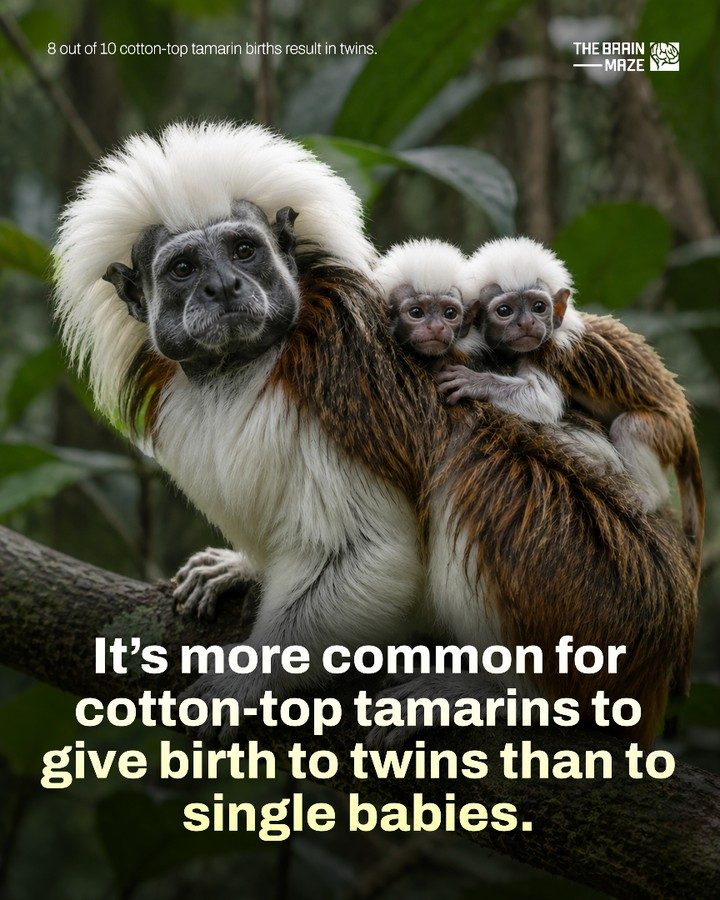
Cotton-Top Tamarins and Their High Twin Birth Rate
Cotton-top tamarins are small, lively New World monkeys native to the tropical forests of South America. Among primates, they stand out for their remarkably high twin birth rate. Around 80% of cotton-top tamarin births result in twins, rather than a single infant. This unique reproductive pattern contributes significantly to the species' survival strategies and social structure. The species relies heavily on cooperative care, with both parents and often other group members sharing the responsibility of raising the young.
Why This Matters
The high twin birth rate among cotton-top tamarins has significant implications for their social dynamics and survival in the wild. Understanding this unique characteristic provides insights into the evolutionary strategies of primates and the importance of social cohesion in raising offspring.
The Unique Reproductive Strategy of Cotton-Top Tamarins
High Twin Birth Rate
Cotton-top tamarins are known for their high incidence of twin births. Approximately 8 out of 10 births result in twins, making them one of the few primate species with such a high twinning rate. This characteristic is crucial for their reproductive success and population stability.
Adaptations for Twin Care
Twin births present unique challenges for any species, but cotton-top tamarins have evolved several adaptations to ensure the survival of their twins. Their small size and agility allow them to move swiftly through the forest canopy, making it easier to carry and protect their young. Additionally, their social structure ensures that multiple individuals are involved in caring for the infants, reducing the burden on the parents.
The Importance of Teamwork in Raising Young
Cooperative Breeding
Cotton-top tamarins are known for their cooperative breeding system, where multiple group members contribute to the care of the young. This system is critical for the survival of twins, as it allows for constant supervision and protection. Parents, siblings, and even other unrelated group members can be seen carrying, grooming, and protecting the infants.
Shared Responsibility
In cotton-top tamarin groups, the responsibility of caring for the young is shared among several individuals. This cooperative care extends beyond the immediate family, involving other group members who help carry, feed, and protect the infants. This collective effort ensures that the young receive the necessary care and attention, enhancing their chances of survival.
Practical Tips for Observing Cotton-Top Tamarins
If you are interested in observing cotton-top tamarins in the wild or in captivity, here are some practical tips to enhance your experience:
Choose the Right Environment
Cotton-top tamarins are native to the tropical rainforests of South America, particularly in Colombia and Panama. If you plan to observe them in the wild, these regions offer the best opportunities. For a more controlled environment, many zoos and wildlife sanctuaries house cotton-top tamarins and provide educational programs.
Look for Group Behavior
Observing cotton-top tamarins in their natural habitat allows you to witness their unique social dynamics. Look for group behavior, such as cooperative care and grooming, which are essential aspects of their social structure. Pay attention to how multiple individuals interact with the young, providing care and protection.
Be Patient and Quiet
Cotton-top tamarins are small and agile, making them adept at moving through the forest canopy. To get a good view, be patient and stay quiet. Use binoculars or a spotting scope to observe their activities from a distance without disturbing them.
Learn About Their Diet
Cotton-top tamarins have a varied diet that includes fruits, insects, and small vertebrates. Understanding their diet can help you identify their feeding habits and preferences. Look for areas with abundant fruiting trees or insect-rich environments, as these are likely to attract cotton-top tamarins.
Important Takeaways
The high twin birth rate and cooperative breeding system of cotton-top tamarins highlight the unique reproductive strategies and social dynamics of this primate species. Their ability to rely on group effort for raising young is a testament to their adaptability and resilience in the wild. By understanding these characteristics, we gain valuable insights into the evolutionary strategies of primates and the importance of social cohesion in raising offspring.
Conclusion
Cotton-top tamarins' high twin birth rate and cooperative breeding system make them a fascinating subject of study for primatologists and wildlife enthusiasts alike. Their social structure, which involves shared responsibility in raising young, ensures the survival and well-being of their offspring. By observing these tiny monkeys in their natural habitat or in captivity, we can appreciate the intricate social dynamics and reproductive strategies that contribute to their success as a species.
Watch the Reel
Questions readers ask
What makes cotton-top tamarins unique among primates?
Cotton-top tamarins are unique due to their exceptionally high twin birth rate, with around 80% of births resulting in twins. This is unusual among primates, making their social dynamics and survival strategies particularly noteworthy.
How does the high twin birth rate affect cotton-top tamarin social dynamics?
The high twin birth rate in cotton-top tamarins significantly influences their social structure. The species relies on cooperative care, where multiple group members, including both parents and other family members, share the responsibility of raising the young.
What is the role of cooperative care in cotton-top tamarin families?
Cooperative care is crucial for cotton-top tamarin families. With high twin birth rates, the involvement of multiple group members ensures that the infants receive the necessary attention and support for their development and survival.
Are cotton-top tamarins the only primates with high twin birth rates?
While other primates do have twin births, cotton-top tamarins are distinctive for their very high rate of fraternal twins, with approximately 80% of births resulting in twins. This rate is notably higher than in other primate species.
What are the survival benefits of high twin birth rates in cotton-top tamarins?
The high twin birth rate in cotton-top tamarins enhances their survival strategies. By having twins, the species increases its reproductive output, which can be crucial for population stability and growth.
How do cotton-top tamarin twins develop with the help of their family?
Cotton-top tamarin twins develop with the collective help of their family members, who participate in cooperative care. This ensures that each infant receives adequate nutrition, protection, and social learning opportunities essential for their growth.
Related deep dives
Similar reads based on topic and creator.




Recent articles
Fresh deep dives from the latest Reels we unpacked.




Comments
Be the first to comment.