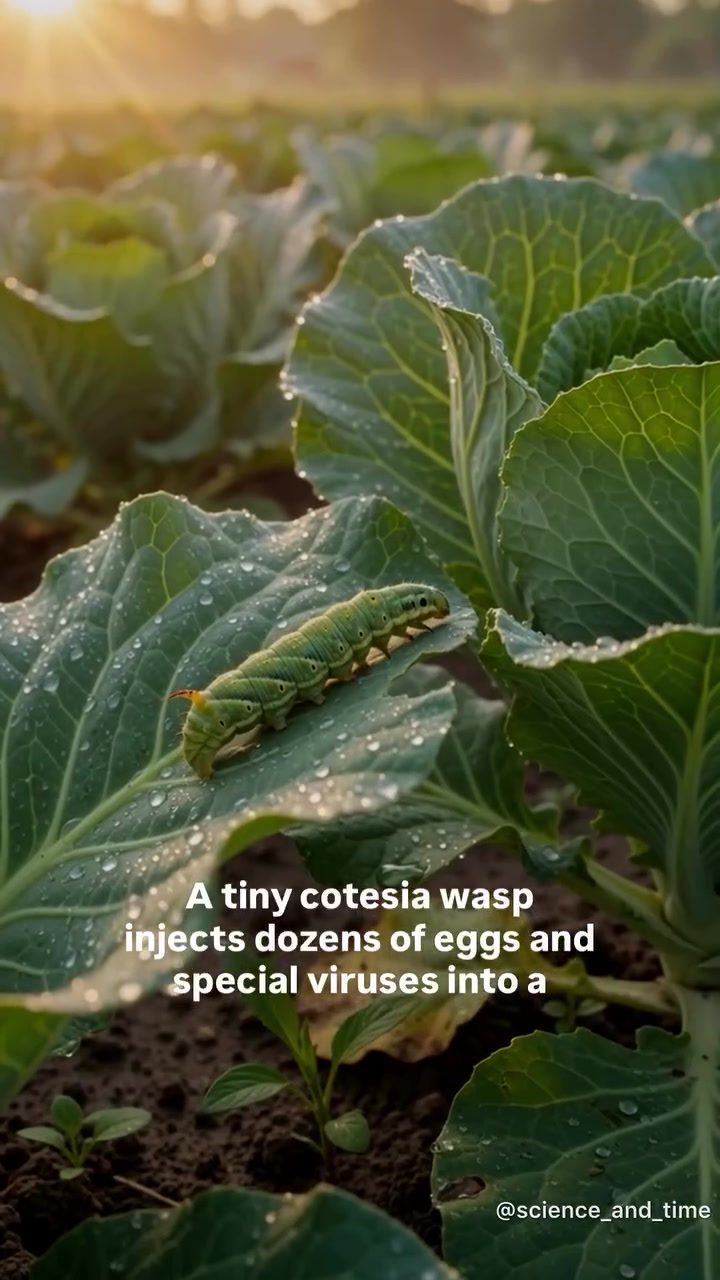
Understanding the Fascinating Lifecycle of the Cotesia Wasp
Cotesia wasps are known for their extraordinary lifecycle—one of the most fascinating examples of parasitism in nature. These tiny creatures, rather than building typical nests, inject their eggs into a living caterpillar, transforming it into a living nursery. This process, although complex, is a testament to the intricate strategies of nature.
Why This Matters
The lifecycle of the Cotesia wasp is a remarkable example of how biological systems can evolve to ensure survival. Understanding this process not only deepens our appreciation for nature's complexity but also provides insights into biological interactions that could have broader implications in fields like pest control and biological conservation.
The Intricate Process of Parasitism
The Initial Infection
The process begins when a Cotesia wasp injects dozens of eggs and special viruses into a caterpillar. This infection is not immediately fatal to the caterpillar, allowing the wasp larvae to develop internally. The eggs survive unseen, initiating one of nature's most complex life cycles. The caterpillar, unaware of its fate, continues to feed and grow.
The Growth of Larvae
Days pass, and the eggs hatch, giving rise to tiny larvae. These larvae feed on the caterpillar's body fluids and fat, avoiding vital organs to keep the caterpillar alive. This is a crucial stage, as the caterpillar's survival ensures a continuous food source for the growing larvae. Inside the caterpillar, the larvae grow larger each day, feeding on stored nutrients while carefully protecting the vital organs that keep their host alive.
The Final Transformation
As the larvae grow, they consume the caterpillar's last nutrient reserves. The caterpillar, now weakened, reaches the end of its life. The larvae, fully grown, are ready to emerge. They exit the caterpillar, spinning protective silk cocoons. The caterpillar's life ends, but the wasp larvae, now in cocoons, are safe and ready to transform.
The Emergence of Adult Wasps
Fully grown, the larvae emerge from their cocoons. Exhausted but ready, they unfold their wings and take flight. The adult wasps are now ready to find another caterpillar, continuing the extraordinary life cycle. The cycle is complete, and the process begins anew, showcasing the enduring nature of this survival strategy.
Practical Tips for Observing Cotesia Wasps
Observing the lifecycle of the Cotesia wasp in nature can be a rewarding experience for both amateur and professional biologists. Here are some practical tips for spotting these fascinating creatures:
- Identify Host Plants: Cotesia wasps often target specific types of caterpillars that feed on particular plants. Identifying these host plants can increase your chances of observing the wasps in action.
- Monitor Caterpillars: Keep an eye on caterpillars in areas where Cotesia wasps are known to inhabit. Look for signs of wasp larvae inside the caterpillar, such as unusual behavior or physical changes.
- Use Magnifying Tools: A magnifying glass or a microscope can help you see the small details of the wasp larvae and the changes they make to the caterpillar.
Important Takeaways
- Survival Strategy: The Cotesia wasp's strategy of injecting eggs into a caterpillar ensures that the larvae have a continuous food source while avoiding immediate detection by the host.
- Resourceful Feeding: The larvae carefully feed on stored nutrients, avoiding vital organs, which keeps the caterpillar alive and functional for as long as possible.
- Lifecycle Continuity: The wasp's lifecycle is a cyclical process, with each generation beginning anew by finding another caterpillar and continuing the extraordinary survival strategy.
Conclusion
The Cotesia wasp's lifecycle is an extraordinary example of nature's adaptability and complexity. From injecting eggs into a caterpillar to ensuring the larvae's survival through careful feeding, the entire process showcases the intricacies of biological interactions. Understanding this lifecycle not only enriches our knowledge of natural processes but also provides valuable insights into biological strategies that ensure species survival in a competitive world.
Watch the Reel
Questions readers ask
How do Cotesia wasps reproduce and how do they ensure the survival of their offspring?
Cotesia wasps reproduce by injecting their eggs directly into living caterpillars. This unique method ensures that the larvae have a constant food source, which is the caterpillar's insides. The wasp larvae then feed on the caterpillar while keeping it alive, allowing the larvae to grow and develop until they emerge as adult wasps.
What happens to the caterpillar after being parasitized by Cotesia wasps?
Once a caterpillar is parasitized, it continues to live but serves as a host for the developing wasp larvae. The caterpillar's metabolism and growth are controlled by the wasp larvae, ensuring a steady food supply for the developing wasps. The caterpillar will eventually be consumed by the larvae, which will then emerge as adult wasps.
Why is the Cotesia wasp lifecycle considered remarkable?
The Cotesia wasp lifecycle is remarkable due to its intricate parasitic nature. The wasp's ability to manipulate the caterpillar's biology to create a living nursery for its offspring showcases the complexity of biological interactions and survival strategies in nature.
How do Cotesia wasps contribute to pest control efforts?
Cotesia wasps play a significant role in pest control by targeting caterpillars that feed on crops. The wasp larvae feeding on the caterpillar eventually kill the caterpillar, which can help reduce the pest population. This natural method of pest control is both effective and environmentally friendly, minimizing the need for chemical pesticides.
How do Cotesia wasp larvae develop within the caterpillar?
Cotesia wasp larvae develop by consuming the tissues of the caterpillar from the inside. The larvae grow and mature within the living caterpillar, using it as a source of nutrients. As they grow, they produce a substance that prevents the caterpillar from completing its life cycle, thereby ensuring the wasp larvae's survival.
What are the key stages in the Cotesia wasp lifecycle?
The key stages in the Cotesia wasp lifecycle include egg injection into a caterpillar, larval development within the caterpillar, and the emergence of adult wasps from the caterpillar. The adult wasps then mate and search for new caterpillar hosts to continue the cycle.
How do Cotesia wasps locate and select suitable caterpillar hosts?
Cotesia wasps use their keen sense of smell to detect and locate suitable caterpillar hosts. They are particularly attracted to the chemical signals emitted by caterpillars, often those that are already parasitized. The wasps then inject their eggs into the caterpillar, initiating the parasitic lifecycle.
Related deep dives
Similar reads based on topic and creator.




Recent articles
Fresh deep dives from the latest Reels we unpacked.



Comments
Be the first to comment.