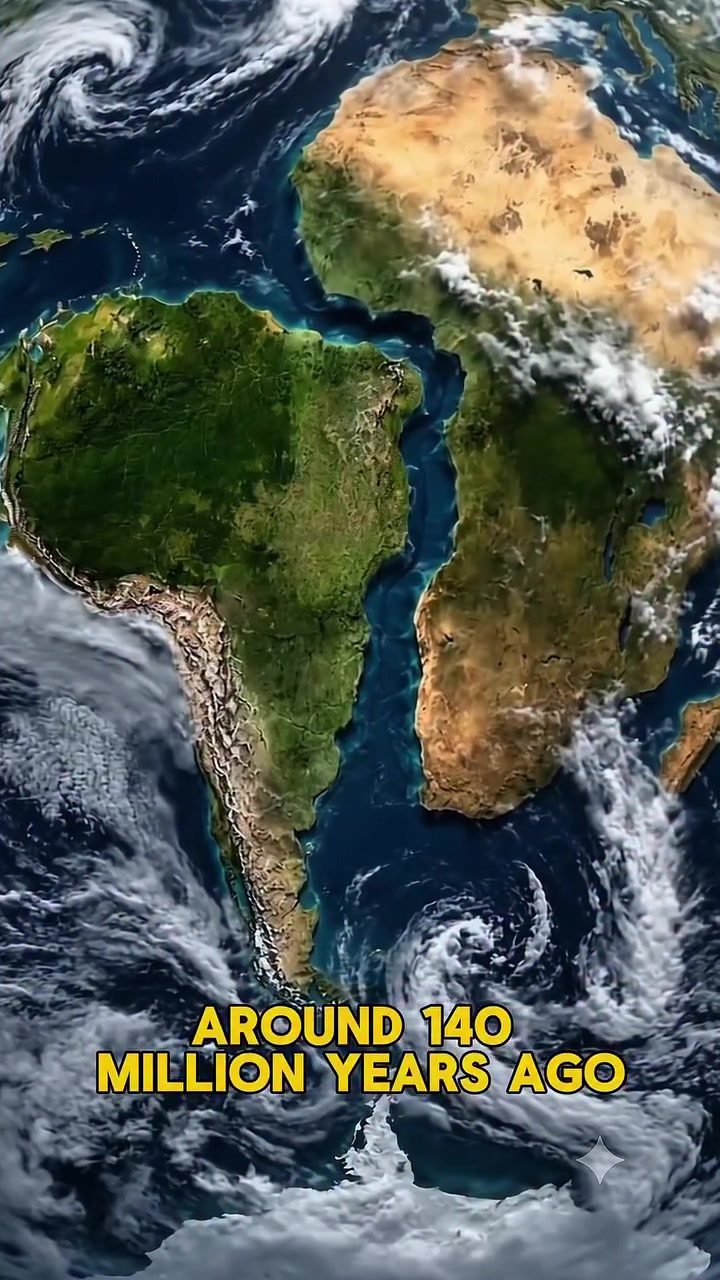
The Slow Dance of the Continents
Continental drift is far more than a geological curiosity. The slow separation of South America and Africa, which began around 140 million years ago, demonstrates a profound and ongoing geological process. The Atlantic Ocean that emerged between them is a testament to this vast, dynamic process. One simulation shows continents clustered together, then gradually separating. This movement suggests where the continents might have been millions of years ago. Continents were once joined together but have been drifting apart. That which was once connected is now separate. Arrows on a visualization indicate the direction of movement. The continents are still moving. Their movements are invisible on a typical human timescale, but over millions of years, the shifts are monumental. As the Earth's crust is broken into pieces, it floats on a layer of molten rock — the mantle.
The Relentless March of Geological Time
The geological record is evidence of how much the Earth has shifted. "The continents are still moving," the narration states, emphasizing the dynamic nature of Earth's surface. The pull from South America and Africa happening over 140 million years ago is something that continues today. Moving plates are the foundation of the process. The Earth’s crust is divided into several major plates, and these are slowly drifting apart, colliding, or sliding past each other. The movement can be traced back more than 100 million years. One simulation dramatizes this movement. The visuals can serve as a reminder that geological processes are ongoing, continuously shaping the planet. The continents are far from fixed.
The Scientific Uncertainty of Continental Drift
The dynamic nature of the Earth's surface means that geological predictions are not precise. Paleoceanographers and geologists each study continental drift. They theorize about the movements of continents. Yet the mechanisms are not fully understood. Does the movement result from subduction, hotspots, or mantle convection above? The dynamic nature of the Earth’s crust means that precise predictions about the movement of continents are difficult to make. The simulation helps to understand the dynamics, but the precise mechanisms that drive the movement is an area of ongoing scientific inquiry. The poles shift over time, and their movement is not the same rate as at the equator.
Revisiting History with Modern Technology
Visualizations bring the past to life. Advances in technology have enabled scientists to create detailed visualizations of these processes. Simulations show the slow, relentless movement of the continents over millions of years. How that movement occurred and the detailed mechanisms behind it are areas of ongoing research. As technology advances, so does our understanding of the Earth’s dynamic surface. The simulation creates a vivid image of the past and helps to understand the Earth's dynamic surface. Technology helps to illuminate the forces that shape the planet and provide insights into its past, present, and future.
Watch the Reel
Related deep dives
Similar reads based on topic and creator.
Recent articles
Fresh deep dives from the latest Reels we unpacked.




Comments
Be the first to comment.