The once and future supercontinent
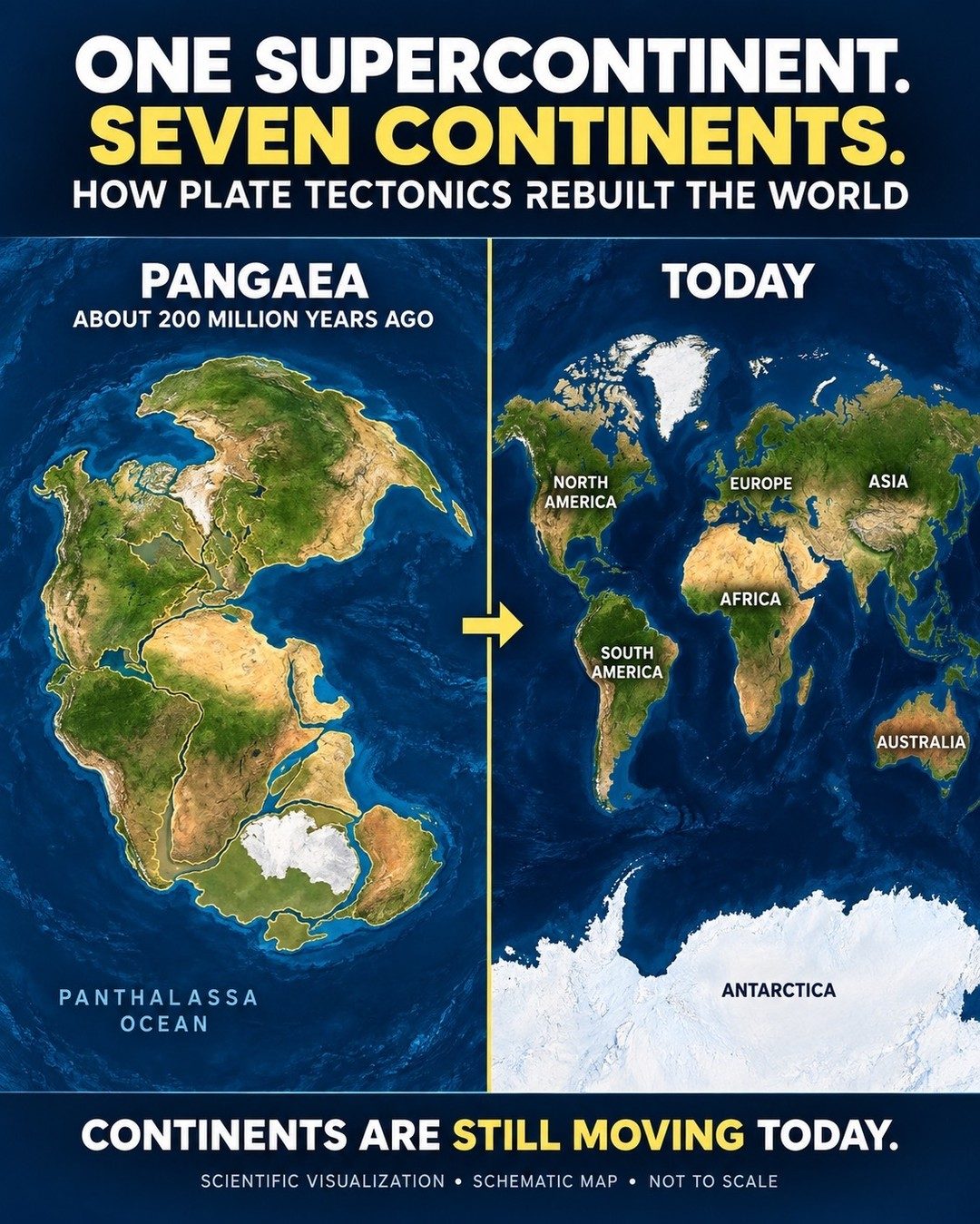
The theory of continental drift is an astonishing journey through space and time. Pangaea likely grew together then broke apart into what are now seven continents - North America, South America, Europe, Asia, Africa, Australia and Antarctica. Hurricane of supercontinent. This is no longer a question of belief but of scientific evidence. The pieces fit together like a giant jigsaw puzzle. To understand the Earth's development, take a helicopter tour of our planet. Around 200 million years ago, nearly all of the Earth's land was joined in a supercontinent named Pangaea. The current consensus among geoscientists is that the breakup of Pangaea was caused by plate tectonics. This process is when the Earth's crust is divided into several large plates, which move horizontally and vertically at varying speeds. The movement of continents continues today. This migration continues at a pace of 1-4 inches per year.
The new world order of plate tectonics
In the age of satellite imagery and Global Positioning Systems, geologists can examine the distribution and movement of the continents. The movement of the continents is measurable. With just the power of a smartphone’s GPS, one often experiences that the Earth is not as stationary as it appears. The continents aren’t drifting aimlessly, but “moving” in a predictable pattern. Its motion is like a slinky, where one area moves and another moves in reaction. The evidence comes in different forms. Plate tectonics manifest itself in various geological phenomena. The motion of the continents is influenced by the spreading of the ocean floor and the creation and destruction of crustal material. The observation of seismic waves, the study of rock formations, and the placement of fossils all contribute to the evidence that the continents have moved. That evidence, and the fragmentation continues to today.
Relic of a global seafloor
The presence of an ancient ocean called Pantalassa, is also a testament to the changes in our planet. This ocean, which surrounded the supercontinent Pangaea, was the largest continuous body of water that has ever existed. The shifting of the continents has left behind clues of the ocean's former structure. This has helped document the movements of Pangaea and identifying the broadest movements of the Earth's ocean. The remains of the Pantalassa are, without exaggeration, the deflated remnants of our world.
Watch the Reel
Related deep dives
Similar reads based on topic and creator.

Recent articles
Fresh deep dives from the latest Reels we unpacked.



Comments
Be the first to comment.