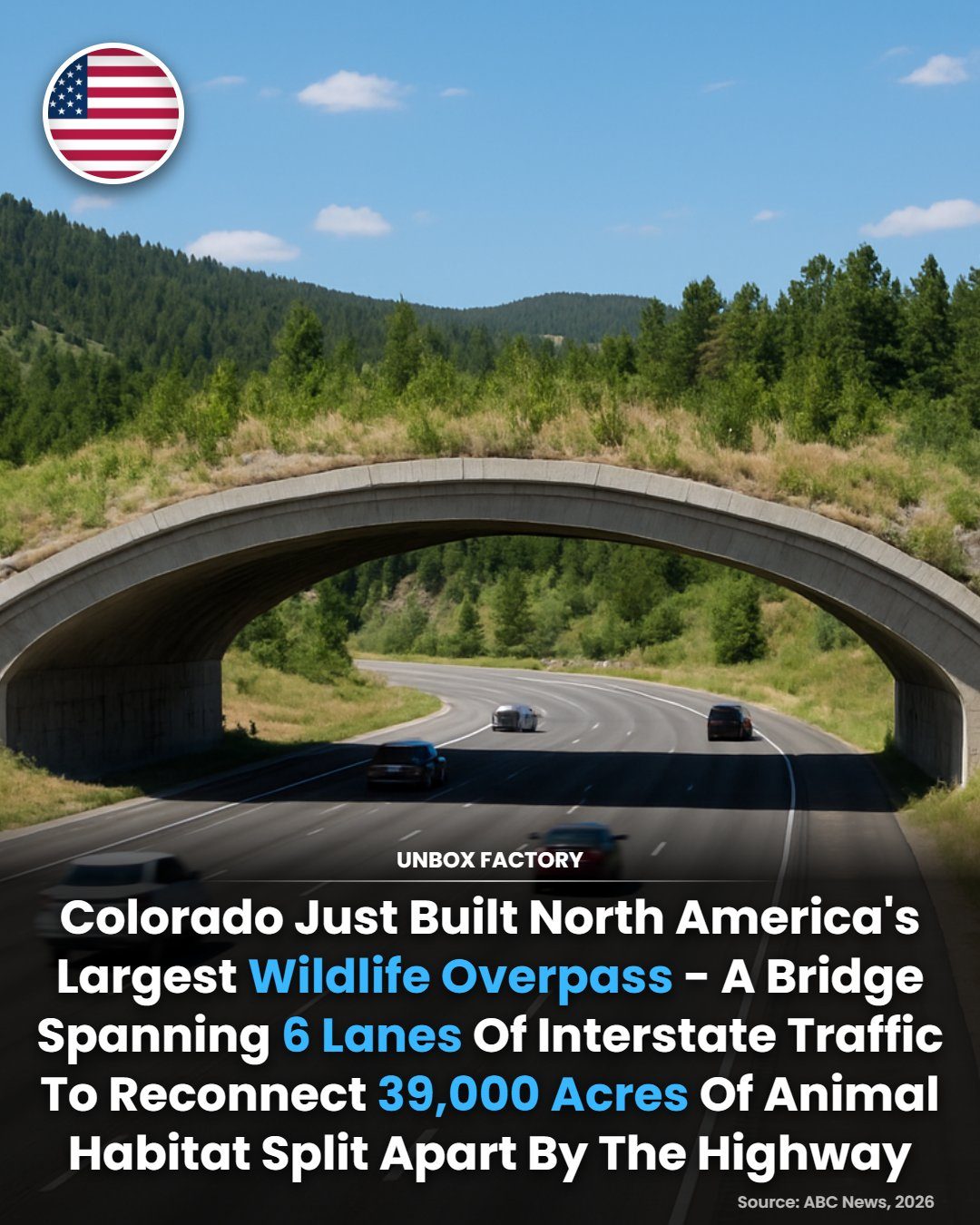
Wildlife Overpass in Colorado
North America's largest wildlife overpass has been completed in Colorado. This impressive structure spans six lanes of interstate highway, aiming to reconnect 39,000 acres of animal habitat that was previously divided by heavy traffic. The overpass is designed to facilitate safe crossings for a variety of wildlife, including elk, deer, bears, and mountain lions, as they traverse one of the state's busiest transportation corridors.
Why This Matters
Wildlife crossings are crucial for maintaining biodiversity and protecting both animals and humans. The overpass in Colorado is part of a broader effort to improve road safety, reduce animal-vehicle collisions, and reconnect fragmented ecosystems. By providing a safe passage for wildlife, these structures help restore migration routes that have existed for thousands of years.
The Construction and Design
The overpass is a significant engineering feat, spanning six lanes of interstate traffic. This design ensures that wildlife can safely cross the highway without interfering with vehicle traffic. The overpass aims to reconnect habitat areas that were previously split by the highway, allowing animals to move freely and safely across their territories.
Benefits of Wildlife Crossings
Wildlife crossings, such as overpasses and underpasses, offer numerous benefits. They significantly reduce the risk of animal-vehicle collisions, which can be hazardous for both animals and drivers. Studies have shown that these structures can reduce such collisions by more than 80%. Additionally, they help restore natural migration routes, which are essential for the survival and reproduction of many species.
Wildlife Benefiting from the Overpass
A variety of wildlife species will benefit from the new overpass. Elk, deer, bears, and mountain lions are just a few of the animals that will be able to safely cross the highway. These species often roam vast territories, and the overpass will enable them to do so without the risk of being hit by vehicles or getting trapped on one side of the highway.
Elk and Deer
Elk and deer are common in Colorado and often venture near roads in search of food and water. The overpass will provide a safe route for these animals to cross the interstate, reducing the risk of collisions with vehicles and allowing them to reach their destinations safely.
Bears
Bears are known for their wide-ranging habitats and often cross highways in search of food and mates. The overpass will give bears a safe passage, reducing the risk of collisions and helping to maintain their populations.
Mountain Lions
Mountain lions are elusive predators that require large territories to hunt and survive. The overpass will provide a safe way for these cats to cross the highway, allowing them to maintain their territories and continue hunting.
The Impact on Road Safety
The overpass is not only beneficial for wildlife but also for human safety. By reducing animal-vehicle collisions, these structures help improve road safety for drivers. This is particularly important in areas with high wildlife activity, where the risk of collisions is higher.
Reducing Collisions
Animal-vehicle collisions can result in injuries to both animals and humans, as well as significant property damage. The overpass aims to reduce these collisions by providing a safe passage for wildlife, making the roads safer for everyone.
Improving Road Safety
By reducing the risk of collisions, the overpass helps improve overall road safety. This is especially important in areas with high wildlife activity, where the risk of collisions is higher. The overpass will help ensure that both wildlife and drivers can safely share the road.
The Broader Effort
The construction of the overpass is part of a broader effort by the Colorado Department of Transportation to improve road safety and protect biodiversity. This effort includes the construction of other wildlife crossings and the implementation of measures to reduce the impact of roads on wildlife.
Other Wildlife Crossings
In addition to the overpass, the Colorado Department of Transportation is constructing other wildlife crossings, such as underpasses and tunnels, to provide safe passages for wildlife. These structures are designed to help wildlife safely cross roads and highways, reducing the risk of collisions and helping to maintain their populations.
Protecting Biodiversity
The overpass is part of a broader effort to protect biodiversity in Colorado. By providing safe passages for wildlife, these structures help maintain the health and diversity of the state's ecosystems. This is essential for the survival of many species and for the overall health of the environment.
Practical Tips for Safe Driving in Wildlife Areas
While the overpass is a significant step in improving road safety, drivers can also take practical steps to reduce the risk of animal-vehicle collisions. Here are some tips for safe driving in wildlife areas:
Slow Down
Reducing your speed in wildlife areas can give you more time to react if an animal suddenly appears on the road.
Be Alert
Pay attention to the environment around you and be on the lookout for wildlife, especially during dawn and dusk when animals are most active.
Use High Beams
If you are driving at night, use your high beams to increase visibility and spot wildlife on the road.
Watch for Signs
Pay attention to road signs that indicate wildlife crossings or areas with high wildlife activity.
Stay in Your Lane
Avoid swerving to avoid an animal, as this can increase the risk of losing control of your vehicle. Instead, slow down and brake gently to give the animal a chance to move out of the way.
Important Takeaways
The completion of North America's largest wildlife overpass in Colorado is a significant achievement in wildlife conservation and road safety. The overpass spans six lanes of interstate traffic and aims to reconnect 39,000 acres of animal habitat, providing a safe passage for a variety of wildlife species. This structure not only reduces the risk of animal-vehicle collisions but also helps restore natural migration routes and improve road safety for drivers. The overpass is part of a broader effort by the Colorado Department of Transportation to protect biodiversity and maintain the health of the state's ecosystems.
Conclusion
The new wildlife overpass in Colorado is a testament to the importance of wildlife conservation and road safety. By providing a safe passage for wildlife and reducing the risk of collisions, this structure helps protect both animals and humans. The overpass is part of a broader effort to improve road safety and protect biodiversity, ensuring that Colorado's ecosystems remain healthy and diverse for generations to come.
Watch the Reel
Questions readers ask
What is the purpose of Colorado's new wildlife overpass?
The primary goal of Colorado's new wildlife overpass is to reconnect 39,000 acres of habitat that was previously divided by a bustling interstate highway. It aims to facilitate safe crossings for various wildlife species, restore ancient migration routes, and reduce the number of animal-vehicle collisions.
Why is the new overpass considered the largest in North America?
The overpass is the largest in North America because it spans six lanes of interstate highway, making it one of the most expansive structures of its kind on the continent. Its size and design allow for the safe passage of a wide range of wildlife, including large animals like elk, deer, and bears.
What types of wildlife will benefit from this overpass?
The overpass is designed to benefit a variety of species, including large mammals such as elk, deer, bears, and mountain lions. These animals can safely traverse the overpass, which helps them access critical habitats and resources, and protects motorists from vehicle collisions with these animals.
How does the overpass improve safety for both wildlife and motorists?
The overpass enhances safety by providing a designated crossing for wildlife, preventing them from attempting to cross busy interstate lanes. This reduces the risk of animal-vehicle collisions, which can be harmful or fatal to both animals and humans, as well as costly for motorists and road authorities.
What broader efforts is the overpass part of?
The overpass is part of a larger initiative to improve road safety, reduce animal-vehicle collisions, and promote wildlife habitat connectivity. These efforts work to reconnect fragmented ecosystems, ensuring that wildlife can access the resources they need to thrive and helping to conserve biodiversity in Colorado.
Where is the overpass located and what interstate does it cross?
The overpass is located in Colorado and crosses one of the state's busiest interstate highways. The exact location and interstate are not specified in the article, but it is noted that the overpass spans six lanes, making it a significant structure in the area.
How does the overpass help to restore ancient migration routes?
By providing a safe and uninterrupted crossing over the interstate, the overpass allows wildlife to traverse the landscape in a manner similar to their historical migration routes. This helps to restore natural movement patterns, ensuring that animals can access seasonal habitats and resources.
Related deep dives
Similar reads based on topic and creator.




Recent articles
Fresh deep dives from the latest Reels we unpacked.




Comments
Be the first to comment.