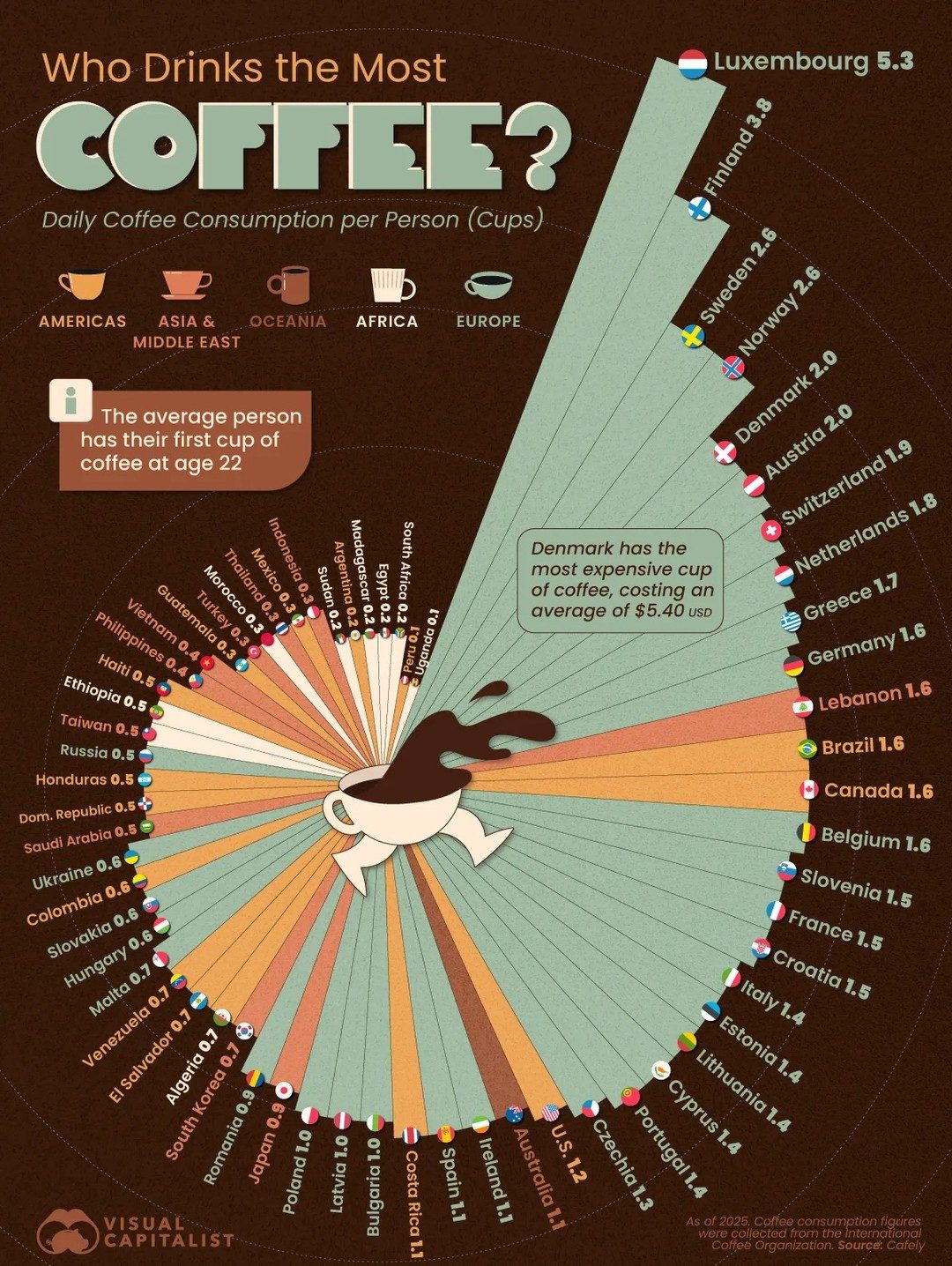
Luxembourg Leads Global Coffee Consumption in 2025
Luxembourg tops the global rankings for coffee consumption in 2025, with residents averaging over five cups per person per day. This places Luxembourg at the pinnacle of a list that includes 65 countries, highlighting significant differences in daily coffee intake per capita. Northern European nations dominate the top of the rankings, while India sits at the bottom, with a mere 0.02 cups per person per day.
Why Coffee Consumption Matters
Coffee is more than just a beverage; it’s a cultural phenomenon. Understanding which countries consume the most and the least can offer insights into lifestyle, economic habits, and even cultural values. This data from Cafely, collected from the International Coffee Organization, provides a snapshot of global coffee habits in 2025.
Global Trends in Coffee Consumption
Top Consumers
Luxembourg's lead in coffee consumption is striking. With an average intake of over five cups per person per day, this small European nation sets the bar for coffee enthusiasts worldwide. Northern European countries, known for their love of coffee, follow closely behind. These nations are not only high coffee consumers but also often have a strong coffee culture.
Bottom Consumers
At the other end of the spectrum, India stands with the lowest daily coffee consumption per person. Only 0.02 cups per person per day. Compared to Luxembourg, this figure is practically negligible. This stark contrast underscores the vast differences in cultural and lifestyle preferences across the globe.
Regional Insights
The data reveals intriguing regional trends. Countries in the Americas, Oceania, and Europe show varying levels of coffee consumption, with some regions having a more pronounced coffee-drinking culture. For instance, the Americas and Europe generally have higher consumption rates compared to the Middle East and Africa. This regional disparity can be attributed to a variety of factors, including availability, cultural preferences, and economic conditions.
Economic and Cultural Factors
The cost of coffee can also play a significant role in consumption patterns. Denmark, for example, has the most expensive cup of coffee, averaging $5.40 USD. This high cost likely influences consumption levels in the country, making it less accessible to some segments of the population. Conversely, in countries where coffee is more affordable, consumption tends to be higher.
Practical Tips for Coffee Enthusiasts
Understanding global coffee consumption trends can enrich your perspective on the beverage. Whether you’re a casual drinker or a connoisseur, these trends provide valuable insights:
Exploring Coffee Cultures
Visiting countries with high coffee consumption rates can be an enriching experience. Luxembourg, for instance, might offer unique coffee traditions and flavors that differ from what you’re used to. Similarly, countries with lower consumption might have more specialized or artisanal coffee cultures worth exploring.
Budgeting for Coffee
If you’re a frequent traveler, knowing the average cost of a cup of coffee in different regions can help you budget more effectively. This knowledge can prevent unexpected expenses, especially in countries like Denmark where a single cup can be quite pricey.
Cultural Sensitivity
Being aware of regional coffee habits can also enhance your cultural sensitivity. For example, in India, where coffee consumption is relatively low, it might be more appropriate to offer chai or other local beverages to your hosts.
Important Takeaways
Global coffee consumption trends offer a fascinating glimpse into the world’s diverse cultures and lifestyles. The data from Cafely highlights significant differences in coffee intake across various regions, with Luxembourg leading the way in 2025. Understanding these trends can enrich your coffee experiences, whether you’re a traveler, a coffee enthusiast, or simply curious about global habits. From the high costs in Denmark to the low consumption in India, each country’s relationship with coffee tells a unique story.
Conclusion
Coffee consumption is a complex and multifaceted phenomenon that reflects deeper cultural, economic, and lifestyle trends. Luxembourg’s dominance in 2025, coupled with the stark differences in coffee intake across the globe, paints a vivid picture of the world’s diverse coffee cultures. By exploring these trends, you can gain a deeper appreciation for the beverage that unites so many people worldwide.
Watch the Reel
Questions readers ask
Which country has the highest coffee consumption per person in 2025?
Luxembourg leads the world in 2025 with an average of over five cups of coffee per person per day, making it the highest consumer globally. The data comes from a ranking of 65 countries, highlighting Luxembourg's exceptional coffee-drinking habits.
How does coffee consumption vary by region in 2025?
In 2025, there are notable differences in coffee intake across regions. Northern European nations, such as Luxembourg and Denmark, rank at the top, while countries like India have the lowest consumption, with residents drinking only 0.02 cups per person per day.
What is the average daily coffee intake in India in 2025?
India has the lowest coffee consumption among the 65 countries surveyed in 2025, with an average of just 0.02 cups per person per day, indicating minimal coffee-drinking habits compared to the rest of the world.
Which countries have the most coffee drinkers per day?
Northern European countries dominate the list of highest coffee drinkers. For example, Luxembourg and Denmark are among the top countries in 2025, with residents consuming more than three cups of coffee daily.
What does the global coffee consumption ranking tell us about lifestyle and cultural habits?
The global coffee consumption ranking provides insights into the lifestyle and cultural habits of different countries. For instance, Luxembourg's high consumption reflects a culture deeply integrated with coffee, while India's low consumption indicates a different set of cultural and economic habits.
Which countries are expected to be the highest consumers of coffee in 2025?
In 2025, Northern European countries are expected to be the highest consumers of coffee. Countries like Luxembourg and Denmark are at the top of the global coffee consumption ranking, with Luxembourg leading with over five cups per person per day.
How do coffee consumption habits differ between Luxembourg and India?
Luxembourg has one of the highest coffee consumption rates in the world, with over five cups per person per day, while India has the lowest, with only 0.02 cups per person per day. This stark contrast highlights significant differences in lifestyle and cultural habits between the two countries.
Related deep dives
Similar reads based on topic and creator.

Recent articles
Fresh deep dives from the latest Reels we unpacked.




Comments
Be the first to comment.