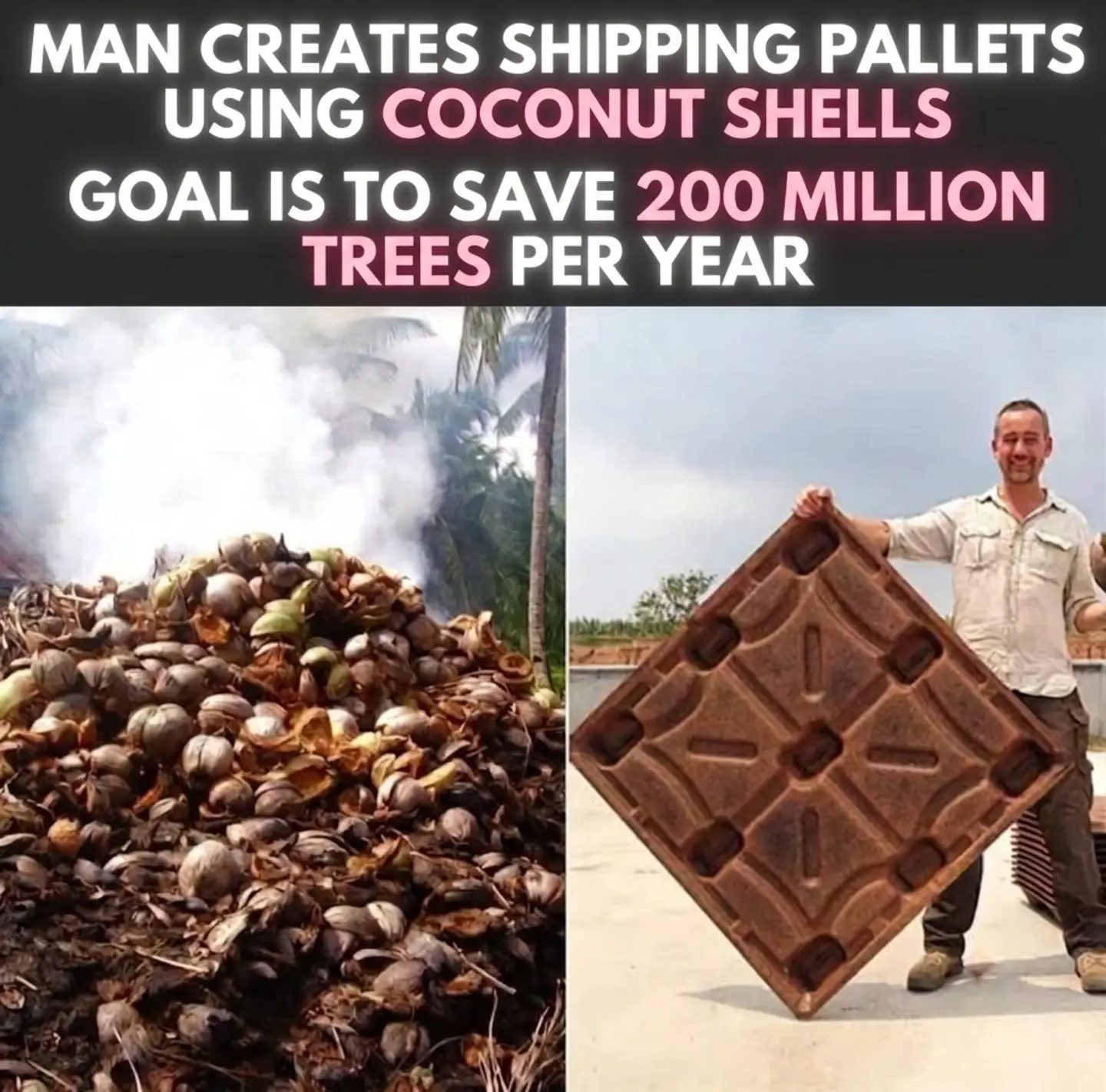
Coconut Shell Pallets: A Sustainable Alternative to Traditional Wooden Pallets
Coconut shell pallets offer a groundbreaking solution to the environmental impact of traditional wooden pallets used in shipping. By utilizing discarded coconut husks, these eco-friendly pallets address several critical issues, including deforestation and waste management.
Why This Matters
The scale of tree loss due to the production of single-use wooden pallets is staggering. Approximately 170 million trees are cut down annually for this purpose. This not only contributes to deforestation but also results in a significant amount of waste, as coconut husks, which make up 85% of the coconut, are often discarded or burned. Coconut shell pallets, also known as CocoPallet, provide a sustainable alternative that addresses both of these issues.
The Benefits of Coconut Shell Pallets
Preventing Deforestation
One of the most significant advantages of coconut shell pallets is their potential to prevent deforestation. By replacing traditional wooden pallets, these eco-friendly alternatives can save millions of trees each year. This reduction in tree cutting helps preserve forests, which are crucial for maintaining biodiversity and mitigating climate change.
Turning Waste into Wealth
Coconut shell pallets transform what is often considered waste into a valuable resource. The 85% of coconut husks that are typically burned or landfilled can be repurposed to create these pallets. This not only reduces waste but also creates a new income stream for coconut farmers in tropical regions. By providing an additional revenue source, coconut shell pallets empower local farmers and promote economic development in these areas.
Empowering Local Farmers
The production of coconut shell pallets creates new opportunities for local farmers. By utilizing coconut husks, which are abundant in tropical regions, farmers can generate additional income. This economic boost helps support local communities and contributes to sustainable development in these areas. Additionally, the production process is simple and requires minimal infrastructure, making it accessible to small-scale farmers.
100% Circular Design
Coconut shell pallets are designed with sustainability in mind. At the end of their useful life, these pallets can be crushed and used as green fertilizer. This circular design ensures that the pallets do not contribute to waste and instead support the growth of new plants. The use of natural coconut fibers and lignin as a binding agent further enhances the environmental benefits of these pallets, as it eliminates the need for synthetic resins, toxic glues, or nails.
How CocoPallet Works
The process of creating coconut shell pallets is straightforward and environmentally friendly. A massive pile of discarded coconut husks is pressed under high heat. The natural fibers and lignin in the coconut shells act as a binding agent, creating a strong and durable pallet. This process does not require any synthetic resins, toxic glues, or nails, making it a truly eco-friendly solution.
Practical Tips for Implementing Coconut Shell Pallets
Assessing Feasibility
Before implementing coconut shell pallets, it is essential to assess their feasibility for your specific application. Consider factors such as the weight and size of the items being shipped, as well as the shipping distance and conditions. Coconut shell pallets are strong and durable, but it is important to ensure they meet your specific needs.
Sourcing Materials
To make the most of coconut shell pallets, source materials locally. This not only supports local farmers but also reduces transportation costs and environmental impact. Work with suppliers who can provide high-quality coconut husks and ensure that the materials are properly prepared for pallet production.
Training and Education
Provide training and education for staff on the proper use and maintenance of coconut shell pallets. Ensure that everyone understands the benefits of these eco-friendly pallets and how to handle them correctly. This will help maximize their lifespan and effectiveness.
Monitoring and Evaluation
Regularly monitor and evaluate the performance of coconut shell pallets. Track their durability, strength, and environmental impact to ensure they are meeting your sustainability goals. Gather feedback from users and make necessary adjustments to improve their effectiveness.
Important Takeaways
Coconut shell pallets offer a sustainable and innovative solution to the environmental challenges posed by traditional wooden pallets. By preventing deforestation, turning waste into wealth, empowering local farmers, and promoting a circular economy, these pallets contribute to a greener future.
Conclusion
The shift towards coconut shell pallets represents a significant step forward in sustainable shipping practices. By replacing traditional wooden pallets with these eco-friendly alternatives, we can reduce deforestation, minimize waste, and support local communities. Embracing this innovation is not just good for the environment; it is also a wise business decision that promotes sustainability and economic growth.
Watch the Reel
Questions readers ask
What are coconut shell pallets and how are they made?
Coconut shell pallets are crafted from coconut husks, the fibrous part that typically goes to waste after coconut use. They are made by heating and pressing coconut husks into a solid mass, then shaping them into pallets. This process reduces the need for single-use wooden pallets.
How do coconut shell pallets contribute to reducing deforestation?
By providing an alternative to traditional wooden pallets, coconut shell pallets help mitigate deforestation. They use a byproduct of coconut production instead of trees that would otherwise be cut down for shipping pallets.
What are the benefits of using coconut shell pallets for shipping?
Coconut shell pallets offer several benefits, including reducing waste by reusing coconut husks, saving trees from being cut down, and providing local farmers with an additional income source by selling their coconut husks.
Are coconut shell pallets as durable as traditional wooden pallets?
Yes, coconut shell pallets are designed to be durable and can withstand the rigors of shipping. They are also resistant to mold, insects, and rot, making them a reliable option for transporting goods.
How do coconut shell pallets support local communities?
Coconut shell pallets empower local farmers by providing them with a new source of income. Farmers can sell their coconut husks to manufacturers of coconut shell pallets, improving their livelihoods.
What makes coconut shell pallets a zero waste solution?
Coconut shell pallets are a zero waste solution because they repurpose coconut husks, which would otherwise be discarded or burned. This not only reduces waste but also prevents the need for additional resources to create pallets.
Can coconut shell pallets be used in various shipping and storage scenarios?
Yes, coconut shell pallets are versatile and can be used in a variety of shipping and storage scenarios. They are designed to be compatible with standard shipping equipment and can handle the weight and conditions of various industries.
Related deep dives
Similar reads based on topic and creator.



Recent articles
Fresh deep dives from the latest Reels we unpacked.




Comments
Be the first to comment.