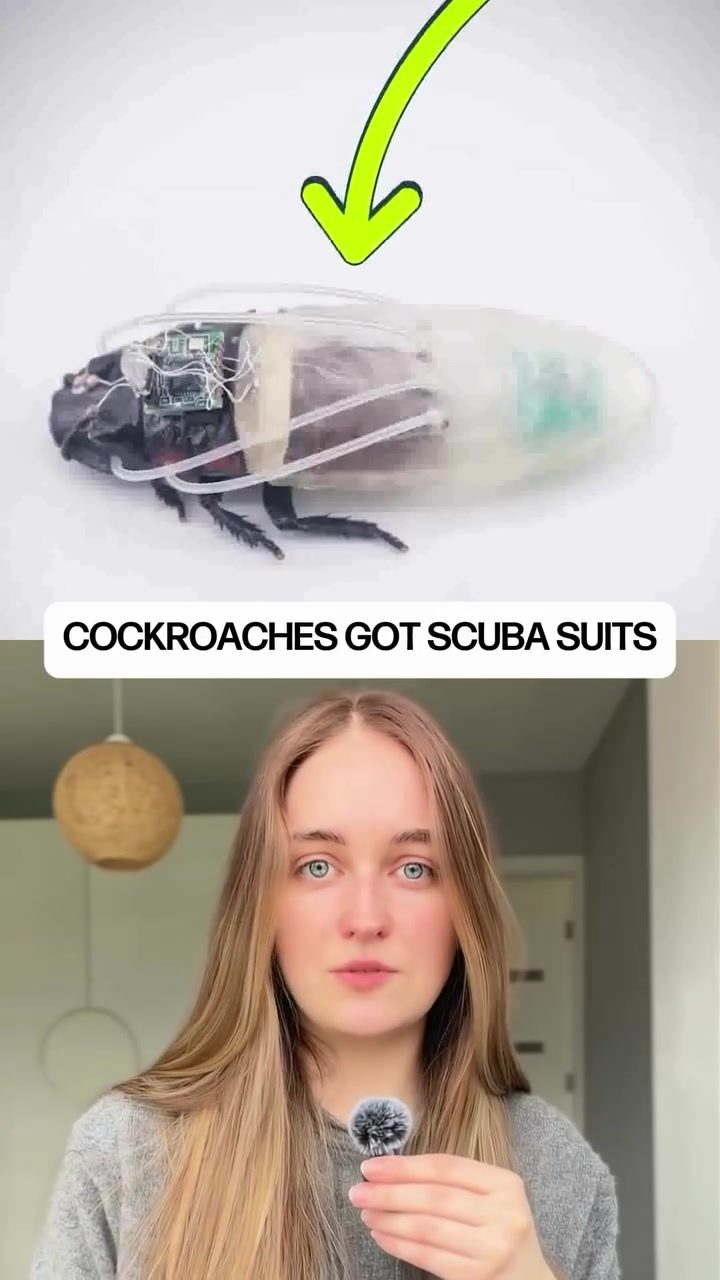
Cockroaches in Scuba Suits
Scientists have developed 3D-printed scuba suits for cockroaches, enabling these resilient creatures to explore flooded disaster zones and potentially even other planets. The concept might sound far-fetched, but the science behind it is grounded in the unique capabilities of cockroaches and the advancements in bio-robotics.
Context / Why This Matters
Cockroaches are notoriously hardy creatures, known for their ability to survive in extreme conditions. Scientists have leveraged this trait by finding a way to remotely control cockroaches using electrodes implanted in their bodies. These remotely controlled cockroaches can be equipped with cameras, making them invaluable for searching for people in disaster zones or hard-to-reach places.
Main Discussion
The Development of Scuba Suits
The primary challenge in using cockroaches for underwater missions is their inability to survive in water. To overcome this, scientists have developed 3D-printed, watertight scuba suits. These suits connect to the cockroach's air holes, providing them with a steady supply of air. This innovation allows the cockroach to move around underwater for hours at a time, significantly expanding their utility in disaster response.
Applications in Disaster Zones
One of the most immediate applications of these scuba-suited cockroaches is in disaster zones that involve flooding. Natural disasters like hurricanes, tsunamis, and floods can create hazardous environments where human rescuers cannot easily navigate. By equipping cockroaches with cameras, they can be sent into these areas to gather crucial information and locate survivors.
Potential for Space Exploration
The technology doesn't stop at Earth's disaster zones. Scientists have an even bigger goal: to create spacesuits for cockroaches, enabling them to help us explore other planets. The idea is to use cockroaches as miniature explorers in environments that are too harsh for humans, such as Mars or the moons of Jupiter. These cockroaches could be equipped with sensors and cameras to collect valuable data from distant worlds.
How It Works
The process involves several key steps. First, electrodes are implanted into the cockroach's body, allowing scientists to remotely control their movements. Next, the 3D-printed scuba suit is designed to fit the cockroach perfectly, ensuring a watertight seal. The suit is connected to the cockroach's air holes, providing them with the necessary oxygen to survive underwater. The suit is lightweight and does not hinder the cockroach's natural movements, allowing it to navigate through water efficiently.
The Science Behind It
The development of these scuba suits is grounded in advanced bio-robotics and 3D printing technologies. The electrodes implanted in the cockroach's body allow for precise control over its movements, making it a reliable tool for exploration. The 3D-printed scuba suits are designed to be lightweight and watertight, ensuring the cockroach can function efficiently in underwater environments. This combination of technology and biology opens up new possibilities for how we can explore both our planet and beyond.
Practical Tips
Using Remotely Controlled Cockroaches in Disaster Zones
For anyone involved in disaster response, the use of remotely controlled cockroaches can be a game-changer. Here are some practical tips for implementing this technology:
- Training and Preparation: Ensure that the cockroaches are well-trained and prepared for the conditions they will encounter. This includes testing their response to different environmental factors and ensuring they can navigate through complex terrains.
- Equipment Check: Before deployment, thoroughly check all equipment, including the scuba suits and electrodes, to ensure they are in good working condition.
- Communication: Maintain clear communication with the team controlling the cockroaches. This includes setting up reliable communication channels and having a backup plan in case of any malfunctions.
Exploring Other Planets
For space exploration missions, the use of cockroaches equipped with spacesuits can provide valuable data. Here are some tips:
- Environmental Testing: Conduct extensive testing to ensure the cockroaches can withstand the harsh conditions of other planets. This includes simulating the atmosphere and temperature of the target planet.
- Data Collection: Equip the cockroaches with the latest sensors and cameras to collect as much data as possible. This data can be used to map out the planet's surface, identify potential resources, and assess the environment for future human exploration.
- Collaboration: Work closely with experts in both bio-robotics and space exploration to ensure the technology is optimized for the specific challenges of space missions.
Important Takeaways
- Versatility: The technology behind scuba-suited cockroaches is highly versatile, with applications ranging from disaster response to space exploration.
- Innovation: The use of 3D-printed scuba suits and remote control technology represents a significant advancement in bio-robotics.
- Practicality: These innovations provide practical solutions for challenging environments, making them valuable tools for both immediate and long-term exploration.
Conclusion
The development of 3D-printed scuba suits for cockroaches is a testament to the incredible advancements in bio-robotics and 3D printing. By equipping these hardy creatures with the ability to explore underwater environments, scientists are opening up new possibilities for disaster response and space exploration. The potential applications of this technology are vast, and as the field continues to evolve, we can expect to see even more innovative uses for these remarkable insects.
Watch the Reel
Questions readers ask
How do 3D-printed scuba suits help cockroaches explore disaster zones?
3D-printed scuba suits enable cockroaches to navigate flooded disaster zones by providing a watertight enclosure. These suits protect the cockroaches from water damage and allow them to carry cameras and other equipment for remote exploration. The suits are designed to be lightweight and durable, ensuring the cockroaches can move freely and efficiently through challenging environments.
How are cockroaches remotely controlled for disaster zone exploration?
Scientists implant tiny electrodes into the cockroaches' bodies to control their movements. These electrodes allow researchers to send signals that mimic the insects' natural neural responses, directing them to move in specific directions. This remote control capability is crucial for guiding the cockroaches through hazardous and inaccessible areas during rescue missions.
What makes cockroaches suitable for disaster relief missions?
Cockroaches are ideal for disaster relief missions due to their exceptional resilience and ability to thrive in harsh conditions. They can withstand extreme temperatures, survive without food for extended periods, and navigate through tight spaces. Their hardiness and small size make them perfect for exploring flooded areas and locating survivors in difficult-to-reach locations.
Can cockroaches in 3D-printed suits be used for purposes beyond disaster relief?
Yes, the technology used for 3D-printed cockroach suits has potential applications beyond disaster relief. Researchers are exploring the use of these remotely controlled cockroaches for space exploration. Equipped with specialized gear, these insects could help investigate other planets, providing valuable insights into extraterrestrial environments and conditions.
What kind of equipment do cockroaches carry in their 3D-printed suits?
Cockroaches in 3D-printed suits are typically equipped with small cameras and sometimes other sensors. These devices allow researchers to capture visual data and transmit it back to a control center, aiding in the assessment of disaster zones or gathering information in remote locations. The equipment is designed to be compact and lightweight to minimize interference with the cockroach's movement.
How are the 3D-printed cockroach suits designed and manufactured?
The 3D-printed cockroach suits are created using advanced bio-robotics techniques. The designs are tailored to fit the cockroach's body perfectly, ensuring a snug and secure fit. The suits are printed using durable materials that can withstand water, debris, and other environmental challenges. This precision manufacturing process ensures the cockroaches can perform their tasks effectively in various conditions.
Related deep dives
Similar reads based on topic and creator.

Recent articles
Fresh deep dives from the latest Reels we unpacked.
Comments
Be the first to comment.