Cobalt Production: A Critical Component in the Era of Electric Vehicles
Cobalt is indispensable in modern technology, particularly in the production of rechargeable lithium-ion batteries for electric vehicles (EVs). These batteries rely on cobalt as a key component to ensure their efficiency and longevity. Understanding the global production landscape of cobalt is crucial, especially as the demand for EVs continues to grow.
Context: Why this matters
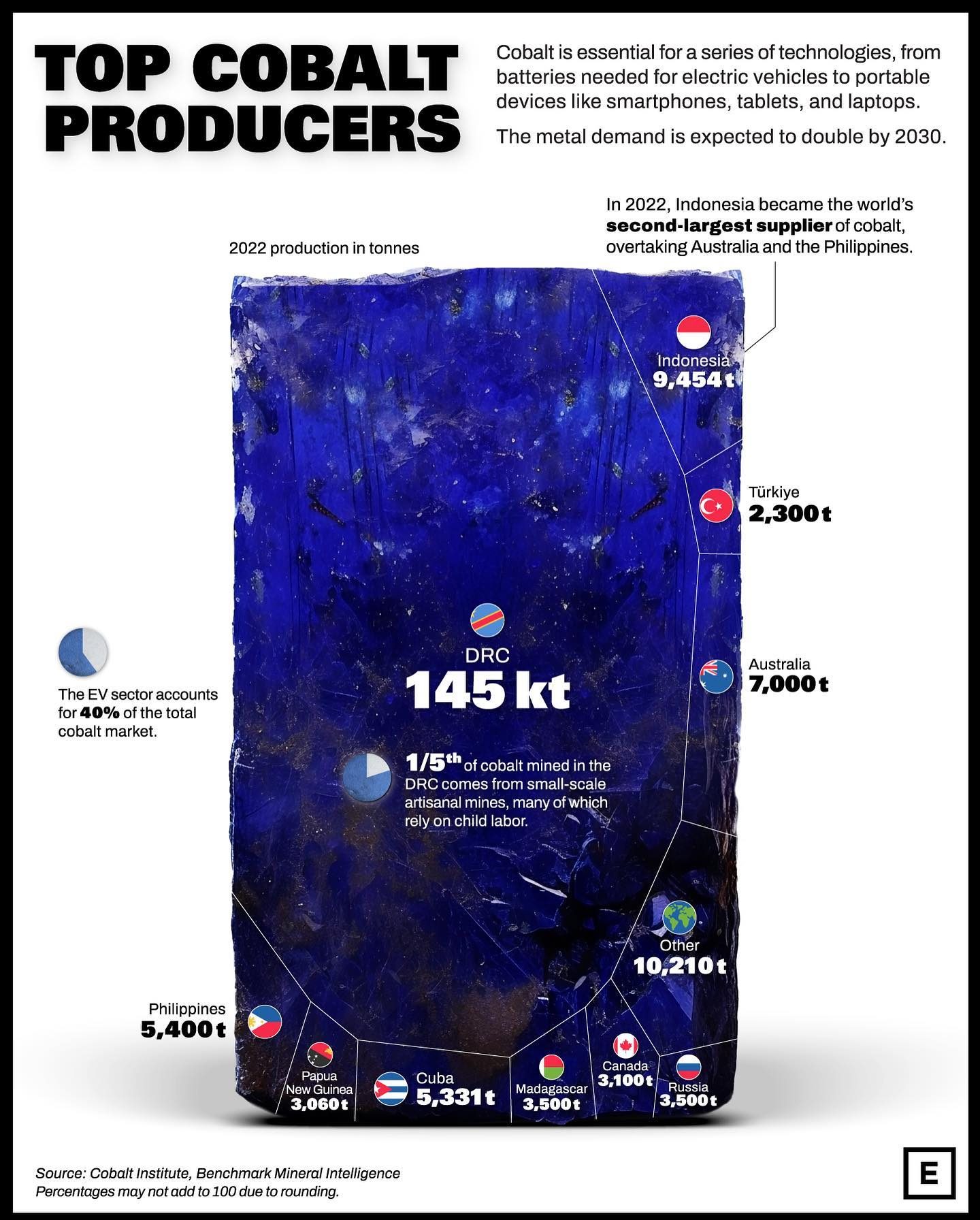
The global production of cobalt is heavily influenced by a few key players, with significant shifts expected in the coming years. The Democratic Republic of Congo (DRC) has traditionally dominated the cobalt market, but new developments are set to change the landscape. The electric vehicle sector, which accounts for 40% of the total cobalt market, is a major driving force behind these changes. The demand for cobalt is expected to double by 2030, driven by the increasing adoption of EVs and other technologies that rely on cobalt-based chemistries.
Cobalt Production Around the World
The Democratic Republic of Congo (DRC)
The DRC has long been the world's largest producer of cobalt, contributing 73% of global output in 2022. This dominance is rooted in the country's rich mineral resources and extensive mining operations. However, the DRC's position in the global cobalt market is projected to decrease to 57% by 2030. The Cobalt Institute predicts this shift, primarily due to the rise of other producers, particularly Indonesia.
Indonesia: The Emerging Contender
Indonesia has rapidly become a significant player in the cobalt market. By 2022, Indonesia became the second-largest supplier of cobalt, largely due to its burgeoning nickel industry. Nickel mining in Indonesia often results in cobalt as a byproduct, making it a cost-effective source of the metal. As Indonesia continues to expand its nickel production, its cobalt output is also expected to grow, further challenging the DRC's dominance.
Other Notable Producers
While the DRC and Indonesia are the leading producers, other countries also contribute significantly to global cobalt supply. Australia, Türkiye, and other regions are notable for their cobalt mining operations. These countries, along with new entrants, are likely to play a more substantial role in the global cobalt market as demand increases.
The Role of Cobalt in Modern Technologies
Cobalt is not only crucial for EV batteries but also for a wide array of technologies. From smartphones and tablets to laptops and other electronic devices, cobalt is an essential component. Its unique properties make it ideal for use in rechargeable batteries, ensuring long-lasting performance and reliability.
Cobalt in Electric Vehicle Batteries
The EV sector is the largest consumer of cobalt, accounting for 40% of the total market. This high demand is due to cobalt's ability to enhance the energy density and stability of lithium-ion batteries. As more countries and consumers adopt EVs, the demand for cobalt is expected to surge, driving further production and innovation in the sector.
Cobalt Beyond Electric Vehicles
While EVs are the most prominent users of cobalt, the metal also plays a vital role in other sectors. Medical devices, aerospace components, and various industrial applications rely on cobalt for its durability, corrosion resistance, and magnetic properties. As technology advances, the demand for cobalt in these areas is also likely to increase.
Practical Tips for Cobalt Consumers
For consumers interested in the technology sector, understanding the role of cobalt is essential. Here are some practical tips to stay informed about the cobalt market:
Stay Updated on Market Trends
Monitoring market trends and global production statistics can provide valuable insights into the future of cobalt. Keeping an eye on industry reports from organizations like the Cobalt Institute and Benchmark Mineral Intelligence can help stay ahead of the curve.
Support Sustainable Practices
As the demand for cobalt grows, it is crucial to support sustainable and ethical mining practices. Consumers can encourage companies to adopt responsible sourcing methods and advocate for better working conditions in cobalt-producing regions.
Important Takeaways
The Shifting Global Production Landscape
The global production of cobalt is undergoing significant changes. While the DRC remains the dominant producer, Indonesia and other countries are rapidly increasing their output, reshaping the market dynamics.
The Critical Role of Cobalt in Modern Technology
Cobalt is indispensable in modern technology, particularly in the production of rechargeable lithium-ion batteries. Its applications extend beyond EVs, making it a crucial component in various electronic devices and industrial applications.
The Growing Demand for Cobalt
The demand for cobalt is expected to double by 2030, driven by the increasing adoption of EVs and other technologies. This surge in demand will necessitate innovative production methods and sustainable practices to meet the growing needs.
Conclusion
Cobalt is a vital component in the modern technological landscape, particularly in the production of rechargeable lithium-ion batteries for EVs. The global production landscape of cobalt is evolving, with significant shifts expected in the coming years. As the demand for EVs and other technologies continues to rise, the importance of cobalt in the global market cannot be overstated. Staying informed and supporting sustainable practices will be crucial for navigating this changing landscape.
Watch the Reel
Questions readers ask
Why is the Democratic Republic of Congo currently significant in the global cobalt market?
The DRC is significant because it currently leads the global cobalt market, producing a substantial portion of the world's cobalt. This makes it a crucial player in the global cobalt supply chain, particularly for the electric vehicle industry.
What role does Indonesia play in the shifting cobalt market dynamics?
Indonesia is emerging as a significant competitor in the cobalt market, driven by its expanding nickel industry. Its growth is expected to contribute to the decline of the DRC's dominance, reshaping the global cobalt supply landscape.
How is the demand for cobalt expected to change by 2030?
The demand for cobalt is projected to double by 2030, primarily due to the growing electric vehicle sector. This increase in demand will significantly impact the global cobalt supply and market trends.
What makes cobalt essential for the electric vehicle industry?
Cobalt is a key component in the production of rechargeable lithium-ion batteries used in electric vehicles. It ensures the efficiency and longevity of these batteries, making it indispensable for the industry.
How will the shift in cobalt production affect the global market by 2030?
The shift in cobalt production, with Indonesia's rise and the DRC's decline, will likely lead to changes in global cobalt supply chains and market dynamics. This could impact pricing, availability, and the strategic importance of different countries in the cobalt industry.
What is the impact of the electric vehicle sector on global cobalt demand?
The electric vehicle sector accounts for 40% of the total cobalt demand, with projections indicating a significant rise in demand. This growing sector is a primary driver of the global cobalt market trends and production shifts.
Related deep dives
Similar reads based on topic and creator.


Recent articles
Fresh deep dives from the latest Reels we unpacked.




Comments
Be the first to comment.