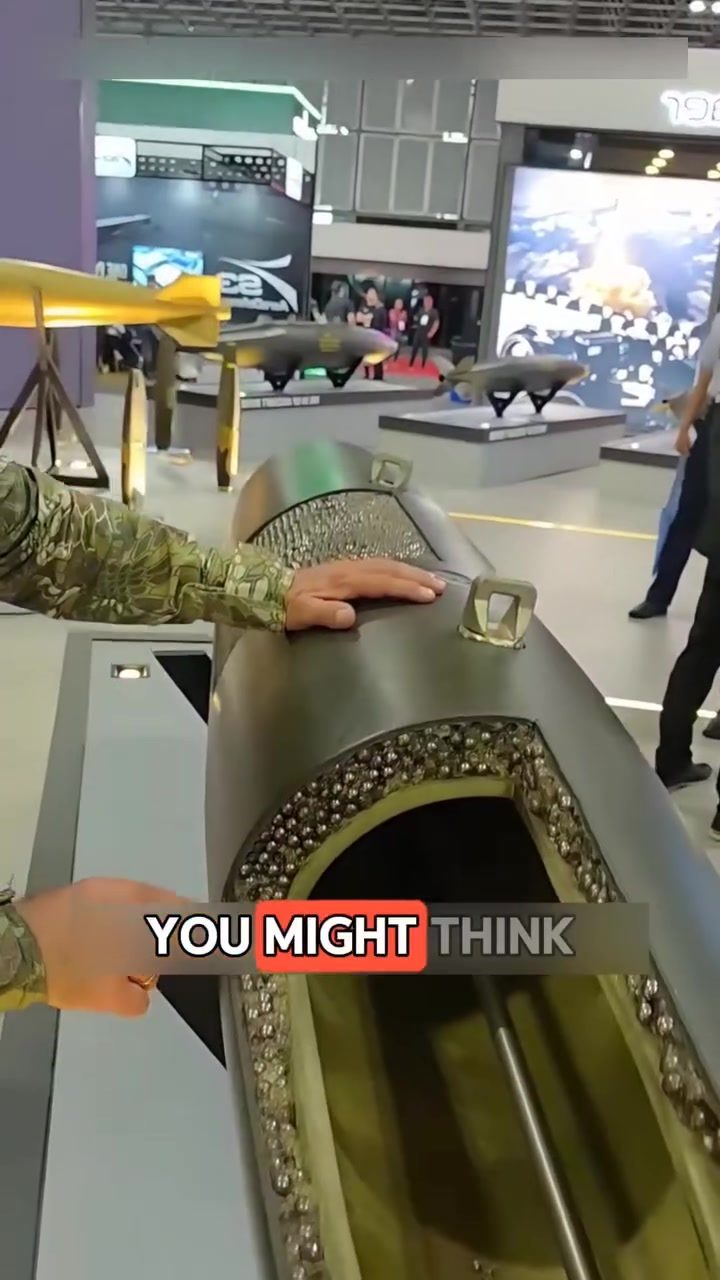
The Deadly Payload of Cluster Bombs: The Role of Steel Balls
Cluster bombs are notorious for their devastating impact on large areas, but their true lethality doesn't come from the initial explosion. The real danger lies in the thousands of small steel balls packed inside, which are blasted outward at speeds far exceeding the speed of sound upon detonation. These balls cover an extensive area, making them a formidable weapon capable of striking even troops behind cover.
Why This Matters
Understanding the mechanics of cluster bombs is crucial for grasping the broader implications of their use in warfare. These weapons have been employed in numerous conflicts, from World War II to the Vietnam War, and their design has evolved over decades. Modern directional mines and other ammunition still use the same principle, highlighting the enduring effectiveness—and horror—of this method.
The Anatomy of a Cluster Bomb
Cluster bombs are composed of multiple smaller submunitions, each containing hundreds or thousands of small steel balls. Upon detonation, these submunitions disperse the steel balls in a wide area. The balls, being dense and hard, retain their speed over longer distances, giving them a much larger lethal radius. This design ensures that the impact is not limited to the immediate blast zone but extends far beyond, creating a deadly field of high-speed projectiles.
The Physics Behind the Deadly Storm
The primary component responsible for the lethality of cluster bombs is the steel balls. These balls are engineered to maximize their impact. When the bomb detonates, the explosion propels the balls outward at several times the speed of sound. The kinetic energy of these fast-moving projectiles is what makes them so deadly. Even troops who might be protected by cover can be hit by these high-speed fragments, which can puncture armor and other protective gear.
Historical Context
The use of steel balls in ammunition has a long history. One of the earliest examples is the German S-Mine, deployed during World War II. This device, known as a "bouncing Betty," launched a spray of steel balls upon detonation, causing severe injuries and chaos. The design was later refined and used in U.S. cluster submunitions during the Vietnam War. These weapons were designed to create a wide field of lethal fragments, making it difficult for enemy troops to maneuver safely.
Modern directional mines and other advanced ammunition follow the same principle. Instead of relying solely on the blast from the explosion, these weapons launch a concentrated spray of steel balls. This approach ensures a broader and more effective lethal radius, making them particularly dangerous in urban and densely populated areas.
Practical Tips for Understanding Ballistic Weapons
While the technical details of ballistic weapons can be complex, there are several key points to keep in mind:
- Lethality Beyond the Blast: The true danger of cluster bombs and similar weapons lies in the secondary effects, such as the high-speed steel balls, rather than the initial explosion.
- Cover is Not Enough: Even troops behind cover can be vulnerable to the wide dispersion of steel balls, which can travel long distances and penetrate protective barriers.
- Historical Precedent: The use of steel balls in ammunition has been a consistent strategy in warfare, from World War II to modern conflicts, highlighting its enduring effectiveness.
Important Takeaways
Cluster bombs and similar ammunition are designed to maximize their lethal impact by dispersing high-speed steel balls over a large area. This design has been used for decades and continues to be a significant factor in modern warfare. Recognizing the true nature of these weapons—beyond the initial explosion—is crucial for understanding their impact and developing effective countermeasures.
Conclusion
The real killer inside a cluster bomb isn't the explosion but the tiny steel balls that are blasted outward at several times the speed of sound. This design, which has been used for decades, ensures a wide and deadly field of high-speed projectiles. Understanding the mechanics and history of these weapons is essential for appreciating their impact on modern warfare and the ongoing debates surrounding their use.
Watch the Reel
Questions readers ask
What makes cluster bombs particularly lethal in warfare?
Cluster bombs are particularly lethal due to their extensive area coverage and the high velocity of the steel balls they release. Upon detonation, these steel balls can travel faster than the speed of sound and create a deadly field, striking troops even when they are behind cover.
How many steel balls are typically released by a cluster bomb?
The number of steel balls in a cluster bomb can vary, but they are often packed in the thousands. This large quantity, when combined with their high speed and wide dispersal, creates a formidable weapon capable of causing significant damage over a large area.
Why are steel balls used in cluster bombs?
Steel balls are used in cluster bombs because they are effective at penetrating and damaging targets. Their small size and high velocity upon detonation allow them to cover a large area quickly, making them a deadly and efficient weapon in warfare.
How has the use of cluster bombs evolved in warfare?
The use of cluster bombs has evolved significantly since their introduction in World War II. They have been used in various conflicts, and their design has been refined over the years. Modern weapons, such as directional mines, have been developed based on the principles of cluster bombs, highlighting their enduring impact on military strategies.
What are the implications of using cluster bombs in warfare?
The use of cluster bombs in warfare can have significant and lasting impacts. Their extensive area coverage and the lingering danger of unexploded ordnance can result in long-term casualties and environmental damage, affecting both combatants and civilians alike, long after the conflict has ended.
What is the speed of the steel balls in cluster bombs upon detonation?
The speed of the steel balls in cluster bombs upon detonation can exceed the speed of sound, reaching speeds of over 340.29 meters per second. This high velocity, combined with their small size and wide dispersal, makes them a highly lethal weapon.
Recent articles
Fresh deep dives from the latest Reels we unpacked.




Comments
Be the first to comment.