A World Transformed
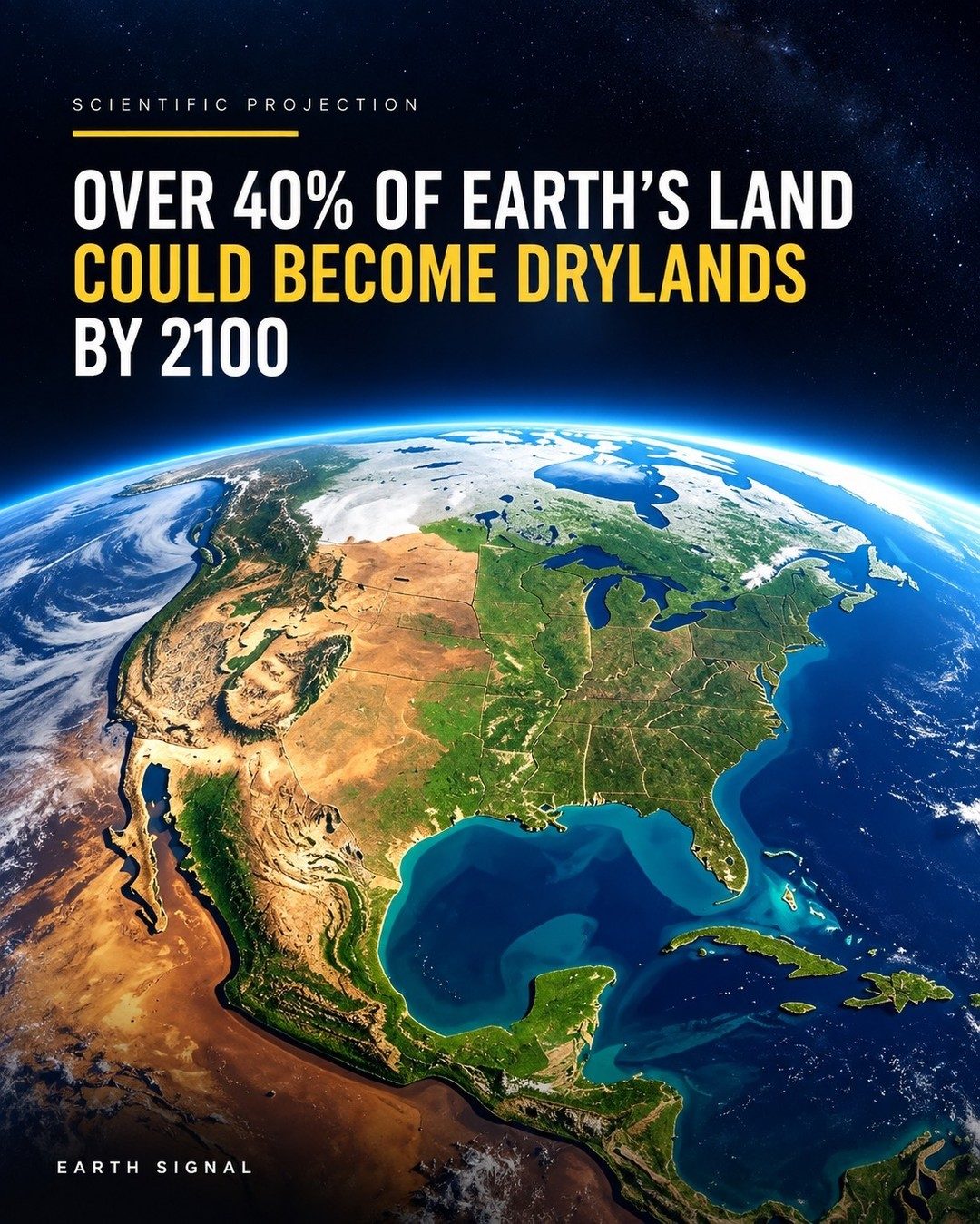
Climate change is reshaping the Earth, and nowhere is this more evident than in the impending expansion of drylands. The stark message, sourced from scientific projections, reads, "OVER 40% OF EARTH'S LAND COULD BECOME DRYLANDS BY 2100." This is not a far-fetched scenario, but a plausible outcome based on current trends and models. The term 'drylands' refers to arid regions that receive low amounts of precipitation. As global temperatures rise, these desert-like conditions could engulf a significant portion of the planet. The visual overlay illustrating this projection underscores the urgency. Brown hues dominate the globe, signifying areas that may experience severe drought, water scarcity, and desertification. Countries might have to adapt to such changes, building infrastructure resilient to harsh climates and managing water scarcity more effectively. This warning is not vague; it is an urgent call for future sustainability actions.
The Science Behind Threat
The projection, highlighting a future where 40% of Earth's terrestrial surface is drylands, is grounded in scientific research. Geobrowsers simulate future climates to estimate precipitation, temperature, and vegetation changes. Agriculture and biodiversity face major threats. Changes in vegetation can push agriculture to the brink. Food production losses are estimated to occur especially in regions that feed large populations, such as sub-Saharan Africa and India. The Earth's cooling mechanisms, primarily ocean currents and forests, which are vital for maintaining temperatures, might be stretched beyond their limits. The Earth's system complexly balances solar energy absorbed and heat radiated. An increase in drylands disrupts this balance, altering the carbon cycle and respiratory systems that absorb and release carbon. This negative feedback loop can intensify the greenhouse effect. The most vulnerable regions, already struggling with scarcity, often lack the resources to mitigate these effects. Countries like India and Nigeria are typically not the largest contributors to greenhouse gas emissions, which exacerbates global warming and makes it challenging to cope.
Human Impact on Climate Change
Humans are a major driver of these changes. What are the primary mechanisms driving this shift? There are many factors. Predominantly, agriculture, energy production, and industrial activities are fueling the process. Among all the drivers, agriculture stands out in particular. Global agriculture's vast land footprint puts it on the front line of climate change. Moreover, agriculture itself releases significant amounts of greenhouse gases (GHGs): methane from livestock, and nitrous oxide from fertilizers. Global emissions from agriculture are projected to increase by 2050. The billions of people living in the regions most prone to becoming drylands pose a major challenge to the world's food security. But this is not to simplify the problem by blaming agricultural practices. The reality is complex, intertwining human needs, agricultural technology, and food security in a complicated dance. Adaptation strategies must consider both resilience and productivity.
Future Prospects
The possibility of over 40% of Earth's land turning into drylands hints at a daunting future. Simultaneously though, it sparks awareness and innovation. The next generation of scientists and engineers is currently spearheading initiatives to mitigate climate change. Earth Signal and other climate-signaling organizations play an essential role in spreading awareness. The urgency of this problem has mobilized governments, corporations, and individuals. Initiatives such as the Great Green Wall, which spans the Sahara and aims to combat desertification, are just the beginning. Urgent action in agriculture, energy, and environmentalism is crucial towards climate change. Redirecting research funding, encouraging sustainable agriculture, and developing low-cost alternative fuel are necessary actions. We may not be able to prevent the expansion of drylands completely, but our actions today can mitigate its worst effects.
Watch the Reel
Related deep dives
Similar reads based on topic and creator.

Recent articles
Fresh deep dives from the latest Reels we unpacked.


Comments
Be the first to comment.