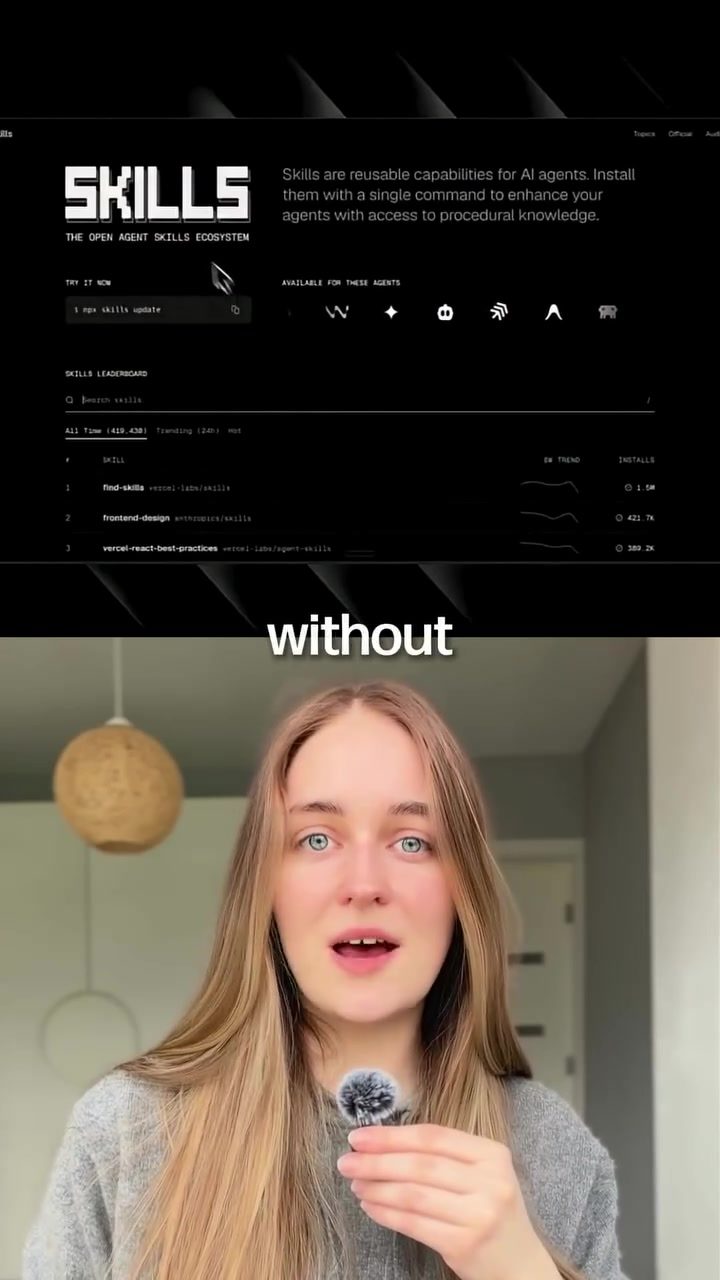
Agent Skills for AI Automation
Agent skills are transforming the way developers and researchers interact with AI assistants, particularly with platforms like Claude. These skills allow AI to perform specialized tasks, turning a generic chatbot into a powerful, tailored tool. The recent release of a library with nearly 10,000 skills, covering areas like coding, writing, research, and automation, has significantly enhanced the capabilities of AI assistants.
Why This Matters
The integration of agent skills into AI platforms like Claude is more than just a technological advancement; it’s a game-changer in how we approach automation and productivity. By leveraging these skills, users can automate complex tasks, streamline workflows, and achieve results that were previously time-consuming or required extensive manual effort. Whether you're a developer looking to automate coding tasks, a researcher needing to sift through large datasets, or a writer seeking to enhance your content creation process, these skills offer a solution.
Main Discussion
The Agent Skills Ecosystem
The agent skills ecosystem is a vast repository of capabilities that can be integrated into AI assistants. These skills cover a wide range of applications, from coding and research to writing and automation. The ecosystem is designed to make AI assistants more efficient and effective, tailored to the specific needs of the user.
The "FindSkills" Tool
One of the standout features of this ecosystem is the "FindSkills" tool. This popular tool has over 1.5 million installs and is designed to simplify the process of finding the right skill for a specific task. By telling Claude what you need to do, FindSkills can identify the best skill for that task, eliminating the need to manually search through the library. This tool not only saves time but also ensures that you are using the most effective skill for your needs.
Safety and Security
Security is a critical aspect of using any software, and the agent skills ecosystem is no exception. Before installing any skill, it’s essential to check its safety and security ratings. The ecosystem includes an alerts feature that shows which skills are safe, which have warnings, and which are high risk. This feature is crucial for ensuring that the skills you install do not compromise your system's security or integrity. The workflow is straightforward: find the skill, check its safety ratings, install it, and you’re good to go.
The Open Agent Skills Ecosystem
The Open Agent Skills Ecosystem is a collaborative platform where developers and researchers can contribute and access a wide range of skills. This ecosystem is built on the principle of open-source collaboration, allowing users to share and enhance skills collectively. The "vercel-react-practices" and "vercel-labs/agent-skills" repositories on GitHub are prime examples of how this collaborative approach is putting these ideas into practice. By leveraging the expertise of a global community, the ecosystem continues to grow and evolve, offering more robust and versatile skills.
Practical Tips
When navigating the world of agent skills, consider the following practical tips to enhance your experience and maximize efficiency:
- Start with FindSkills: If you're new to agent skills, start with the FindSkills tool. It simplifies the process of finding the right skill for your task and ensures that you are using the most effective solution.
- Check Safety Ratings: Always check the safety ratings and alerts before installing any skill. This step ensures that you are not compromising your system's security.
- Explore the Open Ecosystem: Take advantage of the Open Agent Skills Ecosystem and the collaborative repositories like "vercel-react-practices" and "vercel-labs/agent-skills." These resources offer a wealth of skills and can help you stay updated with the latest developments.
- Experiment and Customize: Don’t hesitate to experiment with different skills and customize them to fit your specific needs. The ecosystem is designed to be flexible and adaptable, allowing you to tailor your AI assistant to your requirements.
Important Takeaways
Agent skills are revolutionizing the way we interact with AI assistants. By leveraging these skills, users can transform a generic chatbot into a powerful, tailored tool that can automate complex tasks, streamline workflows, and enhance productivity. Key takeaways include:
- FindSkills: This tool simplifies the process of finding the right skill for your needs, saving time and ensuring effectiveness.
- Security: Always check the safety and security ratings of skills before installation to avoid compromising your system.
- Open Collaboration: The Open Agent Skills Ecosystem fosters collaboration and continuous improvement, offering a vast repository of skills and resources.
Conclusion
The integration of agent skills into AI assistants like Claude is a significant advancement in automation and productivity. By leveraging the nearly 10,000 skills available in the library, users can automate complex tasks, streamline workflows, and achieve results that were previously time-consuming or required extensive manual effort. Whether you’re a developer, researcher, or writer, these skills offer a powerful solution to enhance your productivity and efficiency.
Watch the Reel
Questions readers ask
What are agent skills in the context of AI automation?
Agent skills in AI automation refer to specialized capabilities that enable AI assistants to perform specific tasks, transforming a generic chatbot into a powerful, tool tailored to particular needs. These skills allow AI to handle complex tasks, such as coding, writing, and research, with enhanced efficiency.
How does the Claude AI skills library enhance productivity?
The Claude AI skills library enhances productivity by offering nearly 10,000 capabilities that can automate a wide range of tasks. This includes coding, research, and writing tasks, which helps users streamline their workflows and achieve results more efficiently.
What is the FindSkills tool and how does it help users?
The FindSkills tool is designed to simplify the process of locating the right skill for a specific task within the Claude AI skills library. It helps users quickly find the most relevant capabilities, saving time and ensuring that the right tools are used for each job.
What types of tasks can be automated using the Claude AI skills library?
The Claude AI skills library covers a broad spectrum of tasks, including coding, writing, research, and automation. This makes it a versatile tool for developers, researchers, and professionals looking to enhance their productivity and streamline their workflows.
How can AI automation skills benefit researchers?
AI automation skills can significantly benefit researchers by automating repetitive tasks, such as data collection and analysis, allowing them to focus on more critical aspects of their work. This not only saves time but also ensures that research is conducted more accurately and efficiently.
What makes the Claude skills library a game-changer in AI automation?
The Claude skills library is a game-changer because it offers a vast array of nearly 10,000 specialized skills, enabling users to automate complex tasks and streamline workflows. This level of customization and capability enhancement makes it a powerful tool for boosting productivity across various fields.
Can the Claude AI skills library be used for tasks other than coding and research?
Absolutely. In addition to coding and research, the Claude AI skills library can be used for a wide range of tasks, including writing, data analysis, and general automation. This versatility makes it a valuable resource for users across different industries and professions.
Related deep dives
Similar reads based on topic and creator.




Recent articles
Fresh deep dives from the latest Reels we unpacked.


Comments
Be the first to comment.