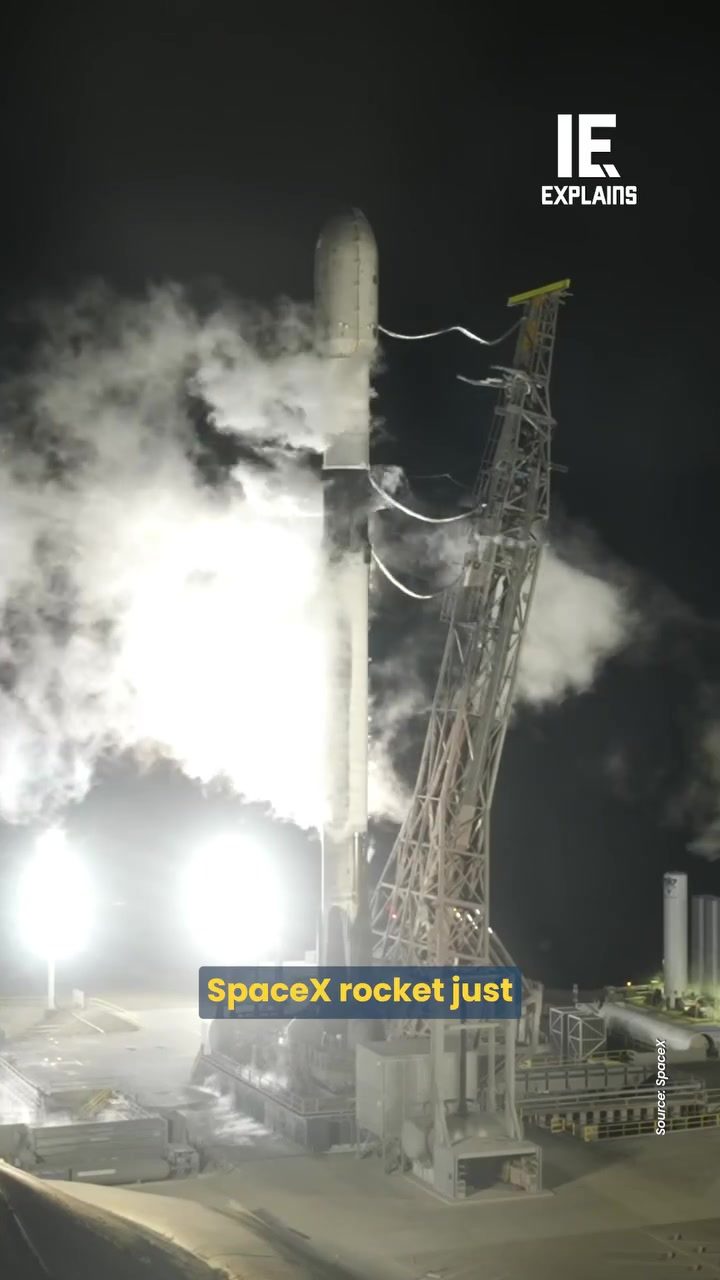
The Launch of BOHR: The World's First Commercial Nuclear-Powered Satellite
On July 7, 2026, a historic event marked a significant milestone in space exploration. Florida-based City Labs launched BOHR, short for Betavoltaic Orbital HighReliability, aboard SpaceX’s Transporter-17 rideshare mission. BOHR is the world's first commercial nuclear-powered satellite and the first-ever nuclear CubeSat, showcasing City Labs’ innovative NanoTritium™ betavoltaic technology.
Why This Matters
The launch of BOHR represents a groundbreaking advancement in satellite technology. Traditional satellites rely on solar power, which can be unreliable in certain environments, such as deep space or the moon's shadowed craters. BOHR, powered by nuclear decay, offers a continuous and always-on power source, independent of sunlight and batteries. This technology has the potential to revolutionize space missions by providing reliable power in regions where sunlight is scarce or unavailable.
Understanding the Technology
The Power Source: Nuclear Decay
BOHR's power source is Tritium, a radioactive form of hydrogen. Tritium undergoes beta decay, releasing beta particles that are converted into electricity. This process is facilitated by the NanoTritium™ chips developed by City Labs. The half-life of Tritium is 12.3 years, ensuring that the power supply remains consistent for over a decade. Unlike traditional power sources, this method does not require sunlight, recharging, or moving parts, making it highly reliable.
Advantages of Nuclear Power in Space
Nuclear power offers several advantages over conventional solar power:
- Continuous Power: Unlike solar panels, which depend on sunlight, nuclear power provides a steady stream of electricity, regardless of the environment.
- Long-Lasting: With a half-life of 12.3 years, Tritium ensures a stable power supply for an extended period.
- Reliability: The absence of moving parts and the need for recharging makes nuclear power a highly reliable option for space missions.
The Mission and Its Goals
BOHR's primary mission is to demonstrate the effectiveness of always-on nuclear power in orbit. Despite the advantages of nuclear power, there are limitations. Beta-voltaics, the technology used in BOHR, generate only microwatts of power. As a result, BOHR still relies on solar power for its primary energy needs. The satellite aims to prove that nuclear power can supplement or even replace solar power in certain applications, particularly in deep space or shadowed areas.
BOHR is also the first commercial nuclear mission to be cleared through the FAA's new launch approval pathway. This pathway, reviewed by Sandia National Laboratories, aims to establish standards for future nuclear-powered missions. The goal is to enable power generation in regions where sunlight is scarce, such as deep space, the moon's shadowed craters, and sensors running independently for years.
Practical Tips for Future Missions
For future missions considering nuclear power, several practical tips can be beneficial:
1. Understand the Power Requirements
Before integrating nuclear power, it's crucial to assess the power requirements of the mission. Nuclear power is ideal for missions that require continuous, long-term power supply. However, for missions with high power demands, a combination of solar and nuclear power may be necessary.
2. Choose the Right Technology
Different types of nuclear power technology offer varying advantages. For instance, beta-voltaics provide a steady but low-power output, while other nuclear technologies, like radioisotope thermoelectric generators (RTGs), can generate more power but have shorter lifespans. The choice depends on the specific needs of the mission.
3. Comply with Regulations
Missions involving nuclear power must comply with strict regulations and approval pathways. Working closely with regulatory bodies like the FAA and Sandia National Laboratories ensures that the mission adheres to safety and environmental standards.
4. Consider Redundancy
While nuclear power is highly reliable, it's essential to have backup power sources. For missions where power failure could be catastrophic, a combination of nuclear, solar, and possibly even battery power can provide the necessary redundancy.
Important Takeaways
The launch of BOHR represents a significant step forward in space exploration technology. Nuclear power, with its continuous and reliable supply, offers a viable alternative to traditional solar power, particularly in environments where sunlight is limited. BOHR’s mission to demonstrate the effectiveness of nuclear power in orbit will pave the way for future missions, enabling power generation in previously inaccessible regions.
Conclusion
The world's first commercial nuclear-powered satellite, BOHR, launched by City Labs, signals a new era in space exploration. With its NanoTritium™ technology, BOHR offers a continuous, reliable power source independent of sunlight and batteries. As future missions venture into deep space and the moon's shadowed craters, the technology demonstrated by BOHR will be instrumental in ensuring reliable power supply and mission success.
Watch the Reel
Questions readers ask
What makes BOHR different from traditional satellites?
BOHR stands out because it is powered by nuclear decay, providing a constant and reliable energy source. Traditional satellites typically use solar power, which can be intermittent and unreliable in certain space environments, such as during eclipses or in shadowed regions.
How does City Labs' NanoTritium™ technology work?
City Labs' NanoTritium™ technology is based on betavoltaic power, which converts the energy from nuclear decay into electricity. This process allows for a continuous power supply, making it ideal for space applications where consistent energy is crucial.
What are the benefits of using nuclear power in satellites?
Nuclear power in satellites, like the BOHR, offers several benefits, including constant, reliable energy, which is particularly useful for long-term missions and in environments with limited sunlight. This can lead to more efficient and effective space operations.
What role did SpaceX play in the launch of BOHR?
SpaceX played a pivotal role by providing the launch services for BOHR through their Transporter-17 rideshare mission. This collaboration highlights the growing trend of commercial partnerships in space exploration, combining expertise from both City Labs and SpaceX.
Why is the launch of BOHR significant for space exploration?
The launch of BOHR is significant because it marks the first time a commercial nuclear-powered satellite has been sent into space. This breakthrough paves the way for more advanced and reliable space missions, especially in regions where solar power is impractical.
What are the potential applications of nuclear-powered satellites like BOHR?
Nuclear-powered satellites like BOHR have potential applications in various space missions, including deep space exploration, lunar surface operations, and other environments with limited sunlight. The constant energy supply can support long-term missions and scientific research, enhancing overall mission capabilities.
What is the importance of the Transporter-17 rideshare mission in this context?
The Transporter-17 rideshare mission is important because it facilitated the launch of BOHR, demonstrating the effectiveness of commercial partnerships in advancing space technology. This approach allows for cost-efficient and collaborative efforts, fostering innovation in the space industry.
Related deep dives
Similar reads based on topic and creator.


Recent articles
Fresh deep dives from the latest Reels we unpacked.




Comments
Be the first to comment.