The San alps in retreat
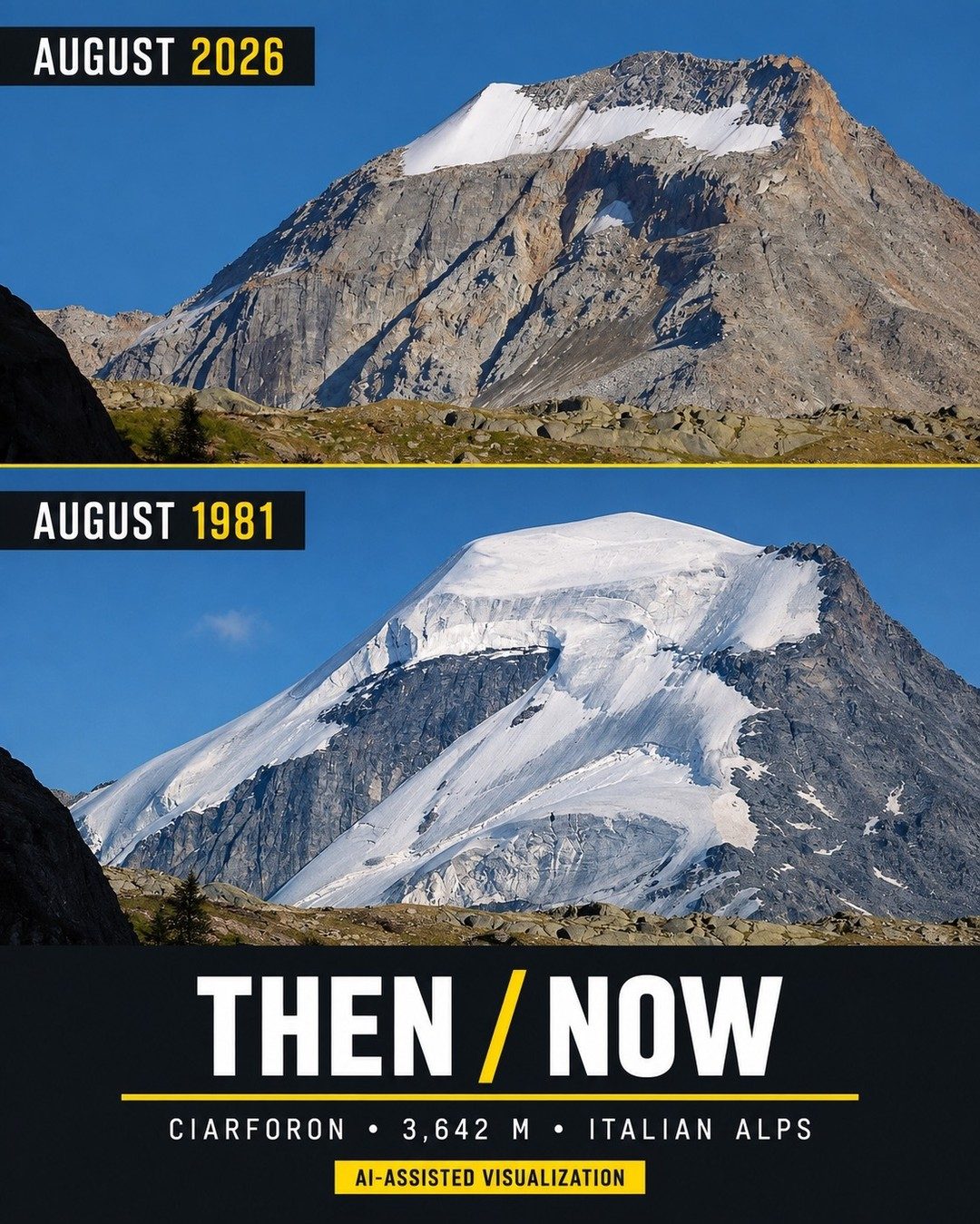
The Italian Alps have experienced a stark transformation in 45 years, particularly around the peak of Ciarforon. Genes peaks are a permanent and crucial indicator of climate change. The glaciers in the mountains now total 3,642 meters, covering less than half of what they did 45 years ago. Bulletproof evidence of climate change is not something that science can show, but it is visible on the slopes of Ciarforon. All mountains suffer from glacial denudation, but none as dramatically as Ciarforon. The visual shows that in August 2026, the mountain was barely recognizable. The once snow-capped peak was reduced to a rocky spine. The top part of the mountain, seen in 2026, bears little resemblance to the snow-covered image below. The comparison is not just a loss of snow, but also the retreat of glacial ice terrain, which has dramatically reshaped Ciarforon. It wasn't climate change's impact on climate modelers or polar bears. It was a 3,642 meter-short, steep, rocky peak. In 1981, the photo was taken during the same month, August — the glaciers were visibly bigger on the mountain.
A timeline of Ciarforon’s retreat
The visual points to profound changes that occurred between 1981 and 2026. 1981's photo shows a mountain covered in thick layers of ice that meet with the steeper terrain. By 2026, the glaciers had retreated and split, leaving a rocky terrain covered with snow, but no longer covered in thick layers of ice. With this dramatic change, it’s evident that the mountain’s snow cover has been reduced by more than half in 45 years, making it a somber reminder of climate change's impact. The change in snow cover and glacial ice between 1981 and 2026 is stark and undeniable. Glaciers covering the slopes erupt in the face of climate changes. There are noticeable increases in snowfall during 1981, but the quantity of snow left by 2026, not weather or snowfall, turned these mountains into mere peaks.
The future of glaciers
Researchers use many methods to show how glaciers retreat. The two images of Ciarforon are part of a broad approach which makes AI-assisted visualization to track changes across the Italian Alps. Glaciers and its retreat changes the terrain and fauna of the mountains, but AI-assisted visualization gives a clearer picture of the changes, revealing the impacts of climate change. The visual provides a record of understanding, how glaciers will behave in the future. Visualization is the best scientific tool available to help people understand the impact on glaciers. The AI-assisted visualization is not only informative, but it also predicts the glacier’s future state.
Watch the Reel
Related deep dives
Similar reads based on topic and creator.


Recent articles
Fresh deep dives from the latest Reels we unpacked.


Comments
Be the first to comment.