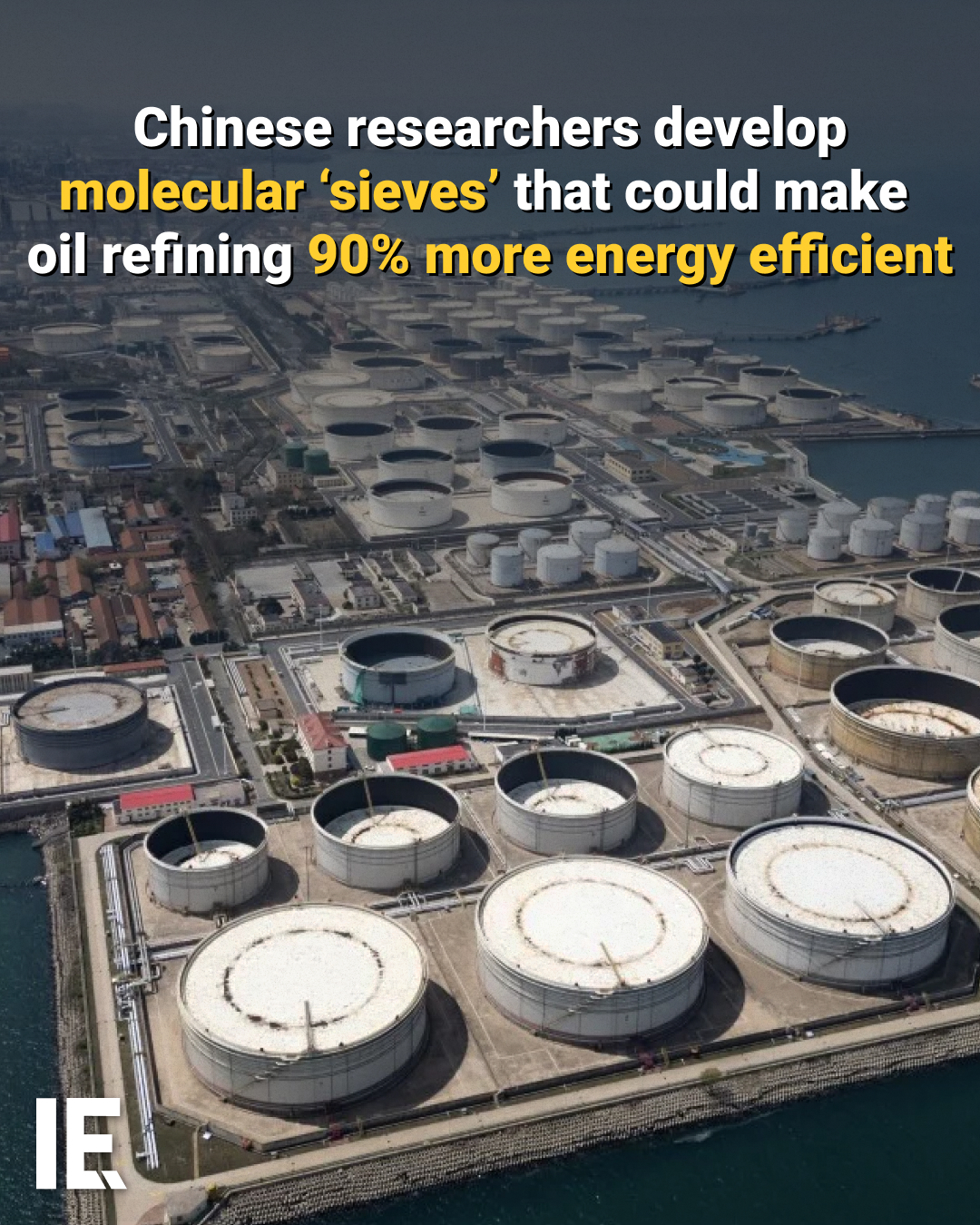
The power needed to run an oil refinery is enormous, but Chinese researchers are exploring new ways to cut that energy use. A recent breakthrough involves unique molecular tools that promise to make the refining process up to 90% more energy-efficient. The technology hinges on a molecular sieve, a recently created material that can selectively filter and purify complex mixtures.
The Refining Revolution: Potent Pores
The Chinese researchers’ innovation takes the form of a molecular sieve. These sieves operate on a nanoscale level, allowing only specific molecules to pass through while trapping others. This precise control of molecular flow can help separate desired components from crude oil without requiring intense energy inputs. The belief is that this technique can significantly reduce the amount of energy required to refine crude oil into usable products. This has the potential for a sweeping impact across the energy sector with China's move. The oil refining sector is both energy- and capital-intensive, and so the prospect of reducing the energy footprint of oil refining processes as much as 90% is a monumental step for the world's top energy consumers. The principle behind molecular sieves isn't entirely new. They’re used in various industrial processes, including water purification and petrochemical separation. Yet, the molecular sieve technology needed for refining the way the Chinese researchers have developed it, has unveiled a breakthrough that sets apart their refinement method. What makes this method extraordinary is the increased efficiency and precision of refining, making it stand out from conventional techniques. The refining sector is known for its energy-guzzling nature. Anything making this process more efficient and sustainable can put a dent in its global carbon footprint.
The Climate Imperative
The significance of this breakthrough goes far beyond the refinement of oil. The oil industry is responsible for a significant portion of the world's greenhouse gas emissions. The energy required to refine crude oil alone accounts for 5 to 7% of global emissions. These molecular sieves present a potential pathway to drastically reduce this environmental impact. By making the refining process significantly more energy efficient, the researchers have found a way to decrease carbon emissions and other pollutants during oil refining, thus providing a method to make this sector suck up less energy. In addition, they could also save millions in fuel costs. This breakthrough is expected to push this technology to the forefront of industrial applications, making oil refining processes more sustainable and cost-effective. As China and the world move towards decarbonizing their economies, any technology that reduces energy consumption is bound to be welcomed, considered, and invested in. This alternative approach to refining could be a game changer for reducing oil’s environmental footprint.
The Chemistry Behind the Breakthrough
The Chinese researchers’ molecular sieves are composed of a network of nano-sized pores that work as selective filters. According to the on-screen text, these pores are precisely engineered to allow only specific molecules to pass through. The exact chemical makeup of these sieves is not explicitly detailed in the description of the breakthrough, but the source highlights the use of nano-sized pores. The molecular sieve process begins with the crude oil mixture being passed through these sieves, which selectively allow certain molecules to pass through while trapping others. This separation process optimizes the separation and purification of complex hydrocarbons found in crude oil, vastly improving the efficiency of the refining process. Any new process that makes an industry’s energy-intensive step more efficient is a big deal.
Distinguishing the Sieve
The molecular sieve technology developed by the researchers stands out because it significantly reduces the energy needed to refine crude oil into usable products compared to more energy-intensive conventional refining processes. The innovation lies in its ability to selectively filter and purify complex mixtures at a molecular level, allowing for a more controlled and efficient refining process. The main distinction is what gets filtered. This technology provides an opportunity to overhaul the refining process, making it more efficient, sustainable, and potentially less environmentally harmful by restricting the refinery's energy consumption. The traditional refining techniques involve heating crude oil at high temperatures, which consumes a great deal of energy as it requires a lot of heat, and time and can release significant greenhouse gases. In contrast, the molecular sieves developed by these researchers are designed to work at lower temperatures, reducing the energy required and thus lowering the carbon footprint of the refining process, or so it is hoped.
The Potential Impact
The molecular sieves developed by Chinese researchers have the potential to drastically reduce the energy consumption of oil refining processes, making them a significant breakthrough in the field. Refineries are among the most energy-intensive industrial facilities, using vast amounts of energy to heat and process crude oil. The implication is that the potential for efficiency gains is enormous. By introducing molecular sieves into these facilities, the researchers offer a way to reduce the energy required for refining, thereby cutting costs and emissions significantly. The efficiency gains alone would be huge, considering the scale at which oil refineries operate. Any new technology that can cut costs and emissions at this level is bound to get attention.
Beyond Energy
Refineries are not just energy-intensive; they’re also a significant source of pollutants and greenhouse gases. By reducing the energy required for refining, the molecular sieves developed by the researchers can help lower these emissions, making the refining process more environmentally friendly. Improving the efficiency of the refining process can help reduce the environmental impact of the oil industry by minimizing energy use. This breakthrough is also expected to have widespread implications for the oil and gas industry. The improved efficiency and reduced energy consumption could lead to lower operational costs and a smaller carbon footprint for refineries. This could make oil refining more sustainable and economically viable in the long run. The price of consuming less energy when treating oil is indeed lower waste and less pollution. Oil is a core part of the world's energy economy.
Environmental Implications
Environmental impact is key for this innovation. Refining crude oil is an energy-intensive process that contributes significantly to greenhouse gas emissions and other pollutants. Traditional refining methods often involve heating crude oil to very high temperatures, which consumes a great deal of energy and can release significant amounts of greenhouse gases and other pollutants. The molecular sieves developed by the researchers offer a more energy-efficient alternative, reducing the overall energy required for refining and thereby lowering the carbon footprint of the process. The molecular sieves developed by the Chinese researchers have the potential to significantly reduce the energy consumption and environmental impact of oil refining. The ability to separate and purify complex mixtures at a molecular level without the need for high temperatures could lead to a more sustainable and environmentally friendly refining process. This breakthrough could help the oil and gas industry move towards a more sustainable future by reducing emissions and improving efficiency.
Implementing the Sieve
Anyone interested in implementing the sieving technology needs to understand that adopting this technology will require investments in research and development. It is crucial to work with experts in the field of molecular engineering and materials science to develop and integrate the sieve technology into existing refining processes. Consider the following as first steps:
- Research and Development: Collaborate with experts in molecular engineering and materials science.
- Pilot Testing: Conduct pilot tests to evaluate the effectiveness and efficiency of the molecular sieve technology in real-world refining scenarios.
- Integration: Develop strategies for integrating the molecular sieve technology into existing refining processes and infrastructure.
- Regulatory Compliance: Ensure that the implementation complies with relevant regulations and industry standards.
- Cost-Benefit Analysis: Conduct a thorough cost-benefit analysis to evaluate the economic feasibility of implementing the technology.
Sifting the Future
Refining crude oil is a process that has enormous energy costs. The breakthrough by the Chinese researchers who have developed molecular sieves hold the promise of enormous efficiency gains. With a potential 90% reduction in energy consumption, these sieves could revolutionize the industry and show the world how to refine oil with far less energy. No one would be surprised if this technology finds use in other energy-intensive industries.
Watch the Reel
Questions readers ask
What exactly are molecular sieves and how do they work in oil refining?
Molecular sieves are materials with tiny, precisely engineered pores that allow only specific molecules to pass through. In oil refining, these sieves can separate desired components from crude oil with high precision, reducing the energy needed for the process. The Chinese researchers’ innovation lies in creating molecular sieves that can make oil refining up to 90% more energy-efficient.
How does this new technology compare to traditional oil refining methods?
Traditional oil refining methods are energy-intensive and often less precise. The new molecular sieve technology developed by Chinese researchers offers a significant improvement by allowing for more efficient and precise separation of crude oil components, which can reduce the energy required for refining by up to 90%.
What are the potential environmental benefits of using these molecular sieves in oil refining?
These molecular sieves can significantly reduce the energy needed for oil refining, which in turn lowers greenhouse gas emissions and other pollutants. The oil industry is a major contributor to global emissions, so this breakthrough could help decrease the sector’s carbon footprint and make it more sustainable. It could also save millions in fuel costs.
Where does China stand in terms of implementing this technology?
China, being one of the world's top energy consumers, is likely to adopt this technology quickly. The breakthrough is expected to push the technology to the forefront of industrial applications. As the country moves towards decarbonizing its economy, this technology could be a game-changer for reducing oil’s environmental footprint and making the refining process more sustainable and cost-effective.
Can this technology be applied to other industries besides oil refining?
Yes, the principle behind molecular sieves isn't entirely new and they are already used in various industrial processes, including water purification and petrochemical separation. The breakthrough by the Chinese researchers, however, has made it even more efficient and precise, which could make it applicable to other industries looking to improve their energy efficiency.
Related deep dives
Similar reads based on topic and creator.




Recent articles
Fresh deep dives from the latest Reels we unpacked.




Comments
Be the first to comment.