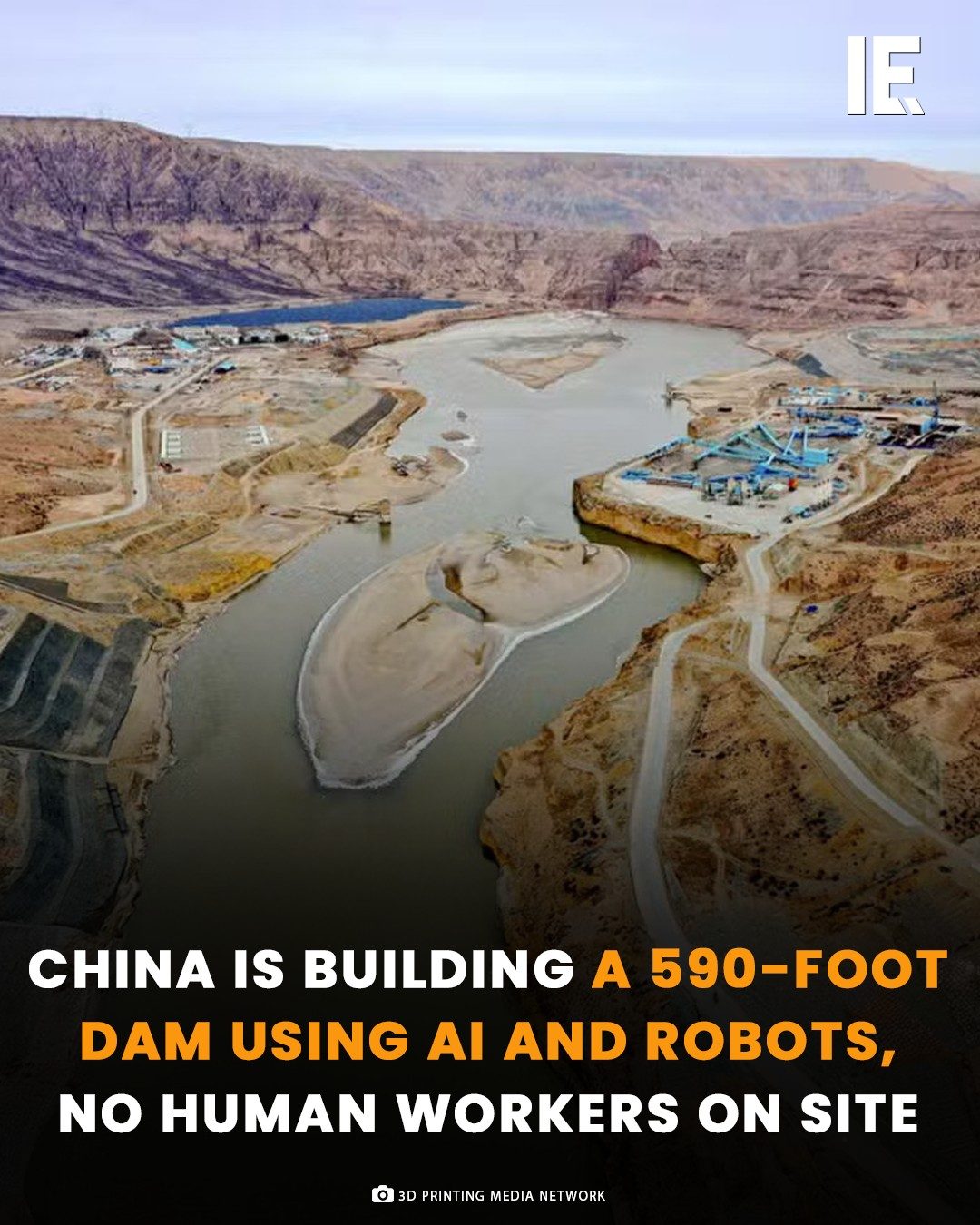
Dam Construction with AI and Robots
On the Tibetan Plateau, China is pioneering a revolutionary approach to dam construction with the Yangqu Dam, a 180-meter (590-foot) hydropower facility. This project is entirely automated, utilizing AI-controlled robots and 3D printing techniques to assemble the dam layer by layer. This method not only speeds up the construction process but also eliminates the need for human labor on-site, marking a significant advancement in construction technology.
Context / Why this matters
The Yangqu Dam project is more than just a technological feat; it represents a shift towards more efficient and safer construction methods. By leveraging AI and robotics, the construction process becomes more precise and less prone to human error. Additionally, the absence of human workers on-site reduces the risk of accidents and ensures that the project can proceed without interruptions.
This innovative approach also aligns with China's renewable energy goals. Once completed, the Yangqu Dam is expected to generate approximately 5 billion kilowatt-hours of electricity annually, contributing significantly to the country's green energy initiatives.
Main discussion
The Role of AI in Dam Construction
AI plays a crucial role in the construction of the Yangqu Dam. It oversees the entire process, from initial planning to final assembly. AI algorithms are used to design the dam's structure, ensuring optimal efficiency and stability. During construction, AI systems monitor the progress, making real-time adjustments to ensure that everything runs smoothly.
3D Printing Techniques
3D printing technology is another key component of this project. It allows for the precise layer-by-layer construction of the dam, ensuring that each layer is perfectly aligned with the previous one. This method not only speeds up the construction process but also ensures that the dam is built to the highest standards of quality and durability.
Robots in Construction
The use of robots in construction is not new, but their role in the Yangqu Dam project is unprecedented. These robots, controlled by AI, handle all the heavy lifting and intricate tasks required for dam construction. They work tirelessly, ensuring that the project stays on schedule and within budget. The absence of human workers on-site also means that the construction process can continue around the clock, further accelerating progress.
Benefits of Autonomous Construction
The autonomous construction method used in the Yangqu Dam project offers several benefits. Firstly, it significantly reduces the risk of accidents and injuries, as there are no human workers on-site. Secondly, it ensures that the project stays on schedule and within budget, as robots can work continuously without the need for breaks or shifts. Finally, it allows for greater precision and accuracy in the construction process, resulting in a more reliable and durable structure.
Environmental Impact
One of the most significant advantages of the Yangqu Dam project is its environmental impact. By generating approximately 5 billion kilowatt-hours of electricity annually, the dam will contribute significantly to China's renewable energy goals. Additionally, the use of AI and robotics in construction reduces the carbon footprint of the project, as these technologies are more energy-efficient than traditional construction methods.
Practical tips
For Infrastructure Projects
For those involved in infrastructure projects, the Yangqu Dam project offers several practical tips. Firstly, consider the use of AI and robotics to automate tasks and reduce the need for human labor. This can not only speed up the construction process but also ensure greater precision and accuracy. Secondly, leverage 3D printing technology for precise layer-by-layer construction, ensuring that each layer is perfectly aligned with the previous one.
For Energy Generation
For those involved in energy generation, the Yangqu Dam project highlights the potential of hydropower. Hydropower is a renewable and sustainable source of energy, and the Yangqu Dam project demonstrates how AI and robotics can be used to build large-scale hydropower facilities more efficiently.
Important takeaways
- The Yangqu Dam project is a pioneering effort in using AI and robotics for large-scale infrastructure projects.
- AI and robotics can significantly reduce the risk of accidents and injuries, as well as ensure greater precision and accuracy in construction.
- The use of 3D printing technology allows for precise layer-by-layer construction, ensuring high-quality and durability.
- The Yangqu Dam project is expected to generate approximately 5 billion kilowatt-hours of electricity annually, contributing significantly to China's renewable energy goals.
- Autonomous construction methods offer several benefits, including reduced risk of accidents, greater precision, and continuous operation.
Conclusion
The Yangqu Dam project on the Tibetan Plateau is a testament to the potential of AI and robotics in large-scale infrastructure projects. By leveraging these technologies, China is not only building a state-of-the-art hydropower facility but also setting a new standard for efficient, safe, and sustainable construction. As we move forward, it is likely that we will see more projects like this, utilizing AI and robotics to revolutionize the way we build our infrastructure.
Watch the Reel
Questions readers ask
What is the significance of the Yangqu Dam project in China?
The Yangqu Dam project is significant because it showcases the use of AI and robotics in large-scale dam construction. This approach enhances safety and efficiency by automating the process and minimizing the need for human labor. The project is a key milestone in China's renewable energy goals, making it more than just a technical achievement.
How do AI-controlled robots contribute to the construction of the Yangqu Dam?
AI-controlled robots play a crucial role in the Yangqu Dam's construction by automating the assembly of the 590-foot structure. They work alongside 3D printing techniques to build the dam layer by layer, ensuring precision and speed, and significantly reducing the likelihood of human error.
What are the benefits of using 3D printing in the construction of the Yangqu Dam?
The use of 3D printing in the Yangqu Dam's construction allows for precise and efficient layering of the dam. This technique reduces the need for manual labor on-site, thereby enhancing safety and accelerating the construction timeline.
What safety advantages does the automated construction method offer?
The automated construction method of the Yangqu Dam offers significant safety advantages by eliminating the need for human labor in potentially hazardous conditions, like in remote areas of the Tibetan Plateau. This reduces the risk of accidents and injuries on-site.
How does the Yangqu Dam project advance China's renewable energy goals?
The Yangqu Dam project advances China's renewable energy goals by demonstrating a more efficient and safer method of constructing large-scale hydropower facilities. This makes it easier to build more dams, increasing China's hydropower capacity and overall renewable energy output.
What is the role of AI in the construction of the Yangqu Dam?
AI is integral to the construction of the Yangqu Dam, as it controls the robots and 3D printing processes. It ensures precision and efficiency by coordinating the robots' movements and the layering process, optimizing the overall construction timeline and accuracy.
What are the potential impacts of the Yangqu Dam's construction methods on future hydro power projects?
The construction methods used in the Yangqu Dam project could set a new standard for future hydro power projects. By proving the feasibility and benefits of AI and robotics in dam construction, it paves the way for more efficient, safe, and precise large-scale hydropower construction globally.
Related deep dives
Similar reads based on topic and creator.


Recent articles
Fresh deep dives from the latest Reels we unpacked.




Comments
Be the first to comment.