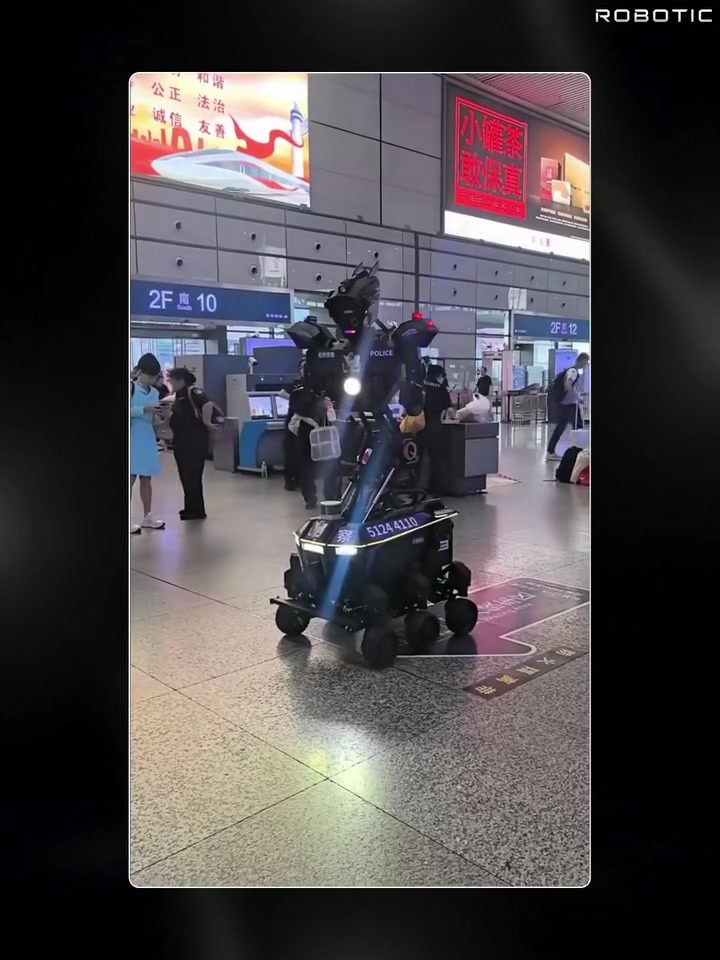
Robotic Police Officers: Enhancing Public Safety in Crowded Spaces
Robotic police officers are revolutionizing public safety operations in crowded spaces, particularly in countries like China. These advanced security robots, equipped with cameras, sensors, and AI-powered navigation, are designed to patrol busy areas and assist human officers by enhancing situational awareness.
Why This Matters
The integration of robotics into public safety is more than just a technological marvel; it's a strategic move to address the challenges of maintaining public safety in densely populated areas. With the ability to autonomously navigate through crowds, these robots can monitor surroundings, detect anomalies, and provide real-time information to human officers. This technological advancement is not just about efficiency; it's about creating a safer environment for everyone.
Main Discussion
The Technology Behind Robotic Police Officers
Robotic police officers are equipped with a range of advanced technologies that enable them to function effectively in public spaces:
-
Cameras and Sensors: These robots are outfitted with high-definition cameras and various sensors that allow them to capture detailed visual data and detect environmental changes. This technology is crucial for monitoring activities and identifying potential threats.
-
AI-Powered Navigation: Autonomous navigation systems enable these robots to move through crowded areas without human intervention. AI algorithms help them avoid obstacles, navigate through complex environments, and optimize their routes for maximum coverage.
-
Situational Awareness: By continuously analyzing the data collected from their sensors and cameras, these robots can provide real-time updates to human officers. This enhances the overall situational awareness, allowing for quicker responses to emergencies and more effective crowd management.
Use Cases and Applications
Robotic police officers are particularly useful in environments where large crowds gather, such as airports, train stations, and public events. Their ability to monitor these spaces and detect anomalies can significantly enhance public safety. Here are some key applications:
-
Airports and Train Stations: These are high-traffic areas where maintaining security is a priority. Robotic police officers can patrol these spaces, monitoring for any suspicious activities and ensuring that safety protocols are followed.
-
Public Events: Large gatherings like concerts, festivals, and sporting events benefit from the presence of these robots. They can help manage crowds, detect potential threats, and provide real-time updates to event organizers and law enforcement.
The Role in Enhancing Public Safety
The primary goal of deploying robotic police officers is to enhance public safety. By integrating these robots into everyday public services, authorities can achieve several objectives:
-
Enhanced Surveillance: Robots equipped with cameras and sensors can provide continuous surveillance, ensuring that every corner of a public space is monitored.
-
Improved Response Times: Real-time data collection and analysis enable quicker responses to emergencies. This can be crucial in situations where every second counts.
-
Supporting Human Officers: While these robots do not replace human officers, they complement their work by handling routine tasks and freeing up human resources for more critical interventions.
Practical Tips
For cities considering the deployment of robotic police officers, there are a few practical tips to keep in mind:
-
Invest in Training: Ensure that law enforcement personnel are well-trained in using and managing these robots. Understanding how to interpret the data they provide and coordinating with them effectively is crucial.
-
Community Engagement: Engage with the community to explain the benefits and limitations of these robots. Building public trust and understanding can mitigate concerns about surveillance and privacy.
-
Maintenance and Upgrades: Regular maintenance and software updates are essential to keep the robots functioning optimally. Staying current with the latest technological advancements can also enhance their effectiveness.
Important Takeaways
The deployment of robotic police officers represents a significant step forward in public safety and security. By leveraging advanced technologies, these robots can enhance situational awareness, improve response times, and support human officers in their duties. However, their success depends on effective integration, community engagement, and continuous improvement.
Conclusion
As cities around the world explore the potential of autonomous systems in public safety, the use of robotic police officers is a promising avenue. Their ability to patrol crowded spaces, monitor activities, and provide real-time updates can significantly enhance public safety. By embracing this technology and continuously improving its capabilities, we can create a safer and more secure environment for everyone.
Watch the Reel
Questions readers ask
How do AI-powered robotic police officers assist human officers in China?
AI-powered robotic police officers in China assist human officers by providing real-time monitoring and situational awareness. They use advanced sensors and cameras to detect anomalies and potential threats, helping human officers respond more effectively in crowded spaces.
Can these robotic police navigate through crowded areas autonomously?
Yes, these robotic police officers are equipped with AI-powered navigation systems that allow them to autonomously navigate through crowded areas. This capability enables them to patrol busy spaces and assist human officers more efficiently.
What types of sensors are used in these robotic police officers?
These robotic police are equipped with a variety of sensors, including cameras and other devices that help them detect anomalies, monitor surroundings, and collect data. This information is then used to enhance public safety and situational awareness.
How do robotic police officers enhance situational awareness in public spaces?
Robotic police officers enhance situational awareness by continuously monitoring their surroundings and collecting data. They use this data to detect potential threats and provide real-time updates to human officers, helping to improve overall public safety in crowded areas.
What are the benefits of deploying AI-powered police robots in public safety operations?
Deploying AI-powered police robots in public safety operations helps to reduce the workload on human officers and improve overall efficiency. These robots can autonomously patrol and monitor areas, providing real-time data and quickly responding to potential threats.
Related deep dives
Similar reads based on topic and creator.



Recent articles
Fresh deep dives from the latest Reels we unpacked.




Comments
Be the first to comment.