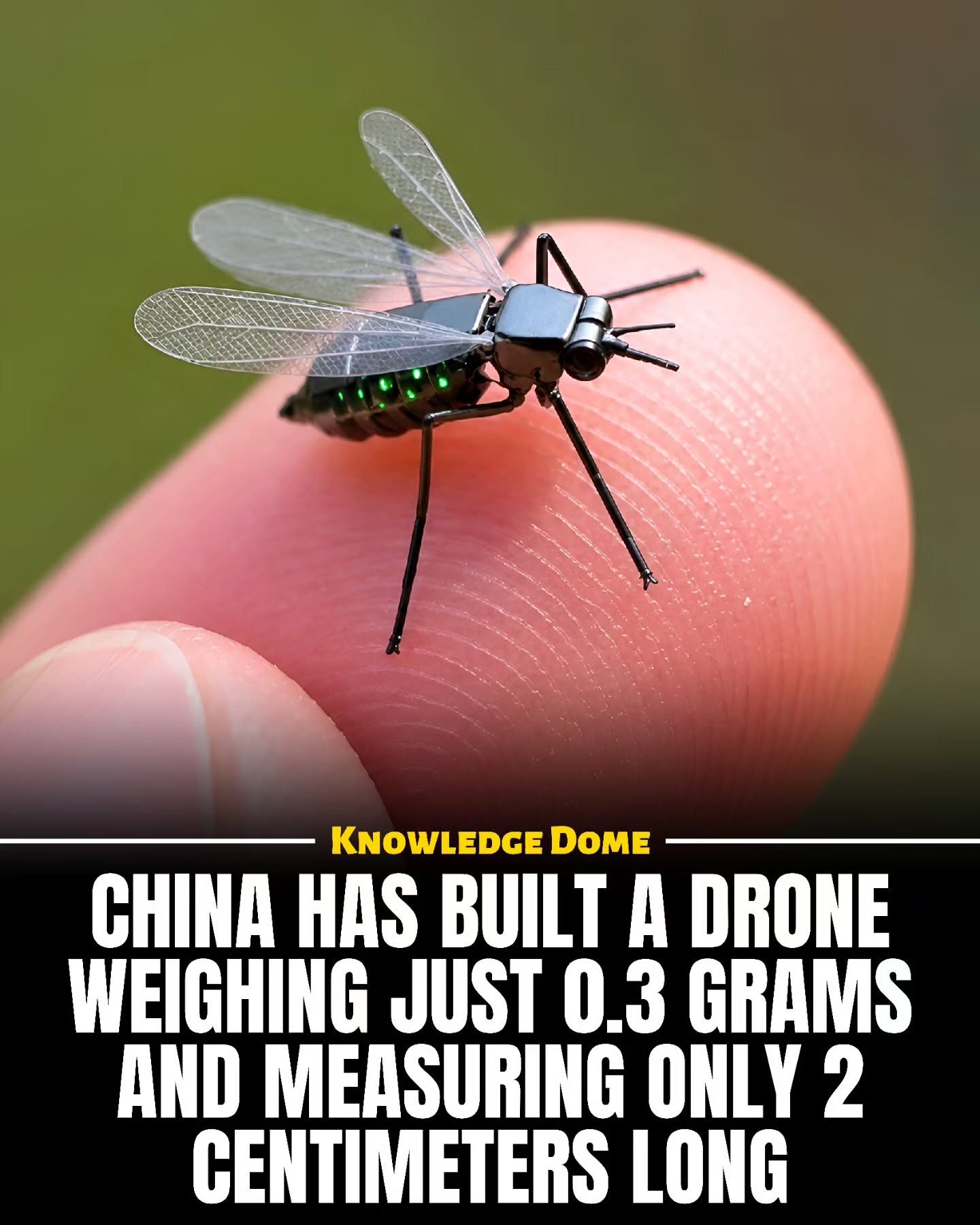
The Tiny Marvel: China's 0.3-Gram Drone
At under 2 centimeters in length and weighing less than 0.3 grams, this miniature drone is pushing the boundaries of what's possible in micro-robotics and drone technology. Developed by the National University of Defense Technology in China, this tiny marvel is designed to look like a mosquito, complete with tiny flapping wings that move around 500 times every second. Its diminutive size and insect-like appearance make it incredibly hard to detect with normal radar systems, positioning it as a potential game-changer for secret military operations and spying missions.
Its size is not the only remarkable feature. The drone's design, inspired by real insects, includes thin legs and wings that help it blend in with its surroundings, making it almost undetectable. Additionally, its light weight and small size make it extremely maneuverable, allowing it to navigate through tight spaces and fly in a way that mimics real insects.
The Challenges and Limitations
While the drone's potential is vast, it's not without its limitations. The primary challenge is power. Due to its small size, the drone cannot carry a large battery, which means its flight time and travel distance are severely limited. This constraint is a significant hurdle for military applications, where endurance is often crucial.
Researchers are exploring various solutions to this problem. One promising avenue is the development of more efficient power sources, such as advanced micro-batteries or even solar-powered systems. Another approach is to design the drone to perform its tasks quickly and efficiently, minimizing the time it spends in the air.
The Future of Micro-Drones
The development of this miniature drone by China is a significant step forward in the field of micro-robotics. It shows how quickly technology is advancing, with other countries also working on similar projects. For instance, researchers in the United States and Europe are developing tiny flying robots inspired by insects, which could be used for a variety of applications, from surveillance and reconnaissance to environmental monitoring and search and rescue.
The military applications of such drones are obvious, but their potential extends far beyond that. Imagine a tiny drone that can navigate through collapsed buildings to find survivors, or one that can monitor air quality in hard-to-reach areas. The possibilities are endless, and the development of this drone by China is a clear indication that we are on the cusp of a new era in drone technology.
Powering the Future
One of the biggest hurdles for drone technology, especially for smaller models, is power. Traditional batteries have limited capacity, and their size and weight are direct factors in a drone's performance. However, advancements in battery technology are offering new possibilities. Lighter, more efficient batteries, or the use of alternative power sources like solar energy, could significantly extend flight times and operating ranges.
But the power problem isn't just about batteries. Efficient energy management and control algorithms can also play a crucial role. Designing drones that can optimize their energy use, even under varying conditions, is a critical area of research. Techniques such as adaptive flight paths and energy-harvesting mechanisms could further enhance the drone's operational capabilities.
Practical Tips for Design and Development
For those working on drone technology or micro-robotics, the development of this tiny drone offers several practical insights:
-
Design for Efficiency: Every component of the drone, from its wings to its control systems, must be designed with efficiency in mind. This includes reducing weight, improving aerodynamic performance, and optimizing energy use.
-
Inspire Nature: Nature has provided us with numerous examples of efficient flight, from the wings of a mosquito to the agility of a dragonfly. Drawing inspiration from these natural designs can help in creating more effective and efficient micro-drones.
-
Focus on Power: While advancements in battery technology are crucial, the overall power system must be designed with efficiency in mind. This includes not only the power source but also how energy is managed and used.
-
Test Extensively: The challenges of power and maneuverability can only be fully understood through extensive testing. Prototypes should be tested in various conditions to ensure they can perform as intended.
-
Think Beyond the Military: While military applications are a clear focus, the potential for small drones extends far beyond that. Exploring applications in environmental monitoring, search and rescue, and other fields can open new avenues for innovation.
Important Takeaways
The development of this miniature drone by China is a significant milestone in the world of micro-robotics and drone technology. It highlights several key points:
-
Rapid Advancements: The pace of technological development is accelerating, with new innovations constantly pushing the boundaries of what's possible.
-
Power Challenges: While the possibilities are vast, the limitations of current power sources remain a significant challenge. Overcoming this hurdle will be crucial for the future of drone technology.
-
Inspiration from Nature: Nature offers numerous examples of efficient flight and movement. Drawing inspiration from these natural designs can lead to more effective and efficient drones.
-
Broad Applications: The potential applications for drones extend far beyond military use. From environmental monitoring to search and rescue, the possibilities are vast and varied.
-
Global Competition: The development of this drone by China is a clear sign that the race to develop the best drone technology is global. Other countries are also making significant strides in this area, and the competition is likely to drive even more rapid advancements.
Conclusion
The tiny drone developed by China is more than just a technological marvel; it's a glimpse into the future of drone technology. Its design, inspired by nature, and its potential applications, from military operations to environmental monitoring, showcase the vast possibilities of this field. While challenges like power limitations remain, the rapid pace of innovation and the global competition in this area suggest that we are on the brink of a new era in micro-robotics. As researchers and engineers continue to push the boundaries of what's possible, the future of drone technology looks brighter and more exciting than ever before.
Watch the Reel
Questions readers ask
What makes the mosquito drone developed by China so unique and challenging to detect?
The mosquito drone's uniqueness lies in its incredibly small size, measuring under 2 centimeters and weighing less than 0.3 grams. It mimics the appearance and flight behavior of a real mosquito, making it nearly undetectable by standard radar systems, which are typically designed to detect larger objects.
Who developed the mosquito drone and what is its primary purpose?
The mosquito drone was developed by the National University of Defense Technology in China. Its primary purpose is to revolutionize military operations, particularly in the realm of covert surveillance and spying, due to its near-undetectable size and insect-like appearance.
How does the mosquito drone's design help it blend in with its surroundings?
The design of the mosquito drone is inspired by real insects, featuring thin legs and wings that allow it to navigate small spaces and mimic insect behavior. These features help it to blend seamlessly with its environment, making it difficult to distinguish from actual insects.
What are some of the challenges faced in the development of the mosquito drone?
One of the main challenges in the development of the mosquito drone is its power limitations. Researchers are working on ways to extend its power supply to ensure that it can perform its intended tasks effectively. The drone's wings beat around 500 times per second, which requires a significant amount of energy.
What advantages does the mosquito drone offer for military operations?
The mosquito drone offers several advantages for military operations, including its ability to navigate small, confined spaces and its near-undetectable size and appearance. These features make it an ideal tool for covert surveillance and spying, allowing it to gather information without being easily detected or intercepted.
How does the mosquito drone's navigation technology work?
The mosquito drone's navigation technology is inspired by the way insects move and navigate. This allows the drone to maneuver through small, complex environments, making it an asset for covert operations. The drone's insect-like behavior and design help it to move through spaces that larger drones could not access.
How does the mosquito drone's size compare to other drone technologies?
The mosquito drone is currently the smallest drone in the world, weighing less than 0.3 grams and measuring under 2 centimeters in length. This makes it significantly smaller than other drone technologies, which typically range from a few centimeters to several meters in size, depending on their intended use.
Related deep dives
Similar reads based on topic and creator.

Recent articles
Fresh deep dives from the latest Reels we unpacked.




Comments
Be the first to comment.