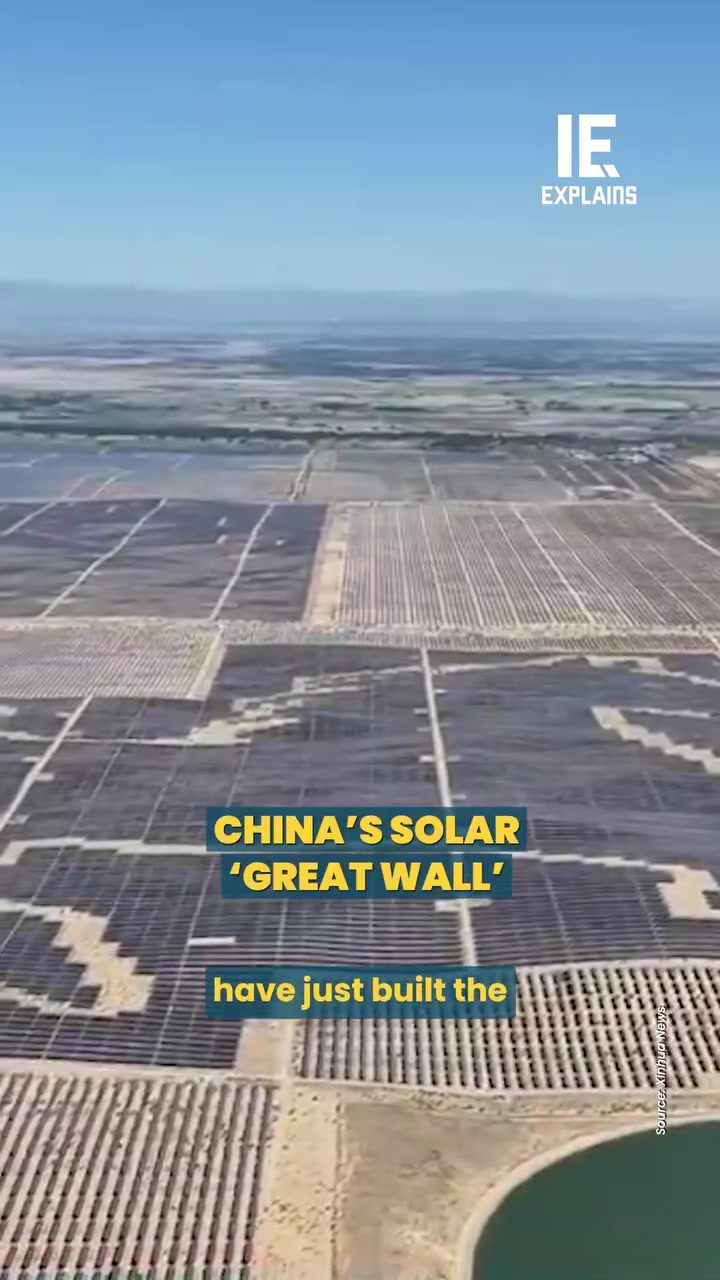
China's Solar 'Great Wall'
China is constructing an ambitious solar project in Inner Mongolia's Kubuqi Desert, known as the "Solar Great Wall." This massive undertaking involves a vast array of solar panels stretching 400 kilometers in length and 5 kilometers in width. By 2030, the project aims to achieve an impressive 100 gigawatts of solar capacity, supplying clean energy to Beijing.
Why This Matters
The Solar Great Wall is more than just an engineering marvel; it represents a significant step forward in renewable energy adoption and environmental conservation. This project demonstrates China's commitment to reducing its reliance on fossil fuels and mitigating the effects of climate change.
The Project: Details and Scale
Location and Size
Situated in the Kubuqi Desert, one of the fastest-moving deserts on Earth, the Solar Great Wall is a strategic choice for harnessing solar energy. The desert's expansive and relatively uninhabited landscape provides ample space for such a colossal project. The 400-kilometer-long and 5-kilometer-wide array of solar panels creates a visually stunning and environmentally impactful landscape.
Capacity and Output
The project, formally known as the Kubuqi Desert Ordos Central Northern New Energy Base, is designed to generate 100 gigawatts of solar capacity. By early 2025, approximately 5.4 gigawatts were already operational, and the base has continued to expand. Once complete, the base will supply around 40 billion kilowatt-hours of electricity annually to the Beijing region, significantly reducing the area's dependence on fossil fuels.
Environmental Impact
One of the most remarkable aspects of the Solar Great Wall is its environmental duality. The solar panels not only generate clean energy but also mitigate desertification. By shading the sand, the panels create conditions favorable for the growth of shrubs and other vegetation beneath them. This stabilizes the dunes, preventing the desert from expanding and helping to "green" the region, transforming what has been dubbed a "sea of death" into a more habitable and eco-friendly landscape.
Practical Tips for Understanding the Scale
To grasp the enormity and impact of the Solar Great Wall, consider the following points:
- Visualizing the Size: Imagine a band of solar panels stretching as long as the distance from New York City to Philadelphia. That's roughly 400 kilometers, the length of the Solar Great Wall.
- Electricity Generation: The 100 gigawatts of capacity by 2030 is enough to power a significant portion of Beijing, potentially powering millions of homes and businesses.
- Environmental Benefits: The project will save roughly 6 million tons of coal annually, a staggering reduction in carbon emissions and a significant step towards sustainable energy production.
Important Takeaways
The Solar Great Wall is a testament to the potential of renewable energy projects on a grand scale. Here are the key takeaways:
- Solar Energy Potential: The project showcases the vast potential of solar energy in regions with abundant sunlight, even in challenging environments like deserts.
- Environmental Benefits: Beyond energy generation, the project contributes to environmental conservation by combating desertification and reducing reliance on fossil fuels.
- Technological and Engineering Marvel: The scale and complexity of the project highlight advancements in renewable energy technology and engineering capabilities.
Conclusion
China's Solar Great Wall in Inner Mongolia's Kubuqi Desert is a monumental undertaking that not only aims to meet a significant portion of Beijing's energy needs but also serves as a model for large-scale renewable energy projects. By harnessing the power of the sun and combating desertification, this project underscores the potential of solar energy in transforming both energy landscapes and environmental conditions. The Solar Great Wall is a pioneering step towards a greener, more sustainable future, demonstrating the incredible achievements possible when technology and environmental stewardship converge.
Watch the Reel
Questions readers ask
What is the 'Solar Great Wall' and where is it being built?
The 'Solar Great Wall' is a vast solar power project being constructed in the Kubuqi Desert, located in Inner Mongolia, China. It spans 400 kilometers in length and 5 kilometers in width, making it one of the largest solar installations in the world.
How much energy will the Solar Great Wall produce?
The Solar Great Wall aims to generate 100 gigawatts of solar capacity, producing approximately 40 billion kilowatt-hours of electricity annually. This significant amount of clean energy will be supplied to Beijing by 2030.
What is the main goal of the Solar Great Wall project?
The primary goal of the Solar Great Wall is to supply Beijing with a substantial amount of clean energy, reducing the city's dependence on fossil fuels. Additionally, the project supports China's broader efforts to combat climate change and transition to renewable energy sources.
Why was the Kubuqi Desert chosen for this solar project?
The Kubuqi Desert was selected due to its vast, uninhabited space and abundant sunlight, which are ideal conditions for large-scale solar panel deployment. The desert's terrain and climate allow for efficient solar energy generation.
What are the benefits of large-scale solar projects like the Solar Great Wall?
Large-scale solar projects offer numerous benefits, including reduced greenhouse gas emissions, decreased reliance on fossil fuels, and the creation of jobs in the renewable energy sector. Additionally, such projects can drive technological advancements and inspire other countries to invest in solar power.
Is the Solar Great Wall project part of a larger renewable energy initiative in China?
Yes, the Solar Great Wall is a key component of China's broader renewable energy strategy. China aims to expand its solar energy capabilities significantly by 2030 and has set a goal of 100 gigawatts of solar capacity for this project alone.
Related deep dives
Similar reads based on topic and creator.


Recent articles
Fresh deep dives from the latest Reels we unpacked.




Comments
Be the first to comment.