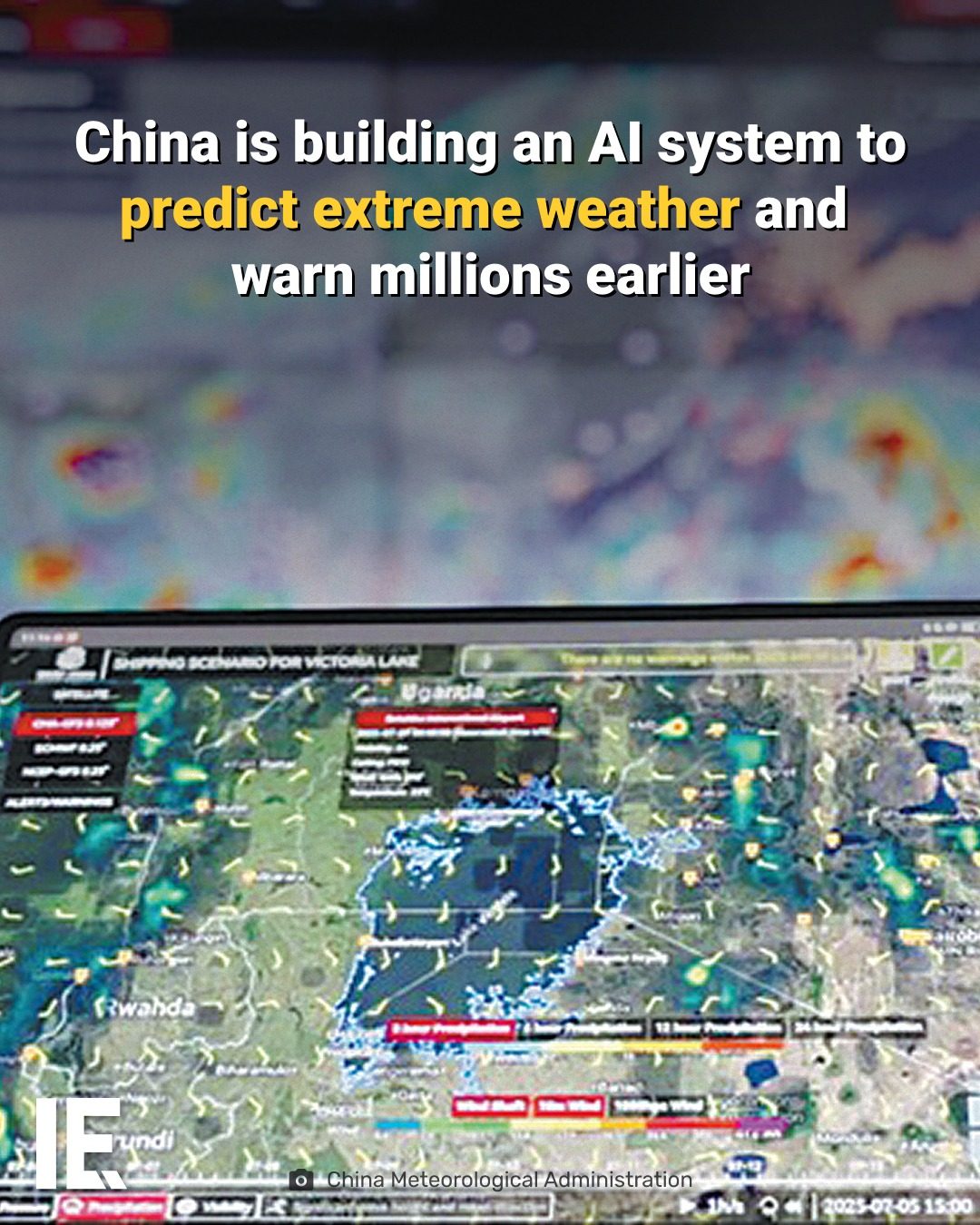
AI in Weather Prediction: Revolutionizing Extreme Weather Alerts
China has launched an ambitious AI-powered global early warning project, aimed at enhancing forecasts for extreme weather events. This initiative by the China Meteorological Administration (CMA) combines multiple AI models, including real-time forecasting and data fusion, to deliver faster and more accurate alerts. The system is designed to provide early warnings for events like floods and storms, potentially impacting millions of lives across multiple countries.
Context / Why This Matters
The development of AI in weather prediction isn't just about improving forecast accuracy; it's about saving lives. Extreme weather events are becoming more frequent and intense due to climate change. Early warning systems can provide crucial time for communities to prepare and respond, minimizing the impact of these disasters. By integrating AI, prediction models can process vast amounts of data more efficiently, offering more precise and timely alerts.
Main Discussion
The Technology Behind AI Weather Prediction
The AI system developed by the CMA leverages several advanced technologies to enhance weather prediction:
-
Real-Time Forecasting: Traditional forecasting methods often rely on historical data, which can limit their accuracy in predicting sudden or unusual weather patterns. Real-time forecasting uses current data to provide up-to-date predictions, making it easier to anticipate sudden changes in weather conditions.
-
Data Fusion: This technique involves combining data from various sources, such as satellite imagery, ground sensors, and weather stations. By integrating this diverse data, the AI can create a more comprehensive and accurate model of weather patterns, allowing for better predictions.
-
Machine Learning Algorithms: These algorithms can analyze large datasets to identify patterns and trends. Over time, they learn to improve their predictions, making the system more reliable and precise.
Applications and Impact
The AI system is designed to be versatile, with applications ranging from local weather alerts to global disaster response. Here are a few key areas where this technology can make a significant impact:
Flood and Storm Prediction
Floods and storms are among the most destructive weather events, causing significant damage and loss of life. By providing early warnings, the AI system can help communities evacuate in time, reducing the risk of fatalities and property damage. Precise prediction models can also inform emergency response teams, ensuring they are deployed efficiently.
Shipping and Maritime Safety
The system's ability to predict weather patterns over specific regions, such as Victoria Lake in Uganda, demonstrates its potential for maritime safety. Precipitation data for different time periods can help shipping companies plan their routes and prepare for adverse weather conditions, minimizing risks and ensuring smooth operations.
Climate Research
Beyond immediate disaster response, the data collected and analyzed by the AI system can contribute to broader climate research. By tracking changes in weather patterns over time, scientists can gain insights into larger climate trends, helping to develop strategies for long-term climate resilience.
Practical Tips
For those interested in leveraging AI for weather prediction, here are some practical tips:
-
Invest in High-Quality Data Sources: The accuracy of AI predictions heavily relies on the quality and diversity of the data inputs. Invest in reliable data sources, including satellite imagery, weather stations, and IoT sensors.
-
Integrate Multiple AI Models: Using a combination of AI models can enhance the overall accuracy of predictions. Each model may excel in different aspects, such as real-time forecasting or data fusion, so integrating them can provide a more comprehensive solution.
-
Continuous Learning and Updating: AI models need to be continuously updated with new data to maintain their accuracy. Implement a system for regular data updates and model retraining to ensure the predictions remain reliable.
Important Takeaways
AI is transforming the field of weather prediction, making it more accurate and reliable. The CMA's initiative showcases the potential of AI in providing early warnings for extreme weather events, which can save lives and mitigate disaster impacts. By integrating real-time forecasting, data fusion, and machine learning, this technology offers a robust solution for predicting and preparing for severe weather conditions.
Conclusion
The integration of AI in weather prediction is a significant step forward in disaster management. With systems like the one developed by the China Meteorological Administration, communities can better prepare for and respond to extreme weather events. As technology continues to evolve, the potential for AI in weather prediction is vast, paving the way for more accurate and timely alerts that can save lives and protect property. This kind of advancement underscores the importance of investing in and leveraging AI for critical applications like weather forecasting.
Watch the Reel
Questions readers ask
How does China's AI weather alert system improve forecast accuracy?
China's AI weather alert system enhances forecast accuracy by processing vast amounts of real-time weather data and adapting to sudden changes in weather conditions. This allows for more precise predictions of extreme weather events, such as floods and storms.
What role does data fusion play in China's AI-powered weather alert system?
Data fusion in China's AI weather alert system involves merging multiple sources of data to create a comprehensive view of weather conditions. This integration helps the AI models to generate more accurate and reliable alerts by considering a wide range of environmental factors.
Which weather events can be predicted more accurately using this AI system?
The AI system is particularly effective in predicting and providing early warnings for extreme weather events such as floods, storms, and heavy precipitation. By analyzing real-time data, the system can quickly detect and alert authorities to imminent dangers, allowing for timely responses.
How does the AI weather alert system benefit communities in multiple countries?
The AI weather alert system can benefit communities across multiple countries by delivering rapid and precise alerts, enabling quicker responses to extreme weather events. This can help reduce the impact of these events, which are becoming more frequent and intense due to climate change.
What makes the China Meteorological Administration's (CMA) AI weather alert system unique?
The CMA’s AI weather alert system stands out due to its use of multiple AI models, real-time data processing, and adaptive forecasting capabilities. This approach ensures that the system can deliver faster, more accurate alerts compared to traditional forecasting methods.
How does the AI system adapt to sudden changes in weather conditions?
The AI system is designed to continuously analyze and integrate real-time weather data, allowing it to quickly adapt to any sudden changes in weather conditions. This adaptability is crucial for providing timely and accurate alerts, especially during rapidly evolving extreme weather events.
What are the key components of the AI weather alert system developed by China?
The AI weather alert system developed by China includes real-time forecasting, data fusion, and multiple AI models. These components work together to process vast amounts of weather data, adapt to sudden changes, and deliver rapid, precise alerts for extreme weather conditions.
Related deep dives
Similar reads based on topic and creator.



Recent articles
Fresh deep dives from the latest Reels we unpacked.




Comments
Be the first to comment.