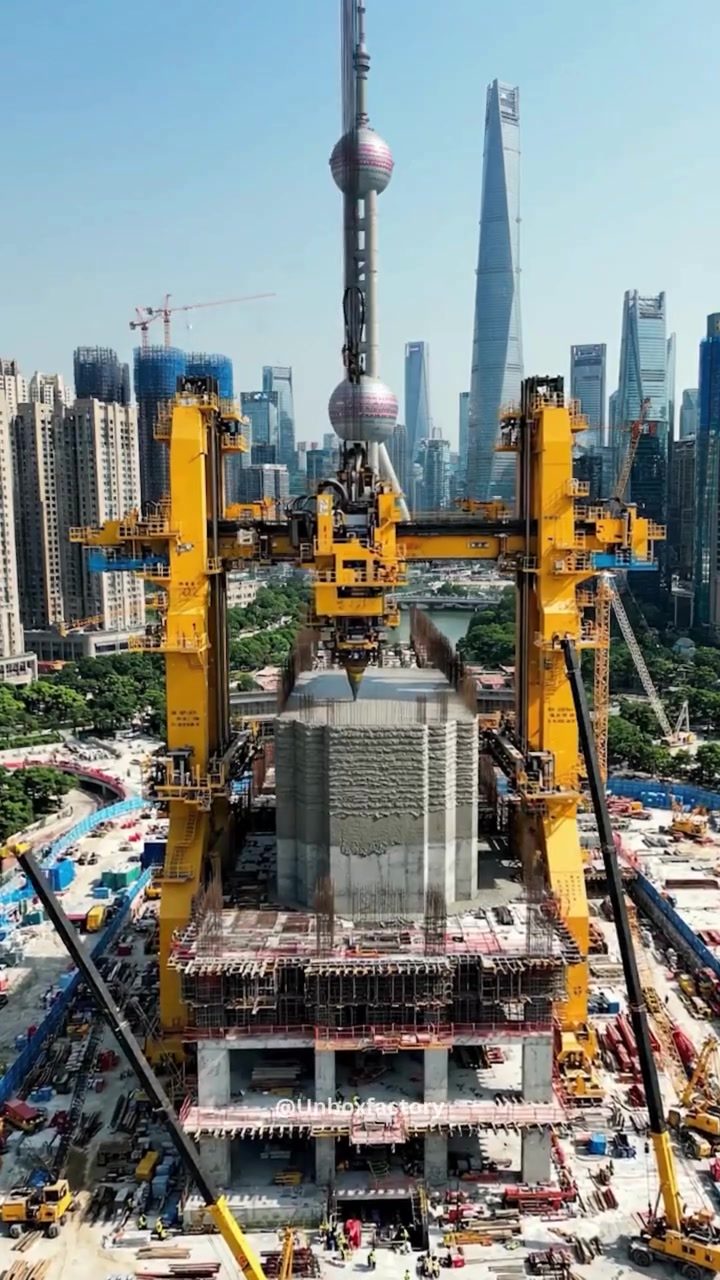
The 3D-Printed 100-Story Skyscraper Under Construction in China
A groundbreaking project is underway in China, where the world's first 100-story building is being constructed using large-scale 3D concrete printing. This initiative is pushing the boundaries of additive construction, transitioning from single-story demonstration homes to genuine high-rise structures.
Why This Matters
The construction industry is notorious for its significant environmental impact, particularly in terms of carbon emissions. Concrete, a staple in construction, is responsible for roughly 8% of global CO2 emissions. The innovative use of 3D concrete printing with recycled materials opens new avenues for reducing this carbon footprint. By incorporating recycled demolition material into the concrete mix, the project significantly cuts down on both virgin material consumption and construction waste. This approach not only addresses environmental concerns but also sets a new standard for sustainable building practices.
The Project: A Breakdown
Proprietary Concrete Mix
The building relies on a proprietary concrete mix that includes crushed concrete from demolished buildings. This recycled material is incorporated into the mix, which is then used in a 3D printing process. By utilizing this recycled content, the project reduces the need for new, raw materials and minimizes construction waste. This method doesn't just make the construction process more sustainable; it also showcases the potential for large-scale recycling in the construction industry.
The 3D Printing Process
The construction process involves continuous vertical passes, with reinforcement steel inserted at prescribed intervals between layers. This method ensures structural integrity while maintaining the efficiency of 3D printing. The gantry system, which supports the printing process, climbs as the building rises, similar to how traditional climbing cranes operate during skyscraper construction. This climbing mechanism allows for uninterrupted printing, which is essential for constructing a 100-story building.
Environmental Impact
One of the most compelling aspects of this project is its potential to reduce carbon emissions. If recycled-content printed concrete can replace conventional poured concrete at a high-rise scale, the emissions impact would be substantial. By demonstrating that large-scale 3D printing can work effectively with recycled materials, the project provides a practical solution to one of construction's most pressing environmental challenges.
Practical Tips for Sustainable Construction
While large-scale 3D printing with recycled materials is still on the cutting edge, there are practical steps that can be taken to make construction more sustainable:
Utilize Recycled Materials
Incorporating recycled materials into construction projects can significantly reduce the environmental impact. Concrete, for instance, can be made with crushed concrete from demolished buildings, reducing the need for new raw materials and lowering waste.
Embrace Additive Construction
Explore the use of 3D printing in construction. While large-scale 3D printing is still in its early stages, smaller-scale applications can be integrated into current projects. This could include printing smaller components or Using 3D printing for specific construction elements.
Optimize Your Processes
Efficiency is key in sustainable construction. Optimizing processes to reduce material waste and energy consumption can lead to significant environmental benefits. For example, using climbing gantry systems can allow for continuous construction, minimizing downtime and maximizing efficiency.
Important Takeaways
-
Innovation in Construction: The use of 3D concrete printing with recycled materials is a significant leap forward in sustainable construction.
-
Environmental Benefits: This project showcases the potential for reducing carbon emissions and construction waste.
-
Scalability: The transition from single-story homes to 100-story buildings highlights the scalability of 3D printing technology in construction.
-
Practical Applications: The techniques used in this project can be adapted to smaller-scale projects, making sustainable construction more accessible.
Conclusion
The 3D-printed 100-story skyscraper in China represents a significant step forward in sustainable construction. By using a proprietary concrete mix with recycled materials and implementing a continuous 3D printing process, the project sets a new standard for large-scale, eco-friendly building practices. The success of this initiative could pave the way for more sustainable construction projects worldwide, proving that innovation and sustainability can go hand in hand in the construction industry.
Watch the Reel
Questions readers ask
How does 3D printing contribute to sustainable construction in the China's 100-story skyscraper project?
3D printing enables layer-by-layer construction, reducing material waste. For the 100-story skyscraper in China, this method also allows for the use of recycled concrete, further minimizing the project's environmental impact by cutting CO2 emissions.
What makes the 100-story skyscraper in China a significant milestone in construction history?
The project is the first of its kind, transitioning from small-scale 3D-printed structures to a genuine high-rise building. This leap signifies a major advancement in large-scale 3D printing and demonstrates the potential for future sustainable urban development projects.
What are the benefits of using recycled concrete in 3D printing construction?
Recycled concrete reduces the demand for new raw materials and lowers carbon emissions. In the context of the 100-story skyscraper, it contributes to waste reduction and supports sustainability goals for the construction industry.
How does the 100-story 3D-printed skyscraper in China address environmental concerns in the construction industry?
By utilizing 3D printing and recycled materials, the project significantly cuts down on carbon emissions and waste. This approach addresses the industry's environmental impact, particularly the substantial CO2 emissions from concrete production.
What are the advantages of large-scale 3D concrete printing in building construction?
Large-scale 3D concrete printing allows for efficient and precise construction, reducing labor costs and construction time. It also enables more sustainable building practices, like integrating recycled materials, as seen in the 100-story skyscraper project in China.
Why is China leading the way in 3D-printed construction with the 100-story skyscraper project?
China is at the forefront of large-scale 3D printing and green building techniques. The country's focus on infrastructure development and sustainability has led to pioneering projects like this 100-story skyscraper, which demonstrates the potential of 3D-printed building materials and techniques.
What are the implications of China's 100-story 3D-printed skyscraper for future construction projects?
This project showcases the feasibility of 3D printing for large-scale, sustainable construction. As this technology advances, it could lead to more innovative, eco-friendly, and cost-effective building methods, influencing future green construction projects around the world.
Related deep dives
Similar reads based on topic and creator.


Recent articles
Fresh deep dives from the latest Reels we unpacked.




Comments
Be the first to comment.