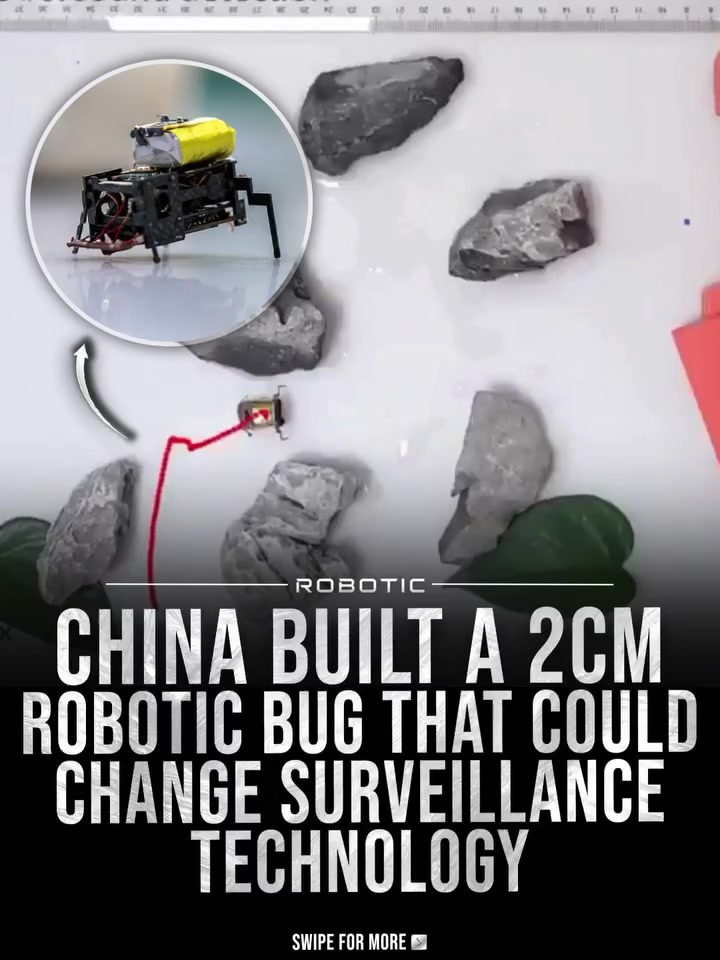
Robotic Bugs: The Future of Micro Robotics and Surveillance
Micro robotics is a rapidly advancing field, pushing the boundaries of what's possible in technology. At the forefront of this innovation is a tiny, insect-inspired robotic bug developed by scientists in China. Measuring just 2 centimeters in length, this untethered micro robot is a testament to the potential of micro robotics in reaching places where conventional machines cannot.
Why This Matters
The development of this 2cm robotic bug is significant for several reasons. Firstly, it demonstrates the progress made in micro robotics, a field that has been under development for over 15 years. The independently controlled legs of the robotic bug allow it to move in any direction, making it ideal for navigating confined spaces. This capability opens up new possibilities for applications such as infrastructure inspection, disaster response, and emergency rescue.
Moreover, the potential for future surveillance applications is a notable aspect of this technology. As micro robotics continues to advance, insect-sized machines like this robotic bug could unlock entirely new possibilities for exploration, sensing, and autonomous operations in hard-to-reach environments. The implications for various industries, from defense to environmental monitoring, are vast.
The Technology Behind the Robotic Bug
Design and Capabilities
The robotic bug is designed to mimic the movement and agility of insects, making it highly maneuverable in various terrains. Its independently controlled legs allow it to navigate rocky surfaces, tight spaces, and other challenging environments with ease. This level of control and versatility is a significant advancement in micro robotics, showcasing the potential for future developments in the field.
Applications
The applications of this robotic bug are diverse and far-reaching. One of the most promising areas is infrastructure inspection. The ability to navigate confined spaces makes it ideal for inspecting pipelines, tunnels, and other hard-to-reach areas. This could significantly reduce the need for human intervention in hazardous environments, enhancing safety and efficiency.
Disaster response and emergency rescue are other critical areas where this technology could make a significant impact. The robotic bug's small size and maneuverability allow it to reach areas that are inaccessible to larger machines, providing valuable information and assistance in emergency situations.
Surveillance is another potential application. The ability to navigate in confined spaces and remain undetected makes the robotic bug a powerful tool for surveillance. This technology could be used in both military and civilian contexts, providing real-time information and enhancing security measures.
Practical Tips for Utilizing Robotic Bugs
Infrastructure Inspection
For those involved in infrastructure inspection, utilizing robotic bugs can greatly enhance the efficiency and safety of operations. Here are some practical tips:
- Plan the Route: Before deploying the robotic bug, plan the route it will take. This includes identifying key areas that need inspection and potential obstacles.
- Regular Maintenance: Ensure that the robotic bug is regularly maintained to keep it in optimal condition. This includes checking the batteries, legs, and sensors.
- Data Collection: Collect and analyze the data provided by the robotic bug. This information can be used to identify issues, plan repairs, and improve overall infrastructure management.
Disaster Response
In disaster response scenarios, the following tips can help maximize the effectiveness of robotic bugs:
- Rapid Deployment: In emergency situations, time is of the essence. Ensure that the robotic bugs are ready for rapid deployment and can be quickly navigated to the affected areas.
- Real-Time Monitoring: Use the robotic bugs for real-time monitoring of disaster zones. This can provide critical information about the situation on the ground and help in coordinating rescue efforts.
- Collaboration with Other Tools: Use the robotic bugs in conjunction with other tools and technologies. This can provide a more comprehensive view of the situation and enhance the overall response.
Surveillance
For surveillance applications, consider the following practical tips:
- Stealth Operation: Utilize the small size and maneuverability of the robotic bug to conduct stealth operations. This can help in gathering information without being detected.
- Data Storage: Ensure that the robotic bug has adequate storage for the data it collects. This can be crucial in situations where immediate transmission of data is not possible.
- Regular Updates: Keep the software and firmware of the robotic bug up to date. This ensures that it operates efficiently and remains secure.
Important Takeaways
The development of this 2cm robotic bug is a significant milestone in the field of micro robotics. Its ability to navigate confined spaces and challenging terrains opens up new possibilities for a wide range of applications. From infrastructure inspection to disaster response and surveillance, this technology has the potential to revolutionize various industries.
Future Possibilities
The future of micro robotics is bright, with endless possibilities for exploration, sensing, and autonomous operations. As technology continues to advance, we can expect to see more innovative developments in this field. The robotic bug is just the beginning, and it sets the stage for even more groundbreaking innovations in the years to come.
Industry Impact
The impact of this technology on various industries is significant. It enhances safety, efficiency, and effectiveness in different sectors, from infrastructure management to disaster response and surveillance. As more companies and institutions adopt this technology, we can expect to see transformative changes in how operations are conducted.
Environmental Considerations
While the potential benefits of this technology are vast, it is also important to consider the environmental implications. The development and deployment of micro robots should be done responsibly, with a focus on sustainability and minimizing environmental impact.
Conclusion
The development of a 2cm robotic bug by scientists in China is a remarkable achievement in the field of micro robotics. Its capabilities and potential applications highlight the vast possibilities that this technology offers. From infrastructure inspection to disaster response and surveillance, the robotic bug demonstrates the future of micro robotics and its impact on various industries.
Watch the Reel
Questions readers ask
How does the 2cm robotic insect move?
The 2cm robotic insect moves by using independently controlled legs that allow it to navigate in any direction. This feature enables it to access and traverse hard-to-reach areas with ease, making it highly versatile for various applications.
What are the primary applications of the 2cm robotic insect?
The primary applications of the 2cm robotic insect include infrastructure inspection, disaster response, and future surveillance. Its small size and independent leg control make it ideal for inspecting confined spaces, assessing damage in disaster zones, and providing covert surveillance.
What makes the 2cm robotic insect unique compared to other micro robots?
The 2cm robotic insect stands out due to its untethered mobility and independent leg control. Unlike other micro robots, it can move freely without the need for wires or other physical connections, and its leg control allows for precise and versatile movement, providing an advantage in narrow and complex environments.
How does the development of the 2cm robotic insect impact the field of micro robotics?
The development of the 2cm robotic insect showcases significant advancements in micro robotics. The innovation of the Chinese scientists demonstrates the ongoing refinement of robotic technology, including improvements in control systems, miniaturization, and untethered mobility, paving the way for new possibilities in robotics.
What challenges can the 2cm robotic insect help address in infrastructure inspection?
The 2cm robotic insect can help address challenges in infrastructure inspection by accessing areas that are difficult or dangerous for humans to reach. Its small size and agility allow it to inspect narrow spaces, assess structural integrity, and identify potential issues in hard-to-reach infrastructure components, such as bridges, tunnels, and pipelines.
How might the 2cm robotic insect be used in disaster response scenarios?
In disaster response scenarios, the 2cm robotic insect can be deployed to assess damage in areas that are inaccessible or hazardous for humans. Its ability to navigate through debris and rubble can provide first responders with crucial information, helping to locate survivors, assess structural damage, and plan recovery efforts effectively.
What future advancements can be expected from China's robotic insect technology?
Future advancements in China's robotic insect technology may include further miniaturization, enhanced sensor capabilities, and improved autonomy. These developments could lead to even more sophisticated applications, such as advanced surveillance, environmental monitoring, and medical diagnostics, pushing the boundaries of what micro robots can achieve.
Related deep dives
Similar reads based on topic and creator.



Recent articles
Fresh deep dives from the latest Reels we unpacked.




Comments
Be the first to comment.