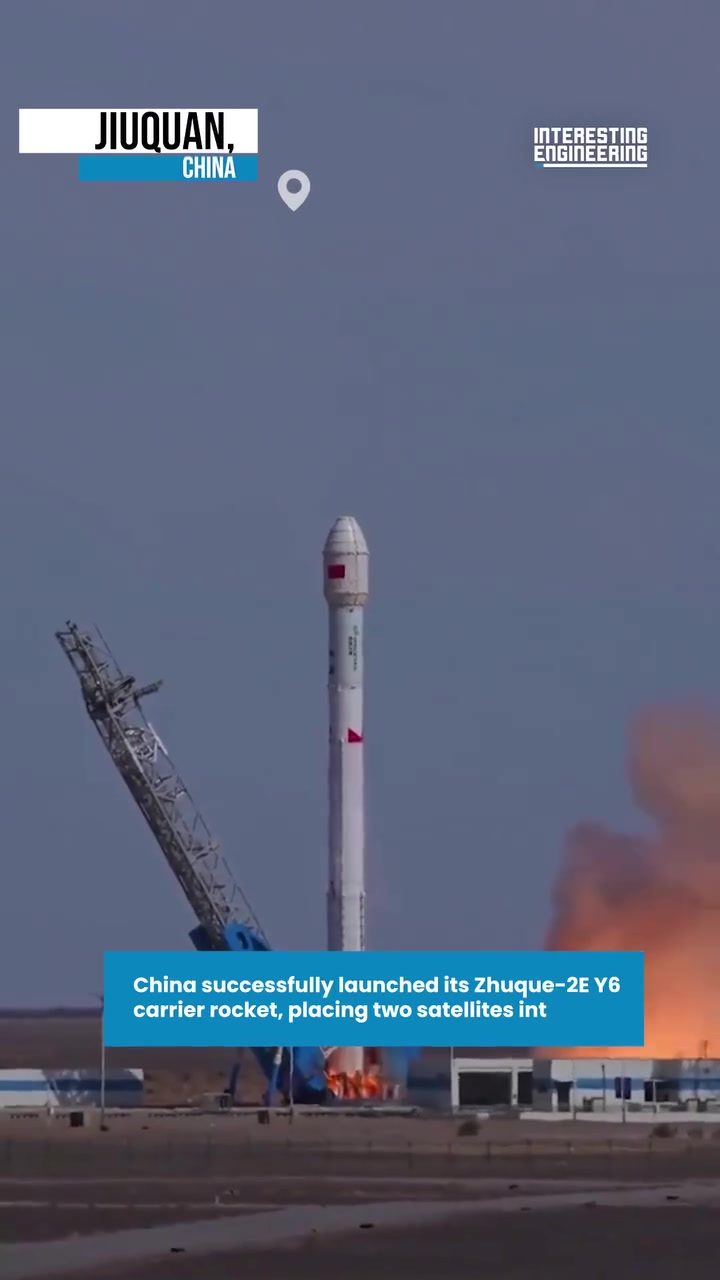
China's Latest Milestone: Zhuque-2E Y6 Rocket Launch
China’s commercial space sector continues to make strides with the successful launch of the Zhuque-2E Y6 carrier rocket from Jiuquan, China. The rocket’s mission was to place two satellites into orbit, a feat that has now been accomplished. This launch is a notable milestone in China's efforts to expand its presence in the commercial space sector.
Why This Launch Matters
The Zhuque-2E Y6 rocket launch is significant for several reasons. Firstly, it demonstrates China's growing capability and confidence in conducting commercial space missions. Secondly, the successful placement of two satellites into orbit underscores the reliability and effectiveness of China's rocket technology. Thirdly, it highlights the strategic importance of the Jiuquan Satellite Launch Center, which played a pivotal role in this mission.
The Launch and Its Mission
The Rocket: Zhuque-2E Y6
The Zhuque-2E Y6 is a carrier rocket designed for commercial missions. The 'Y6' designator suggests an evolution from previous models, indicating advancements in engineering and performance. The rocket features state-of-the-art technology, ensuring a successful launch and deployment.
The Launch Site: Jiuquan, China
Jiuquan is one of China’s key satellite launch centers, known for its strategic location and extensive launch infrastructure. Situated in the Gobi Desert, the site provides ample space and minimal interference from weather or human activity, making it an ideal location for rocket launches.
The Mission: Placing Two Satellites Into Orbit
The primary objective of the Zhuque-2E Y6 launch was to place two satellites into orbit. The successful deployment of these satellites marks a significant achievement, showcasing China’s capability in space logistics and satellite operations.
Practical Tips for Rocket Launches
While the technical aspects of rocket launches are complex, there are a few practical tips to keep in mind if you are interested in following or understanding these missions:
Monitoring Weather Conditions
Weather conditions play a crucial role in the success of a rocket launch. Clear skies and minimal wind conditions are ideal for a smooth launch. Monitoring weather forecasts and understanding how they impact launch schedules can provide valuable insights into the mission’s timeline.
Launch Window Management
Launch windows are specific periods during which a rocket can be launched to achieve its mission objectives. Factors such as the rocket’s trajectory, the satellite’s orbit, and celestial alignments determine these windows. Understanding launch windows can help in planning and following missions more effectively.
Post-Launch Tracking
After a rocket is launched, tracking its trajectory and the deployment of satellites is essential. This involves monitoring the rocket’s performance, ensuring the satellites reach their intended orbits, and verifying their operational status. Advanced tracking systems and real-time data updates are crucial for this process.
Important Takeaways
-
Technological Advancements: The Zhuque-2E Y6 launch showcases China’s ongoing advancements in rocket technology. Each successful launch builds on previous achievements, paving the way for more sophisticated and reliable spacecraft.
-
Strategic Importance of Jiuquan: The Jiuquan Satellite Launch Center is a critical asset for China’s space program. Its strategic location and infrastructure make it an ideal site for commercial and scientific missions.
-
Expanding Commercial Space Sector: The success of the Zhuque-2E Y6 mission underscores China’s growing prowess in the commercial space sector. As more satellites are launched, China’s capabilities in space logistics, communication, and scientific research continue to expand.
-
Future Prospects: With each successful launch, China’s commercial space sector gains momentum. Future missions will likely involve more complex objectives, including space exploration, satellite constellations, and potentially manned missions.
Conclusion
The successful launch of the Zhuque-2E Y6 carrier rocket from Jiuquan, China, marks a significant milestone in the country’s commercial space sector. The deployment of two satellites into orbit showcases China’s technological advancements and strategic capabilities. As China continues to make strides in space exploration, future missions are poised to bring even more groundbreaking achievements and innovations.
Watch the Reel
Questions readers ask
What makes the Zhuque-2E Y6 rocket launch a significant event in China's space sector?
The Zhuque-2E Y6 rocket launch is significant because it showcases China's advancing capabilities in commercial space missions and satellite operations. It is the first time this particular variant of the Zhuque-2E rocket has been used, marking a new phase in China's space logistics and commercialization efforts.
Where did the Zhuque-2E Y6 rocket launch take place, and why is this location noteworthy?
The launch took place at the Jiuquan Satellite Launch Center, which is one of the oldest and most active launch sites in China. This location is noteworthy because it has been the site of many significant space missions, including the launch of China's first satellite, Dong Feng Hong I, in 1970.
How does this launch contribute to China's commercial space sector?
This launch contributes to China's commercial space sector by demonstrating the country's ability to conduct reliable and effective satellite launches. By successfully placing two satellites into orbit, China has shown its capability to provide commercial satellite launch services, which can attract international customers and promote economic growth.
What are the two satellites launched by the Zhuque-2E Y6 rocket, and what are their purposes?
As of now, the specifics of the two satellites launched by the Zhuque-2E Y6 rocket have not been publicly detailed. However, these satellites are likely to serve various purposes such as Earth observation, communication, or scientific research, furthering China's capabilities in space-based applications.
What does the success of the Zhuque-2E Y6 mission indicate about China's rocket technology?
The success of the Zhuque-2E Y6 mission indicates that China's rocket technology is advancing and reliable. The successful placement of two satellites into orbit demonstrates the rocket's capability and precision, reinforcing China's position as a major player in the global space industry.
What are the strategic implications of China's expanding presence in the commercial space sector?
China's expanding presence in the commercial space sector has several strategic implications. It enhances China's global influence, fosters technological advancements, and opens up new economic opportunities. Additionally, it strengthens China's ability to conduct independent space operations, reducing reliance on foreign technologies.
What future developments can be anticipated in China's commercial space sector following this milestone?
Following this milestone, several future developments can be anticipated. China is likely to continue advancing its rocket technology, conducting more frequent and complex satellite launches, and expanding its commercial space services. This may include launching heavier payloads, developing reusable rockets, and possibly establishing partnerships with international space agencies.
Related deep dives
Similar reads based on topic and creator.


Recent articles
Fresh deep dives from the latest Reels we unpacked.




Comments
Be the first to comment.