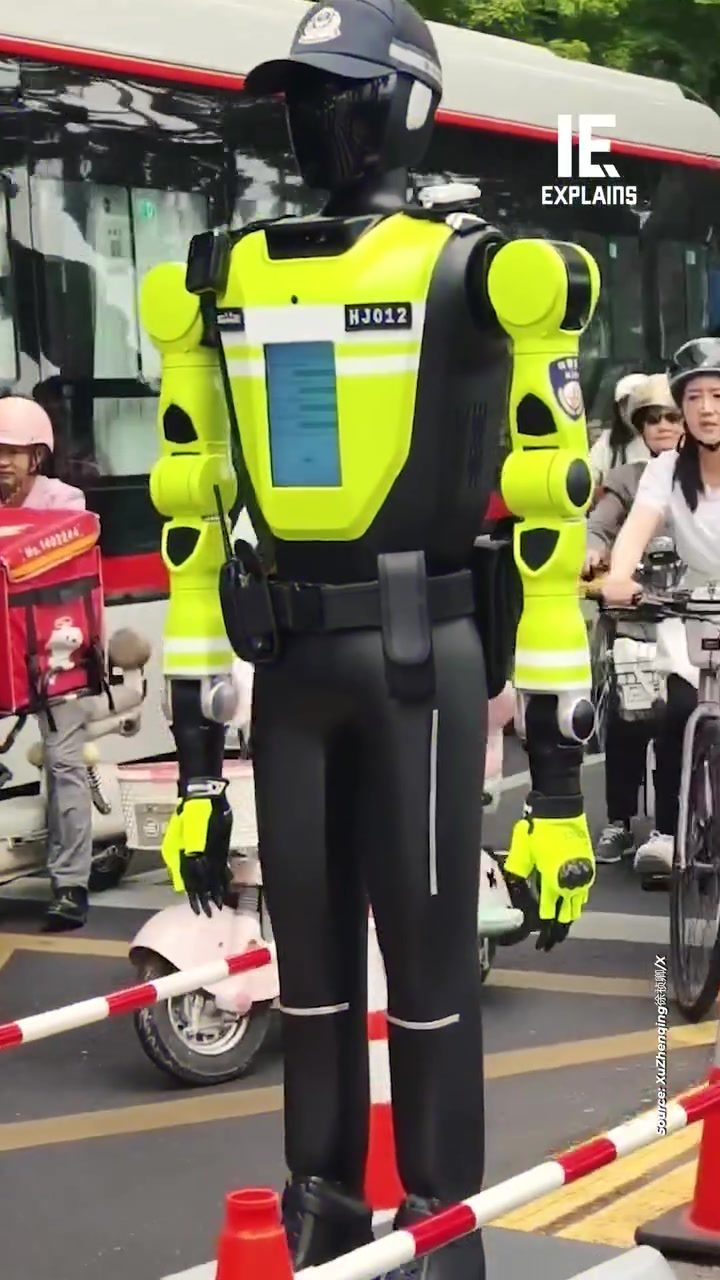
Robot Police Officers: Revolutionizing Traffic Management in China
China has introduced a new era in traffic management by deploying a squadron of 15 intelligent traffic management robots in Hangzhou. These robots, designed to resemble traditional police officers, are equipped to handle the city's bustling traffic and crowded streets, especially during peak tourist seasons.
Why This Matters
With millions of tourists flocking to the West Lake Scenic Area during holidays, managing traffic and ensuring public safety is a monumental task. The deployment of these robots marks a significant step towards improving efficiency and reliability in traffic management. By handling routine and repetitive tasks, these robots free up human officers to focus on more critical and sensitive situations.
The Robots in Action
The robots, first deployed on May 1, China's Labor Day, are stationed along the iconic West Lake Scenic Area and key surrounding roads. Their primary functions include guiding pedestrians and cyclists away from violations, such as crossing on red or riding without a helmet. When a violation is spotted, the robot issues a real-time voice warning. If the violation is ignored three times, the incident is recorded and sent directly to the Traffic Police Bureau.
Human-Machine Collaboration
This initiative is part of China's broader strategy of "human-machine collaboration." The robots work alongside human officers, taking on the mundane and repetitive tasks that can often overwhelm human resources. This allows human officers to focus on more complex and urgent situations that require human judgment and intervention. The robots can operate continuously for 8 to 9 hours a day, providing relentless support without the need for breaks or rest periods.
The Future of Policing
The successful deployment in Hangzhou is just the beginning. Other Chinese cities have also deployed similar robot patrols, indicating a national rollout in motion. This shift towards technology-driven policing is not just about efficiency; it's about enhancing public safety and ensuring that human officers can focus on what they do best—responding to critical incidents and maintaining public order.
Key Features of the Robot Police Officers
- Real-Time Monitoring: The robots can detect and issue real-time voice warnings for traffic violations, such as pedestrians crossing on red or cyclists not wearing helmets.
- Automatic Reporting: Repeat offenders are automatically reported to the Traffic Police Bureau.
- Endurance: Each robot can operate continuously for 8 to 9 hours a day without breaks, ensuring constant traffic management.
- Collaborative Functioning: The robots work alongside human officers, handling routine tasks so that human officers can focus on more critical situations.
Practical Tips for Effective Implementation
- Integration with Existing Systems: Ensure that the robots can seamlessly integrate with existing traffic management systems to provide real-time data and alerts.
- Public Awareness: Conduct public awareness campaigns to inform citizens about the new traffic management system and how it benefits them.
- Regular Maintenance: Schedule regular maintenance checks to ensure that the robots are functioning optimally and can operate continuously without disruption.
- Human Oversight: Maintain a balance between robot and human oversight to ensure that human judgment is available for complex situations.
Important Takeaways
- Enhanced Efficiency: Robot police officers can handle routine tasks more efficiently, freeing up human resources for more critical situations.
- Improved Safety: Real-time monitoring and immediate action on traffic violations can significantly enhance public safety.
- Continuous Operation: The robots' ability to operate for 8 to 9 hours without breaks ensures constant surveillance and management.
- Future-Ready Policing: This initiative marks a significant step towards integrating advanced technology in policing, setting a precedent for other cities to follow.
Conclusion
The deployment of robot police officers in Hangzhou represents a groundbreaking shift in how cities manage traffic and public safety. By leveraging advanced robotics, China is paving the way for a future where human-machine collaboration enhances efficiency and reliability in public services. This initiative not only improves the management of crowded areas like the West Lake Scenic Area but also sets a new standard for smart city solutions. As more cities adopt similar technologies, we can expect to see a global transformation in urban policing and traffic management.
Watch the Reel
Questions readers ask
What specific tasks are the robot police officers in Hangzhou designed to handle?
The robot police officers in Hangzhou are designed to manage traffic, control pedestrian flow, and provide assistance in areas with heavy tourist traffic. Their tasks are particularly focused on reducing the load on human officers and improving efficiency during peak times, such as the holidays.
How many robot police officers have been deployed in Hangzhou's West Lake area?
Hangzhou has deployed 15 intelligent traffic management robots around the West Lake area. These robots assist in managing the city's busy traffic and crowded streets.
What are the benefits of using robot police officers in busy tourist areas like West Lake?
The benefits include improved efficiency, reliability in traffic management, and enhanced public safety. The robots handle routine and repetitive tasks, which allows human officers to focus on more critical and sensitive situations, especially during peak tourist seasons.
Do the robot police officers in Hangzhou resemble human officers?
Yes, the robots are designed to resemble traditional police officers. This design choice helps to reinforce their role as traffic management assistants and ensures that their presence is recognizable and authoritative.
How do the robot police officers in Hangzhou help with public safety?
By managing traffic and pedestrian flow, the robot police officers help to reduce congestion and potential hazards, thereby enhancing public safety. Their presence also acts as a deterrent to traffic violations, contributing to a safer environment for both locals and tourists.
Related deep dives
Similar reads based on topic and creator.


Recent articles
Fresh deep dives from the latest Reels we unpacked.




Comments
Be the first to comment.