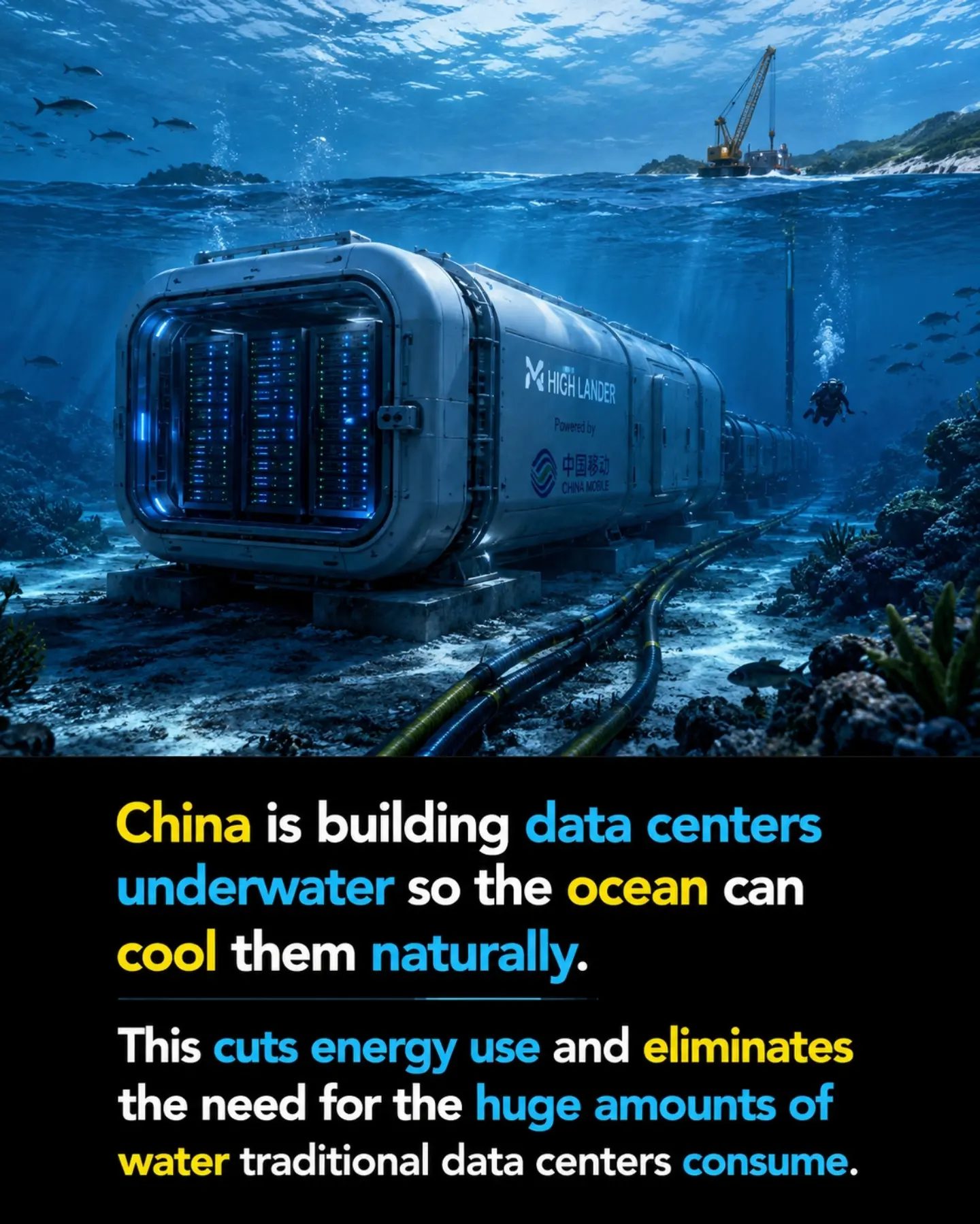
Underwater Data Centers
Underwater data centers represent a groundbreaking approach to addressing the energy and environmental challenges posed by traditional land-based data centers. This innovative concept leverages the natural cooling properties of the ocean, leading to significant reductions in energy consumption and water usage. Let's explore the benefits, challenges, and practical considerations of this emerging technology.
Context / Why this Matters
The demand for data storage and processing continues to surge, driven by the proliferation of digital services, cloud computing, and the Internet of Things (IoT). Traditional data centers, which house vast arrays of servers, consume enormous amounts of energy for cooling and operation. Typically, they use large volumes of water for cooling, contributing to environmental concerns and resource depletion. Underwater data centers, such as China Mobile's High Lander, address these issues by utilizing the ocean's natural cooling capabilities, making them an eco-friendly and efficient solution.
Main discussion
Leveraging Natural Cooling
The primary advantage of underwater data centers is their ability to harness the ocean's natural cooling properties. The cold temperatures and low thermal conductivity of seawater provide a sustainable and efficient cooling mechanism. This reduces the need for energy-intensive air conditioning systems and large volumes of water, which are typically used in traditional data centers. By eliminating the need for extensive cooling infrastructure, underwater facilities can significantly lower their energy consumption and operational costs.
Environmental Benefits
Underwater data centers offer substantial environmental benefits. Traditional data centers are major energy consumers and contributors to greenhouse gas emissions. By reducing energy consumption and eliminating water usage, underwater data centers can help mitigate environmental impacts. Additionally, these facilities are less likely to face natural disasters such as earthquakes, flooding, and wildfires, which are increasingly affecting land-based data centers due to climate change. The High Lander centers are not only designed for operational efficiency but also to withstand the harsh underwater environment, ensuring long-term sustainability and reliability.
Design and Deployment
The design of underwater data centers involves several engineering challenges, including waterproofing, pressure management, and ensuring reliable data transmission. China Mobile's High Lander, for example, is designed with a robust waterproof structure that can withstand the high pressures and corrosive properties of the ocean floor. These centers are strategically located near coastal regions to ensure easy access for maintenance and to facilitate high-speed data transmission through underwater fiber-optic cables. The deployment process includes careful selection of suitable underwater locations, construction of the data center modules, and installation of marine monitoring systems to ensure operational safety and efficiency.
Energy Efficiency
One of the most significant advantages of underwater data centers is their energy efficiency. The natural cooling provided by the ocean eliminates the need for expensive and energy-intensive cooling systems. This results in a substantial reduction in carbon footprint and operational costs. Furthermore, underwater data centers can integrate renewable energy sources such as underwater turbines or solar power, further enhancing their energy efficiency and sustainability.
Operational Challenges
Despite their benefits, underwater data centers face several operational challenges. One of the primary concerns is the accessibility and maintenance of these facilities. Accessing underwater data centers for routine maintenance or repairs is logistically challenging and costly. Additionally, the underwater environment poses risks such as corrosion, marine life interference, and potential damage from underwater currents or seismic activity. Overcoming these challenges requires advanced engineering solutions and robust monitoring systems to ensure the long-term reliability and safety of underwater data centers.
Security and Safety
Security and safety are critical considerations for any data center, and underwater facilities are no exception. Underwater data centers must be equipped with advanced security systems to protect against cyber threats and physical intrusion. Additionally, ensuring the safety of personnel involved in the maintenance and operation of these facilities is paramount. Robust safety protocols, including emergency response plans and regular safety inspections, are essential to mitigate risks and ensure operational continuity.
Practical Tips
If you are considering the deployment of an underwater data center, here are some practical tips to ensure its success:
-
Site Selection: Choose a suitable underwater location that minimizes environmental impact and ensures easy access for maintenance. Factors such as depth, water temperature, and proximity to fiber-optic cables should be carefully considered.
-
Structural Design: Invest in robust and durable materials to withstand the harsh underwater environment. Ensure the design incorporates efficient cooling mechanisms and waterproofing technologies.
-
Energy Integration: Integrate renewable energy sources to enhance energy efficiency. Consider underwater turbines or solar power to supplement the natural cooling provided by the ocean.
-
Security Measures: Implement advanced cybersecurity systems and physical security measures to protect against threats. Regularly update security protocols to address emerging risks.
-
Maintenance Planning: Develop a comprehensive maintenance plan that includes regular inspections, emergency response protocols, and accessible maintenance facilities. Ensure that personnel are well-trained and equipped to handle underwater operations.
Important Takeaways
Underwater data centers, such as China Mobile's High Lander, offer a sustainable and efficient solution to the growing demand for data storage and processing. By leveraging the natural cooling properties of the ocean, these facilities can significantly reduce energy consumption and water usage, contributing to environmental sustainability. However, the successful deployment of underwater data centers requires careful consideration of design, energy integration, security, and maintenance challenges. With the right strategies and technologies, underwater data centers can play a crucial role in shaping the future of data infrastructure and sustainability.
Conclusion
As the demand for data continues to grow, underwater data centers emerge as a forward-thinking solution to the environmental and operational challenges posed by traditional land-based facilities. By harnessing the ocean's natural cooling capabilities, these centers offer a sustainable and efficient alternative, reducing energy consumption, water usage, and environmental impact. With careful planning, advanced technologies, and robust security measures, underwater data centers can pave the way for a more sustainable digital future.
Watch the Reel
Related deep dives
Similar reads based on topic and creator.

Recent articles
Fresh deep dives from the latest Reels we unpacked.




Comments
Be the first to comment.