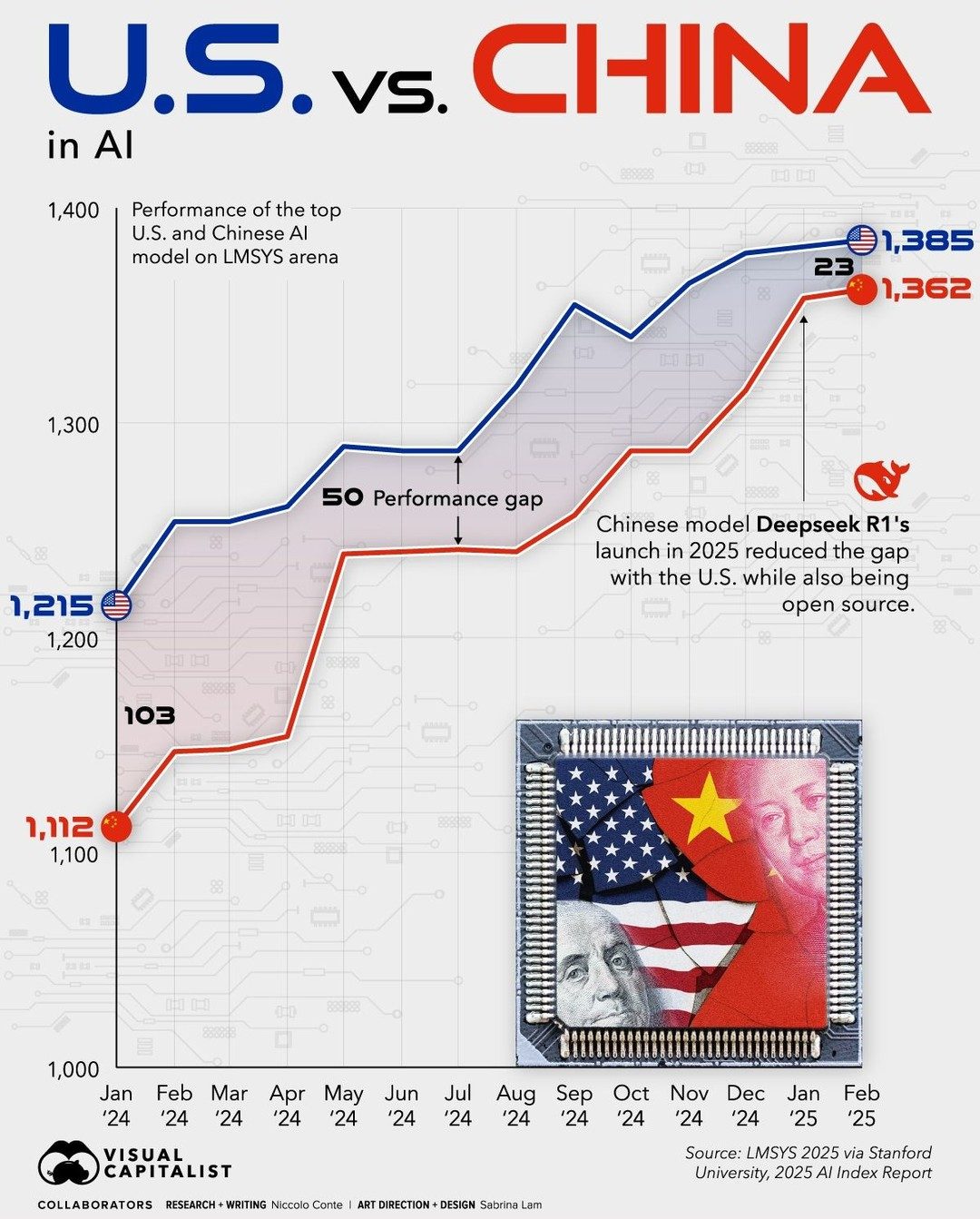
AI Performance Gap Between the U.S. and China
The performance gap between the top AI models of the United States and China has significantly narrowed over the past year, from 103 in January 2024 to just 23 in February 2025. This shift is particularly notable in the context of the LMSYS’s Chatbot Arena, where the performance of leading AI models from both countries is rigorously evaluated.
Why This Matters
The narrowing performance gap has significant implications for the global AI landscape. It indicates that China is rapidly closing in on the technological advancements made by the U.S. in the field of artificial intelligence. This convergence could lead to increased competition, collaboration, and innovation in AI technologies, benefiting both countries and the global tech industry as a whole.
Main Discussion
Performance Metrics and Trends
The performance of AI models is typically measured using benchmarks that evaluate various aspects such as language understanding, reasoning, and problem-solving capabilities. The LMSYS’s Chatbot Arena serves as a crucial platform for comparing the strengths and weaknesses of different AI models.
Key Performance Indicators
- January 2024: The performance difference between the top U.S. and Chinese AI models was 103 points.
- February 2025: This gap has shrunk to just 23 points, marking a significant reduction in a relatively short period.
Factors Contributing to the Narrowing Gap
Several factors have contributed to the narrowing of the performance gap between U.S. and Chinese AI models.
Technological Advancements
Both countries have made significant strides in AI research and development. The U.S. has long been a leader in AI, with major contributions from leading tech companies and research institutions. However, China has been investing heavily in AI, with both government and private sector investments fueling rapid advancements.
Open-Source Innovations
The launch of the Chinese model Deepseek R1 in 2025 was a pivotal moment. Deepseek R1 not only reduced the performance gap with U.S. models but also stands out as an open-source model. Open-source AI models allow for broader collaboration and faster iteration, making them a powerful tool for accelerating progress in the field.
Comparison of Top Models
Top U.S. Models
The top-performing AI models from the U.S. have traditionally set the benchmark for excellence in AI. These models are often developed by leading tech companies and research institutions, leveraging vast amounts of data and advanced algorithms.
Top Chinese Models
Chinese AI models have made notable strides in recent years, with several models achieving performance levels that rival those of their U.S. counterparts. The launch of Deepseek R1 is a testament to China's growing capabilities in AI development.
Practical Tips
Staying Informed
Keeping abreast of the latest developments in AI performance is essential for anyone involved in the tech industry. Here are some practical tips for staying informed:
-
Follow Key Reports: Regularly review reports such as the 2025 AI Index Report from Stanford University, which provides comprehensive insights into the state of AI globally.
-
Engage with the Community: Participate in AI conferences, webinars, and online forums to stay updated on the latest trends and innovations.
-
Track Benchmarking Platforms: Utilize platforms like LMSYS’s Chatbot Arena to monitor the performance of top AI models and understand how they stack up against each other.
Leveraging Open-Source Models
Open-source AI models offer numerous advantages, including cost-effectiveness and the ability to customize and improve upon existing models. Here’s how you can leverage open-source models:
-
Explore Open-Source Repositories: Platforms like GitHub host a wealth of open-source AI models that can be used and modified for various applications.
-
Community Collaboration: Engage with the open-source community to collaborate on projects, share insights, and contribute to the development of new AI technologies.
-
Customization: Adapt open-source models to suit specific needs, whether for research, business, or personal projects.
Important Takeaways
The narrowing performance gap between U.S. and Chinese AI models underscores the rapid advancements in AI technology globally. Key takeaways include:
-
Rapid Innovation: Both countries are making significant strides in AI development, driven by technological advancements and substantial investments.
-
Open-Source Contributions: The launch of open-source models like Deepseek R1 highlights the potential of collaborative innovation in AI.
-
Global Impact: The convergence of AI capabilities between the U.S. and China is poised to have a profound impact on the global tech industry, fostering both competition and collaboration.
Conclusion
The narrowing performance gap between the top AI models of the U.S. and China is a testament to the rapid advancements in AI technology. As both countries continue to invest in research and development, we can expect to see even more innovative breakthroughs in the field. Staying informed about these developments and leveraging open-source models will be crucial for anyone looking to stay ahead in the rapidly evolving AI landscape.
Watch the Reel
Questions readers ask
Why has the AI performance gap between the U.S. and China decreased?
The AI performance gap has decreased due to China's rapid advancements in AI technology. In the past year, the gap between the top models of the two countries has narrowed from 103 to 23, as measured by the LMSYS’s Chatbot Arena.
What does the narrowing of the AI performance gap mean for the global AI landscape?
The narrowing gap indicates increased competition and potential for collaboration. This could drive innovation in AI technologies, benefiting both countries and the global tech industry.
What is the significance of the LMSYS’s Chatbot Arena in measuring AI performance?
The LMSYS’s Chatbot Arena is a platform where the performance of leading AI models from both the U.S. and China is rigorously evaluated. It provides a benchmark for comparing the capabilities of top AI models, highlighting the progress made by each country.
What are the implications of China's rapid advancement in AI technology for the U.S.?
China's rapid advancement means that the U.S. will face increased competition in the AI sector. This could push both countries to develop more innovative and advanced AI technologies, fostering a more dynamic global AI landscape.
What is the current status of the top AI models from China and the U.S.?
As of February 2025, the performance gap between the top AI models from China and the U.S. has narrowed to 23. China has shown significant progress, particularly with models like the DeepSeek AI, which have been performing well in recent evaluations.
What is the AI performance gap, and why is it significant?
The AI performance gap refers to the difference in capabilities between the top AI models of the U.S. and China. This metric is significant because it reflects the progress and investments each country is making in AI technology.
Related deep dives
Similar reads based on topic and creator.


Recent articles
Fresh deep dives from the latest Reels we unpacked.




Comments
Be the first to comment.