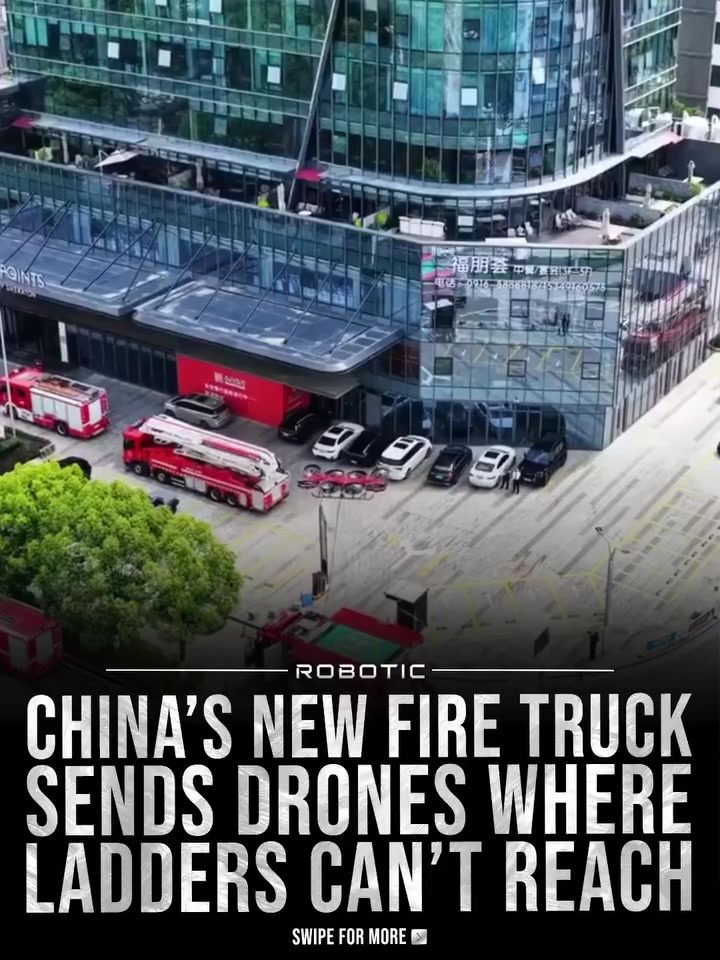
China's Robotic Fire Truck
China has developed a cutting-edge firefighting truck equipped with a built-in drone, marking a significant advance in emergency response technology. This innovative vehicle combines traditional firefighting equipment with aerial robotics, designed to tackle high-rise emergencies and difficult-to-access areas.
Why This Matters
Urban landscapes are increasingly vertical, with tall buildings and densely packed cities posing unique challenges for firefighters. Traditional firefighting equipment, while effective, often struggles to reach the upper floors of skyscrapers or navigate narrow, hazardous environments. The integration of drones into fire trucks addresses these limitations, offering a smarter, more versatile solution for modern fire safety.
Main Discussion
The Technology Behind the Robotic Fire Truck
The new fire truck from China incorporates a drone that can reach heights of up to 200 meters, spray water from elevated positions, and deploy in under 60 seconds. This aerial capability allows firefighters to access areas that conventional fire engines may struggle to reach, providing a crucial advantage in high-rise emergencies.
How Drones Enhance Firefighting
Drones offer several key benefits in firefighting scenarios:
- Accessibility: Drones can reach high altitudes and navigate through narrow, hard-to-reach spaces, making them ideal for tall buildings and complex structures.
- Speed: The rapid deployment of drones (within 60 seconds) ensures that firefighters can quickly address emerging threats, minimizing damage and saving lives.
- Safety: By using drones to spray water from elevated positions, firefighters can stay at a safer distance from the fire, reducing the risk of injury.
The Future of Firefighting
As cities continue to grow vertically, the integration of robotics and autonomous systems in emergency response is becoming increasingly important. The future of firefighting may not replace human crews but rather equip them with smarter tools to handle the most dangerous situations. This technology provides new options for tackling fires in tall buildings and difficult environments, ultimately improving response times and increasing safety for firefighters.
Practical Tips
For Firefighters
- Training: Firefighters should undergo specialized training to effectively utilize drones in firefighting operations. This includes learning how to operate the drones, interpret their data, and integrate them into existing firefighting strategies.
- Maintenance: Regular maintenance of the drones and their associated equipment is crucial to ensure they are always ready for deployment. Firefighters should follow a strict maintenance schedule and perform routine checks.
- Safety Protocols: Establish clear safety protocols for using drones in firefighting operations. This includes guidelines for operating drones in hazardous environments, coordinating with other firefighters, and ensuring the safety of both the public and firefighters.
For City Planners
- Infrastructure: City planners should consider incorporating drone-friendly infrastructure into new buildings and urban planning projects. This includes designated landing zones, charging stations, and communication systems to support drone operations.
- Regulations: Develop regulations and guidelines for the use of drones in emergency response. This includes protocols for drone deployment, coordination with other emergency services, and ensuring the safety of the public and firefighters.
- Public Awareness: Educate the public about the benefits and limitations of drones in firefighting. This includes explaining how drones are used, the safety measures in place, and how they can help improve fire safety in urban environments.
Important Takeaways
- Innovation: The integration of drones into firefighting equipment represents a significant advancement in emergency response technology. This innovation allows firefighters to access hard-to-reach areas, improve response times, and increase safety.
- Adaptability: As cities continue to grow vertically, the use of robotics and autonomous systems in emergency response will become increasingly important. The future of firefighting will likely involve more advanced technologies that equip firefighters with the tools they need to handle the most dangerous situations.
- Collaboration: Effective use of drones in firefighting requires collaboration between firefighters, city planners, and technology providers. By working together, these groups can develop innovative solutions that improve fire safety and response times.
Conclusion
China's robotic fire truck, equipped with a built-in drone, offers a glimpse into the future of firefighting. By combining traditional firefighting equipment with aerial robotics, this innovative vehicle addresses the unique challenges posed by tall buildings and densely packed cities. As technology continues to advance, the integration of drones and other autonomous systems will play a crucial role in improving fire safety and response times, ultimately saving lives and protecting communities.
Watch the Reel
Related deep dives
Similar reads based on topic and creator.



Recent articles
Fresh deep dives from the latest Reels we unpacked.




Comments
Be the first to comment.