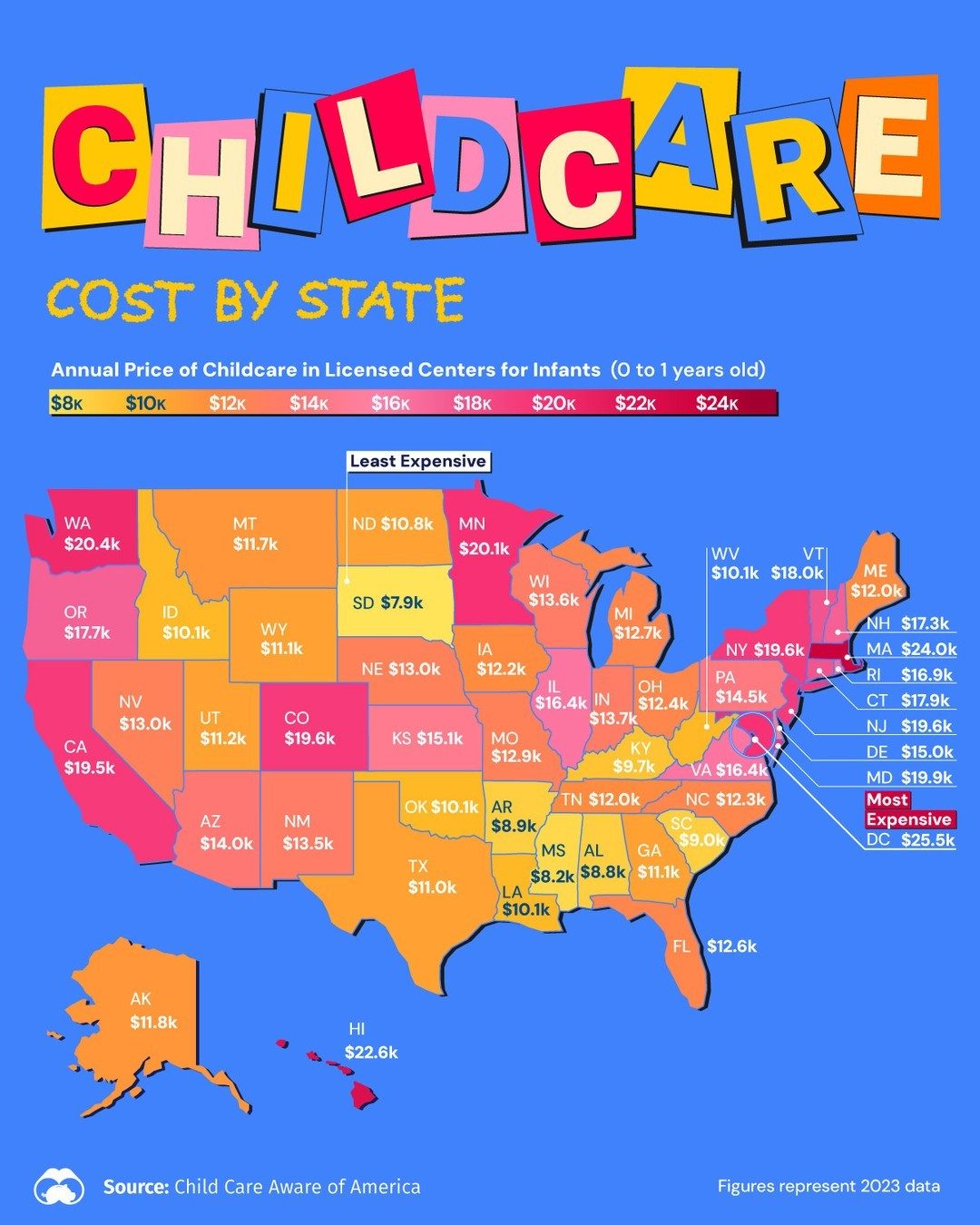
Childcare Costs by State
Childcare costs vary widely across the United States, impacting families differently based on where they live. Understanding these costs is crucial for families planning their budgets and for policymakers looking to address affordability issues. Child Care Aware of America provides valuable data on the annual costs of infant childcare across different states. This article breaks down the 2023 data to give a clear picture of the financial burden childcare places on families nationwide.
Why This Matters
Childcare costs are a significant expense for many families, often rivaling or even exceeding other major household expenses like housing or education. The affordability of childcare can influence a family's decision on the number of children they have, their participation in the workforce, and their overall financial security. For instance, in Hawaii, infant childcare costs 18% of a married couple's median income, making it the least affordable state based on median incomes. In contrast, the nation's capital, D.C., has the highest average annual cost for infant childcare at $25,585. Childcare costs do not just impact families; they also have broader economic implications, affecting workforce participation and economic productivity.
State-by-State Breakdown
High-Cost States
Several states stand out for their high childcare costs. Washington, the most expensive state for infant childcare, has an average annual cost of $24,000. Other high-cost states include Massachusetts, California, and New York, where the annual cost exceeds $20,000. These high costs are often attributed to the cost of living and labor costs in these regions. For families in these states, childcare can be a significant financial burden, often requiring both parents to work to cover the expenses.
Low-Cost States
On the other end of the spectrum, several states offer more affordable childcare options. Mississippi has the lowest annual cost for infant childcare at $9,000. Other low-cost states include Alabama, South Carolina, and Louisiana, where the average annual cost is below $10,000. These states generally have a lower cost of living and labor costs, making childcare more accessible for families. However, it is important to note that even in these states, childcare costs can still be a substantial portion of a family's budget.
Mid-Range States
Many states fall in the middle range for childcare costs. Ohio, for example, has an average annual cost of $14,000, while Tennessee and Indiana have costs around $12,000. These mid-range states offer a variety of childcare options, from licensed centers to family-based care. Families in these states may have more flexibility in choosing care that fits their budget and needs.
Regional Trends
Northeast and West Coast
The Northeast and West Coast regions tend to have higher childcare costs. This is largely due to the higher cost of living and labor costs in these areas. For example, New York, California, and Massachusetts all have high childcare costs. Families in these regions often face a significant financial burden when it comes to childcare, which can impact their decisions about work and family size.
South and Midwest
The South and Midwest regions generally have lower childcare costs. States like Mississippi, Alabama, and South Carolina offer more affordable childcare options. The lower cost of living and labor costs in these regions contribute to the lower childcare expenses. However, even in these more affordable regions, childcare costs can still be a significant portion of a family's budget.
Factors Influencing Childcare Costs
Several factors influence the cost of childcare in different states. These include:
- Cost of Living: States with a higher cost of living generally have higher childcare costs. This is because the cost of goods and services, including labor, is higher in these areas.
- Labor Costs: The cost of labor is a significant factor in childcare expenses. States with higher minimum wages and labor costs tend to have higher childcare costs.
- Regulation and Licensing: States with stricter regulations and licensing requirements for childcare providers often have higher costs. These regulations ensure a higher standard of care but can also increase expenses.
- Demand for Childcare: In states with high demand for childcare, such as those with growing populations or strong economies, costs tend to be higher. High demand can drive up prices, especially in areas where supply is limited.
Practical Tips for Managing Childcare Costs
Managing childcare costs can be challenging, but there are several strategies families can use to make it more affordable:
Explore Different Care Options
Families should explore different childcare options, including licensed centers, family-based care, and informal care. Each option has its own advantages and costs, so it's essential to research and compare them to find the best fit.
Seek Financial Assistance
Financial assistance programs, such as childcare subsidies and tax credits, can help families offset the cost of childcare. Eligibility for these programs varies by state, so families should research the options available in their area.
Share Childcare Costs
Families can also explore the option of sharing childcare costs with other families or forming cooperative arrangements. This can help spread the financial burden and make childcare more affordable.
Plan Ahead
Planning ahead can help families budget for childcare costs and avoid unexpected expenses. Families should consider their childcare needs and financial situation when planning for the future.
Important Takeaways
Understanding the cost of childcare by state is crucial for families planning their budgets and for policymakers looking to address affordability issues. Here are some key takeaways:
- Childcare costs vary significantly by state, with Washington having the highest annual price at $24,000 and Mississippi having the lowest at $9,000.
- High childcare costs can be a significant financial burden for families, impacting their decisions about work and family size.
- Factors such as the cost of living, labor costs, regulation, and demand for childcare influence the cost of care in different states.
- Families can manage childcare costs by exploring different care options, seeking financial assistance, sharing costs, and planning ahead.
Conclusion
Childcare costs are a significant expense for many families, and understanding the variations across states can help families and policymakers make informed decisions. By exploring different care options, seeking financial assistance, and planning ahead, families can manage the financial burden of childcare more effectively. Addressing the affordability of childcare is essential for supporting families and ensuring economic stability.
Watch the Reel
Questions readers ask
What is the average cost of infant childcare in the United States in 2023?
The average cost of infant childcare in the United States in 2023 varies widely by state, with annual costs ranging from $4,600 in Mississippi to $25,585 in Washington, D.C. The national average cost is influenced by factors such as location and type of care, but it typically falls around $10,600 annually.
Which states have the lowest childcare costs in 2023?
The most affordable states for childcare in 2023 are Mississippi, Louisiana, and Alabama, with annual costs for infant childcare around $4,600, $5,000, and $5,200 respectively. These states are among the most fiscally friendly options for families looking to minimize childcare expenses.
How do childcare costs in Hawaii compare to the national average?
Childcare costs in Hawaii are notably high, consuming approximately 18% of a median couple's income. The average cost for infant care in Hawaii is around $14,000 annually, significantly higher than the national average of $10,600.
What factors contribute to the variations in childcare costs across different states?
Several factors contribute to the variations in childcare costs, including the cost of living in the state, local regulations and labor costs for childcare providers, as well as the demand for childcare services. States with higher costs of living, such as those on the East and West Coasts, tend to have higher childcare expenses.
Which state has the highest childcare costs in 2023?
Washington, D.C. has the highest childcare costs in 2023, with an annual fee of $25,585 for infant care. This cost is significantly higher than the national average, making it one of the most expensive places for childcare in the United States.
Related deep dives
Similar reads based on topic and creator.

Recent articles
Fresh deep dives from the latest Reels we unpacked.




Comments
Be the first to comment.