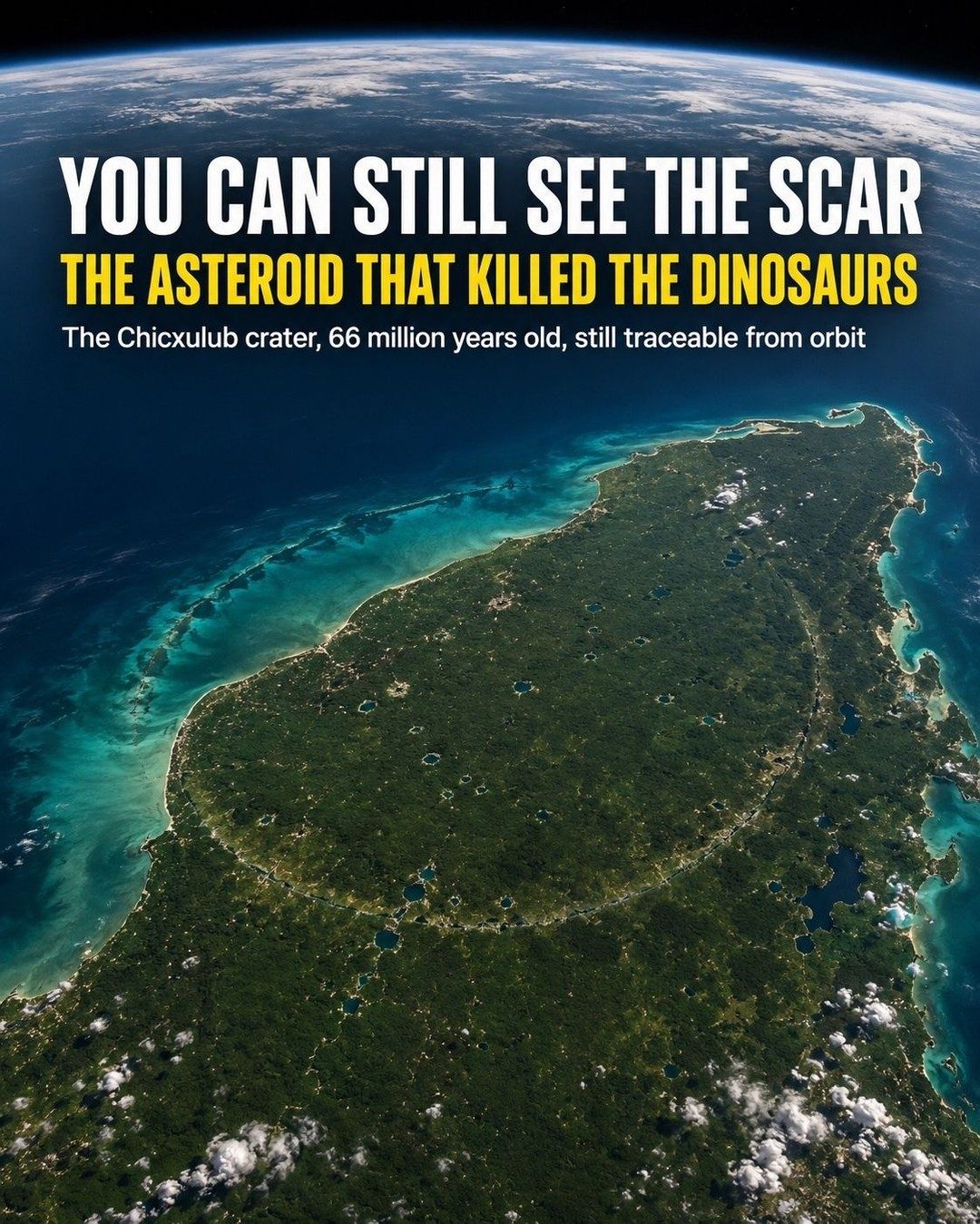
The Mark of Catastrophe
Tucked away on the Yucatan Peninsula, Mexico, lies the Chicxulub crater. Ordinary to glimpse from orbit. Extraordinary in origin. This impact crater provides firm geological evidence: the thumbprint of an asteroid. A violent, high-energy collision 66 million years ago devastated the planet's surface. The Chicxulub crater is the impact site of the asteroid — roughly estimated to be 10–15 km — that triggered a mass extinction event. About 75% of all plant, animal and insect species were wiped out. Including the dinosaurs, which had flourished for 180 million years. This immense asteroid impacted the earth with the force of a billion Hiroshima bombs. Running headlong into the shallows of the Gulf of Mexico about 66 million years ago. When the asteroid struck, it formed a crater of approximately 93 miles (150 km) in diameter. Which scientists have been studying for decades. The impact devastated local wildlife. It triggered tsunamis with waves taller than the Empire State Building. Spewed molten debris into the sky. This debris then settled in the form of an eerie geologic layer. Found today in a thin seam of rock on almost every continent.
A Celestial Time-Capsule
Years ago, the extraterrestrial impact formed the crater. Today, it's still traceable from orbit. This impact provided insight into a grave period in Earth's history. The most important evidence of a major asteroid impact lies hidden in the rocks of Chicxulub. Petrologist discover remnants of impact ejecta all throughout the crater site. This ejected material includes rocks from deep within the earth. Re-constructing the impact has given scientists a clear understanding. That the crater formed when an asteroid struck the location. A gravitational anomaly stretches deep into the geological strata. Because the asteroid struck. You can still see the scar: The Chicxulub crater, its surface demarcated by a subtle semicircle, buried under hundreds of meters of sediment. The impact threw ejecta across a vast area. Spurring global wildfires. The molten glass in the ejecta suggests the impact of extreme heat. Which would have been a result of the heat generated by the impact. Some rocks in the crater record evidence of a massive earthquake that would have formed the ocean bed. The Chicxulub crater continues to reveal new information about the catastrophic events that once rocked the planet. But it remains a clearly visible scar on the Earth's surface. The impact debilitated the planet. Killing almost all living things. Excepting a few creatures, such as the small mammals. Being the only survivors. Which evolved milliseconds ago.
Watch the Reel
Related deep dives
Similar reads based on topic and creator.

Recent articles
Fresh deep dives from the latest Reels we unpacked.

Comments
Be the first to comment.