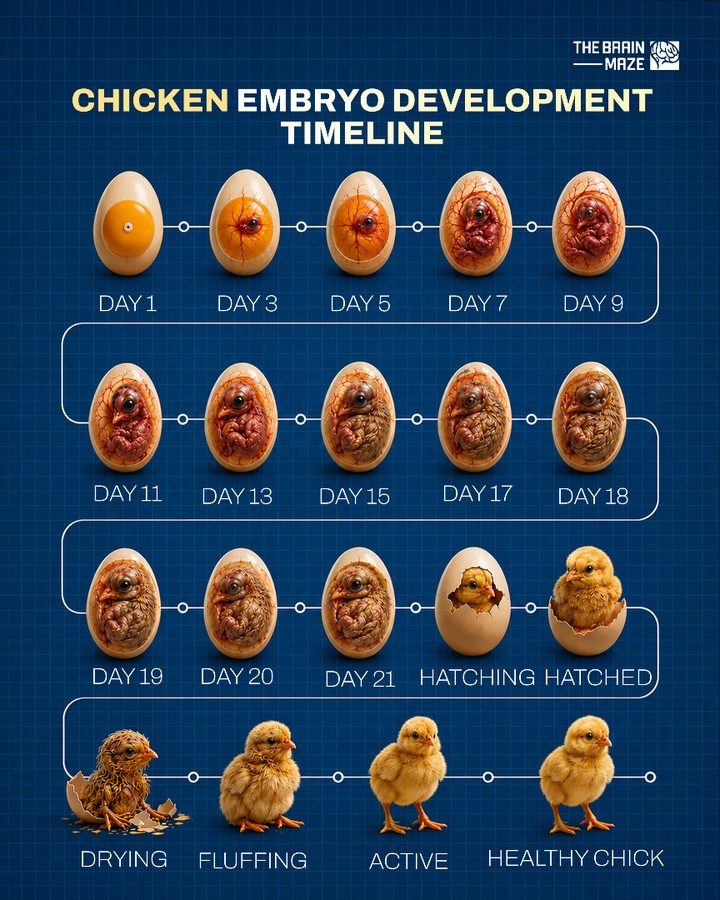
Chicken Embryo Development
Chicken embryo development is a captivating process that transforms a fertilised egg into a fully formed chick over a period of 21 days. This journey involves several critical stages, each marked by significant changes in the embryo's structure and functionality.
Context / Why This Matters
Understanding chicken embryo development is crucial for anyone interested in poultry farming, biology, or simply curious about the natural world. This process not only illuminates the intricacies of life but also provides valuable insights into reproductive biology and animal husbandry.
Main Discussion
Initial Stages: Rapid Cell Division
The first few days of chicken embryo development are characterised by rapid cell division. Within the first 24 hours, the fertilised egg undergoes a series of cellular divisions, forming a structure known as the blastoderm. By day 3, the embryo starts to take shape, with the formation of the primitive streak, a key developmental milestone. This streak marks the beginning of the central nervous system and the early stages of organ formation.
By day 5, the embryo's heart starts to beat, and the neural tube, which will eventually become the brain and spinal cord, begins to form. Blood vessels also start to develop, ensuring that the embryo receives the necessary nutrients and oxygen.
Mid-Development: Recognizable Features
As the embryo progresses through the middle stages of development, it becomes more recognizable. From day 7 to day 15, the embryo's limbs, beak, and eyes start to form. By day 9, the embryo has distinct features, including a visible tail and the beginnings of feathers.
During this period, the embryo's organs continue to develop, and the yolk sac, which provides vital nutrients, begins to form. By day 15, the embryo is well-developed, with all major organs in place and the beginnings of a respiratory system.
Final Stages: Preparing for Hatching
In the final days of development, the embryo prepares for hatching. From day 17 to day 20, the embryo positions itself for hatching, breaking the shell and absorbing the remaining yolk. This nutrient absorption is crucial for the chick's survival immediately after hatching.
Hatching itself is a delicate process that typically occurs on day 21. The chick breaks through the shell using its beak and then dries and fluffs its feathers. This drying process is essential for the chick to maintain body temperature and prevent dehydration.
Practical Tips
Incubating Chicken Eggs
If you're interested in incubating chicken eggs, here are some practical tips to ensure a successful hatching process:
- Temperature Control: Maintain a consistent temperature of 99.5°F (37.5°C) throughout the incubation period.
- Humidity Levels: Keep the humidity level high for the first 18 days (around 40-50%). Increase it to 60-65% in the final three days to help the chick emerge from the shell.
- Turn the Eggs: Regularly turn the eggs to prevent the embryo from sticking to the shell. Stop turning the eggs three days before hatching.
- Positioning for Hatching: Ensure the eggs are positioned correctly for hatching. This can be done by slightly elevating one end of the incubator to encourage the chick to move into the correct position.
Important Takeaways
- Critical Stages: Rapid cell division, organ formation, and feature development are key stages in chicken embryo development.
- Hatching Process: Preparing for hatching involves positioning the embryo, absorbing the yolk, and breaking the shell.
- Incubation Tips: Maintain optimal temperature and humidity levels, turn the eggs regularly, and position them correctly for a successful hatching.
Conclusion
Chicken embryo development is a fascinating journey that highlights the complexity of life's initial stages. From the rapid cell division in the early days to the formation of recognizable features and the final preparations for hatching, each phase is crucial for the chick's survival and growth. Understanding this process can provide valuable insights for poultry farmers, biologists, and anyone interested in the natural world.
Watch the Reel
Questions readers ask
How long does it take for a chicken embryo to develop into a chick?
The entire process from fertilization to hatching takes approximately 21 days. This period is divided into several distinct stages, each crucial for the chick's development.
What happens during the first 24 hours of chicken embryo development?
Within the first 24 hours, the fertilized egg undergoes rapid cell division, a process known as cleavage. This results in the formation of a cluster of cells called a blastoderm, which will eventually develop into the embryo.
When do the major organs of the chick begin to form?
Major organs start to form around day 3 to day 7. This period is marked by the development of the neural tube, which will become the brain and spinal cord, as well as the formation of the heart and circulatory system.
At what stage do the chick's limbs and beak start to become visible?
Limb buds, which will develop into wings and legs, begin to appear around day 4. The beak starts to form around day 6. By day 10, these features become more pronounced and recognizable.
What is the significance of the 14th day in chicken embryo development?
By day 14, the chick is well-proportioned and features such as feathers and scales start to appear. The chick is also covered in down feathers, which will help it regulate body temperature after hatching.
Why is understanding chicken embryo development important for poultry farming?
Knowing the stages of chicken embryo development helps poultry farmers monitor the health and progress of their incubating eggs. It aids in identifying issues early and ensuring optimal conditions for successful hatching, contributing to higher hatch rates and healthier chicks.
What happens in the final days before a chick hatches?
In the final days, the chick turns inside the egg to position itself for hatching. It absorbs the remaining yolk, which provides essential nutrients, and begins to break through the shell using a specialized structure called the egg tooth. This process can take several hours as the chick works to free itself from the shell.
Related deep dives
Similar reads based on topic and creator.




Recent articles
Fresh deep dives from the latest Reels we unpacked.




Comments
Be the first to comment.