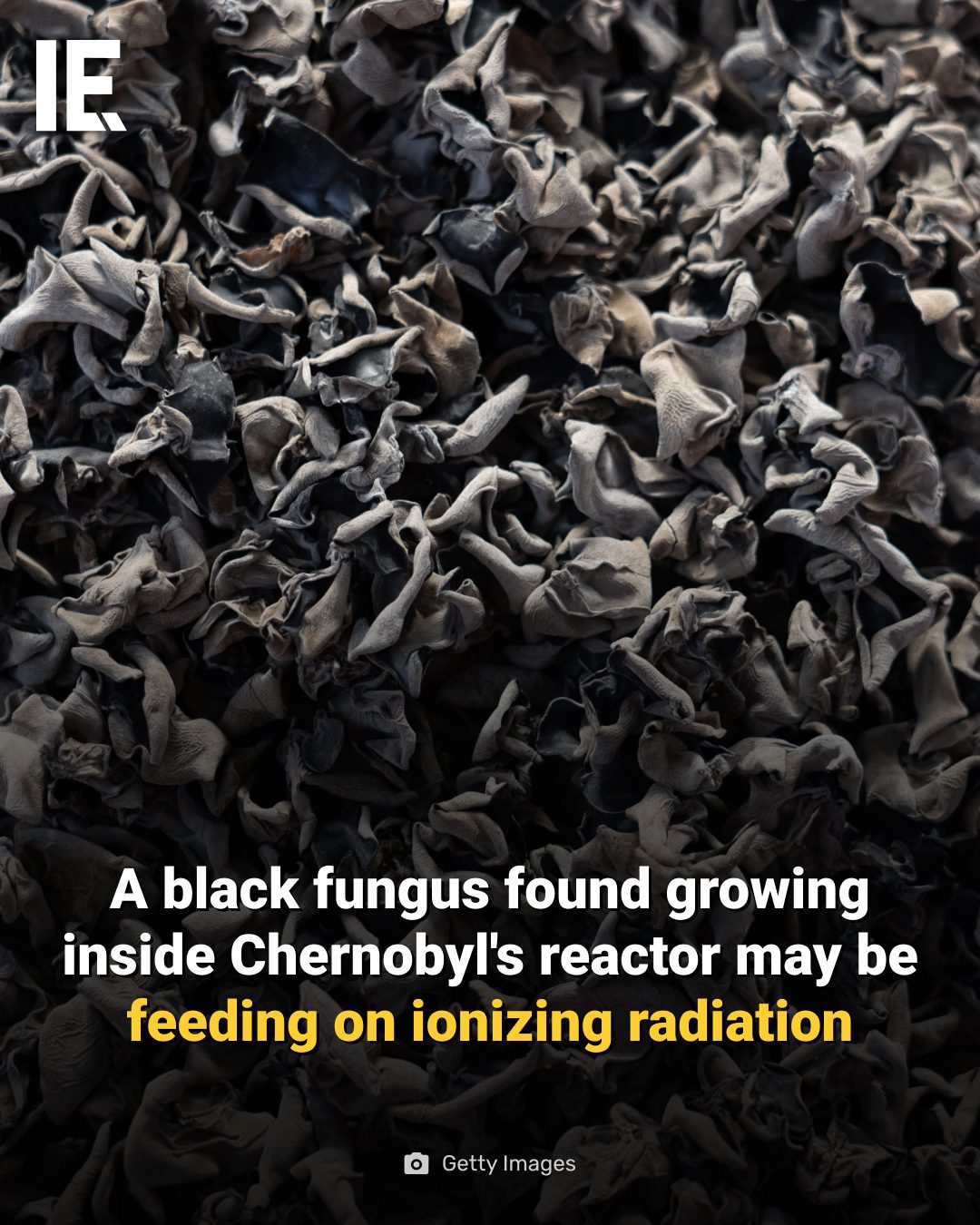
Chernobyl's Radiation-Loving Fungus
Inside the remnants of Chernobyl's Unit Four reactor, scientists discovered an extraordinary phenomenon. Among the debris and radiation, a unique form of dark, melanin-rich fungus was thriving. This wasn't just resilience; the fungus, predominantly Cladosporium sphaerospermum, seemed to flourish in the presence of intense ionizing radiation. This discovery shone a spotlight on the potential of fungi to interact with radiation in ways that could revolutionize our understanding of biology and energy conversion.
Context / Why This Matters
The Chernobyl disaster of 1986 left behind a landscape contaminated with unprecedented levels of radiation. The fungus found in the reactor's ruins offered a glimpse into nature's adaptability and the potential for novel biological processes. Understanding how this fungus interacts with radiation could have significant implications for astrobiology, radiation protection, and even the search for extraterrestrial life.
Main Discussion
The Discovery
In the late 1990s, a team of scientists embarked on a mission to survey the damaged reactor. What they found was astonishing: a thriving community of fungi, particularly Cladosporium sphaerospermum, growing on the reactor's interior walls. This species, rich in melanin, a pigment known for its protective properties, appeared to not only tolerate but also benefit from the high levels of radiation.
Radiosynthesis: A New Biological Process
Researchers hypothesized that the fungus's melanin might enable it to convert ionizing radiation into a usable form of energy, a process they termed "radiosynthesis." This process is loosely analogous to photosynthesis, where plants convert light energy into chemical energy. In the case of Cladosporium sphaerospermum, the hypothesis suggests that the fungus might be harnessing radiation in a similar way, albeit through a different mechanism.
Testing in Space
The potential of this fungus didn't go unnoticed by space agencies. Cladosporium sphaerospermum was later tested on the exterior of the International Space Station (ISS). The results were intriguing: the fungus measurably blocked cosmic radiation from passing through. This finding held promise for developing new radiation-protective materials, potentially shielding astronauts and spacecraft from harmful radiation.
Unanswered Questions
Despite these groundbreaking observations, the exact mechanism behind this fungus's interaction with radiation remains a mystery. While the hypothesis of radiosynthesis is compelling, it has yet to be definitively proven. Scientists have not yet identified a clear energy-harvesting pathway. The fungus's ability to convert radiation into energy, if confirmed, would represent a groundbreaking advancement in our understanding of biological energy conversion.
Practical Tips
While the practical applications of this discovery are still in the realm of speculation, there are several areas where this research could lead to tangible benefits:
-
Radiation Protection: Developing materials that can block or absorb radiation, inspired by the fungus's melanin-rich properties, could be game-changing for protecting humans in high-radiation environments, both on Earth and in space.
-
Energy Conversion: If the fungus truly can convert radiation into energy, this could open new avenues for energy production, particularly in environments where radiation is abundant, such as near nuclear reactors or in space.
-
Astrobiology: Understanding how life can thrive in extreme environments like Chernobyl could inform the search for life beyond Earth. If fungi can survive and potentially thrive in such harsh conditions, it raises questions about the adaptability of life in other parts of the universe.
Important Takeaways
The discovery of radiation-loving fungi in Chernobyl opens up a world of possibilities for understanding biological processes and their potential applications. While the exact mechanisms remain unknown, the potential for developing new protective materials, energy conversion methods, and insights into astrobiology is profound.
Conclusion
Cladosporium sphaerospermum, the melanin-rich fungus found in Chernobyl, offers a fascinating glimpse into nature's resilience and adaptability. Whether it truly converts radiation into energy or simply thrives in its presence, this organism has already sparked significant scientific interest and could pave the way for future advancements in various fields. As research continues, the mysteries surrounding this extraordinary fungus may gradually unravel, revealing new horizons for biological and energy science.
Watch the Reel
Questions readers ask
What is the Chernobyl fungus and why is it significant?
The Chernobyl fungus, predominantly Cladosporium sphaerospermum, is a melanin-rich fungus found thriving in the highly radioactive environment of the Chernobyl reactor. Its significance lies in its ability to not only survive but also potentially convert radiation into energy, offering insights into novel biological processes and energy conversion methods.
How does the Chernobyl fungus interact with radiation?
The fungus interacts with radiation by absorbing the energy from ionizing radiation, which it is hoped can be converted into energy. This interaction is believed to be facilitated by the melanin in the fungus, which is known for its ability to absorb light and other forms of energy.
Could this fungus be used to clean up radioactive sites?
While the Chernobyl fungus shows promise in its ability to thrive in radioactive environments, its use in cleaning up radioactive sites is still a topic of ongoing research. Scientists are exploring whether this fungus could be harnessed for bioremediation, but more studies are needed to understand its full potential and any potential risks.
What are the implications of this discovery for space exploration?
The discovery of the Chernobyl fungus has significant implications for space exploration, as it suggests that life could potentially thrive in extreme environments beyond Earth. This could inform the search for extraterrestrial life and the development of technologies for long-duration space missions, where radiation exposure is a major concern.
Is the Chernobyl fungus safe to handle?
The Chernobyl fungus itself is not inherently dangerous to handle, as it is a naturally occurring organism. However, the environment in which it thrives—highly radioactive areas—poses significant health risks. Therefore, any handling of the fungus would need to be done in a controlled environment with appropriate safety measures.
What role does melanin play in the fungus's ability to thrive in radiation?
Melanin is a pigment found in the fungus that is believed to play a crucial role in its ability to thrive in high-radiation environments. Melanin can absorb and disperse energy, which may allow the fungus to convert the radiation into a usable form of energy, enabling its survival and growth in such extreme conditions.
What are the next steps in researching this unique fungus?
The next steps involve further laboratory studies to understand the precise mechanisms by which the fungus interacts with radiation. Researchers aim to isolate and study the genes and biological processes that enable this unique ability, with the goal of potentially applying these findings to practical technologies for energy conversion and environmental remediation.
Related deep dives
Similar reads based on topic and creator.



Recent articles
Fresh deep dives from the latest Reels we unpacked.




Comments
Be the first to comment.