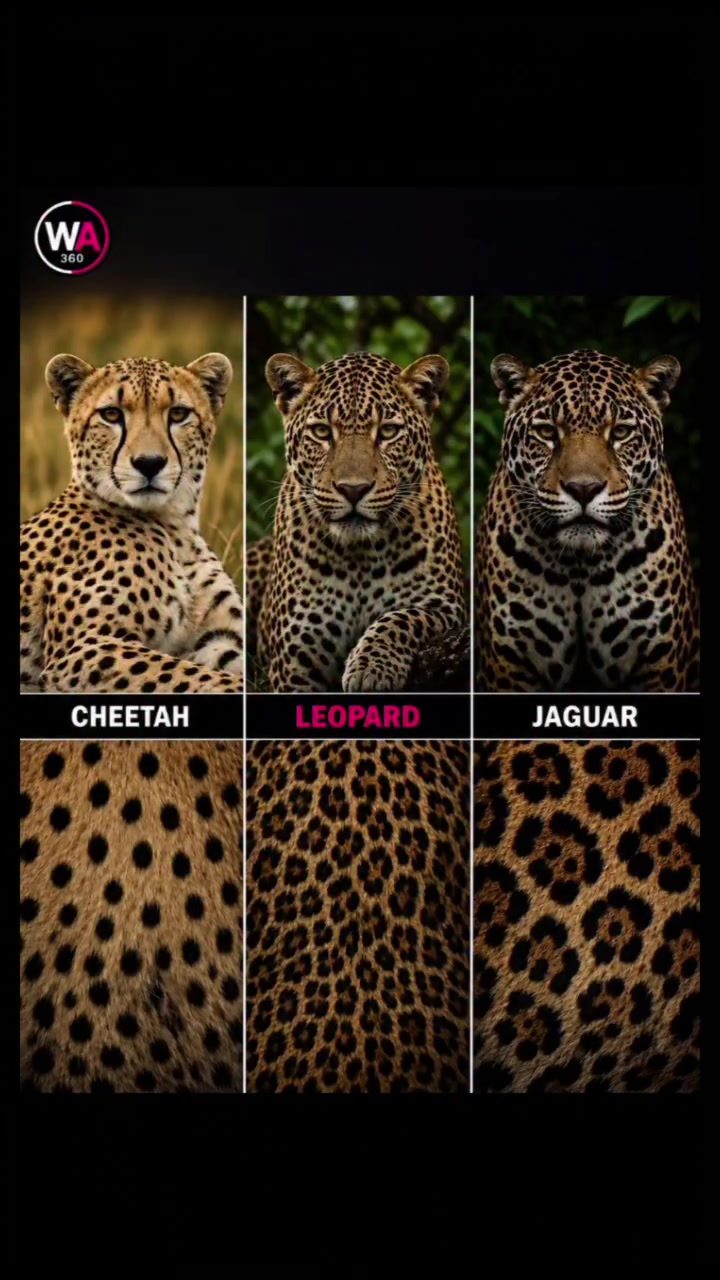
Big Cat Identification
The three big cats, cheetahs, leopards, and jaguars, are often mistaken for one another due to their similar appearances. However, a closer examination reveals distinct characteristics that set each species apart. Understanding these differences not only aids in identification but also provides insight into the unique adaptations and habitats of these magnificent predators.
Context / Why This Matters
Recognizing the differences between cheetahs, leopards, and jaguars is more than just a fun trivia exercise. It aids in conservation efforts, wildlife management, and ecological research. Each of these big cats plays a crucial role in its respective ecosystem, and accurate identification helps in tracking their populations, understanding their behaviors, and implementing effective protection measures.
Main Discussion
Cheetahs: Speed and Agility
Cheetahs are renowned for their extraordinary speed and agility. Their bodies are designed for swift pursuits, with long, slim legs and a flexible spine that allows for quick direction changes. Cheetahs have a distinctive coat pattern characterized by solid black spots on a tan background. These spots help them blend into their savannah habitats, providing camouflage while hunting. A unique feature of cheetahs is the distinctive "tear marks" that run from the inner corners of their eyes down to their mouths. These markings are thought to reduce glare from the sun, enhancing their vision during daytime hunts.
Leopards: Masters of Stealth
Leopards are expert climbers and stealthy hunters, often found in forests and grasslands. Their coat patterns consist of smaller, rosette-shaped spots that are well-suited for blending into complex environments. These spots help leopards remain hidden from both prey and potential predators. Leopards are known for their powerful build and muscular bodies, which allow them to climb trees effortlessly. This ability helps them evade competitors and store their kills in trees, keeping them safe from scavengers. Leopards are solitary animals, and their elusive nature makes them a fascinating subject of study for wildlife enthusiasts.
Jaguars: Strength and Power
Jaguars are the largest of the three big cats, known for their powerful build and strong bite force. Their coat patterns feature larger, more complex rosette spots with dark spots inside them. These rosettes are spread out in a way that aids in their stealthy hunting techniques. Unlike leopards, jaguars are often found in dense forests and wetlands, where their strong swimming abilities come in handy. Jaguars are known for their powerful jaws, which allow them to pierce through the shells of armored prey like armored catfish and caimans. Their hunting style is characterized by patience and ambush tactics, making them formidable predators in their ecosystems.
Practical Tips
Identifying big cats in the wild can be challenging, but knowing the key features can make a significant difference. Here are some practical tips to help you distinguish between cheetahs, leopards, and jaguars:
-
Cheetahs: Look for the solid black spots on a tan background and the distinctive "tear marks" running from the eyes to the mouth. Cheetahs are also known for their lean, athletic build and long legs.
-
Leopards: Focus on the smaller, rosette-shaped spots. Leopards have a more muscular build compared to cheetahs and jaguars. If you spot one in a tree, it's likely a leopard, as they are known for their tree-climbing abilities.
-
Jaguars: Notice the larger, more complex rosettes with darker spots inside. Jaguars have a stocky, powerful build and are often found in dense forest habitats. Their strong swimming abilities and ambush tactics are also distinguishing features.
Important Takeaways
Each of these big cats has unique characteristics that make them well-suited to their respective environments. Cheetahs' speed and agility, leopards' climbing abilities and stealth, and jaguars' powerful build and strong bite force are all adaptations that have evolved over time to ensure their survival and success as predators. Understanding these differences not only aids in identification but also deepens our appreciation for the remarkable diversity and complexity of the natural world.
Conclusion
Distinguishing between cheetahs, leopards, and jaguars is a fascinating endeavor that highlights the incredible diversity of big cats. Each species has evolved unique characteristics that set them apart, from the cheetah's tear marks and solid black spots to the leopard's rosette-shaped spots and the jaguar's complex rosettes. Recognizing these differences is essential for conservation efforts and ecological research, ensuring that these magnificent predators continue to thrive in their natural habitats. By understanding and appreciating the unique features of these big cats, we can contribute to their preservation and the overall health of their ecosystems.
Watch the Reel
Questions readers ask
What are the key differences in the coat patterns of cheetahs, leopards, and jaguars?
Cheetahs have solid black spots all over their bodies, while leopards have rosettes with small spots inside them. Jaguars have rosettes that may or may not contain a small spot, and they have a unique design on their head and shoulders. The spots on leopards are more irregularly shaped, and they have fewer spots on their belly, which is usually a pale color.
How can I distinguish between a leopard and a jaguar based on their spots?
Leopards have rosettes with small spots inside them. Jaguars have rosettes that may or may not contain a small spot, plus they have a unique design on their head and shoulders. Leopards have fewer spots on their belly, which is usually a pale color. Jaguars have more spots all around their body.
What are some unique physical characteristics of cheetahs that set them apart from leopards and jaguars?
Cheetahs have a distinctive 'tear mark' that runs from the corner of their eyes to the sides of their nose. They also have a slimmer body type with long, lean legs, which helps them reach speeds of up to 70 miles per hour. Cheetahs have a smaller head and a longer tail than leopards and jaguars.
Why is it important to accurately identify big cats in the wild?
Accurate identification of big cats is crucial for tracking their populations, understanding their behaviors, and implementing effective conservation strategies. It also aids in wildlife management and ecological research. Each big cat plays a unique role in its ecosystem, so knowing how to tell them apart helps in preserving these roles.
How can understanding the differences between cheetahs, leopards, and jaguars aid in conservation efforts?
By understanding the differences between cheetahs, leopards, and jaguars, conservationists can better track and protect these species. This includes monitoring population sizes, studying behavior, and implementing targeted conservation strategies. Each big cat has unique adaptations and habitats, so accurate identification is key to preserving these magnificent predators.
What are some behavioral differences between cheetahs, leopards, and jaguars?
Cheetahs are diurnal, meaning they are most active during the day, while leopards and jaguars are primarily nocturnal. Leopards are known for their tree-climbing abilities and often drag their prey up into trees. Jaguars are strong swimmers and are often found near water sources. Cheetahs are known for their high-speed chases, while leopards and jaguars prefer to ambush their prey.
Related deep dives
Similar reads based on topic and creator.




Recent articles
Fresh deep dives from the latest Reels we unpacked.




Comments
Be the first to comment.