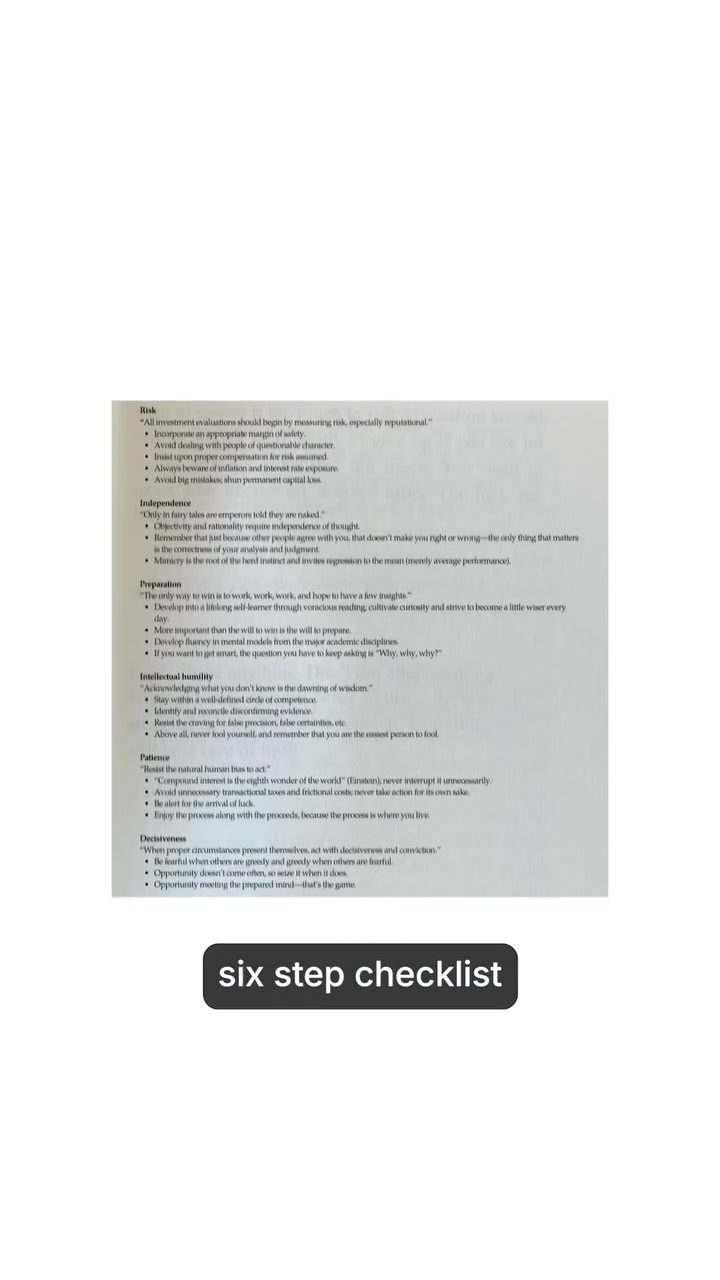
Charlie Munger's Checklist for Clear Thinking
Charlie Munger, renowned for his partnership with Warren Buffett and his significant contributions to Berkshire Hathaway, has long been admired for his decision-making prowess. At the core of his success lies a systematic six-step framework that helps eliminate emotional biases and costly mistakes. This framework, now accessible through an AI prompt, can be a powerful tool for entrepreneurs and investors alike. The AI prompt walks users through Munger's complete decision-making process, making it available for anyone to leverage.
Why This Matters
Entrepreneurs and investors often face high-pressure situations where poor decisions can lead to significant losses. Unlike generic business advice, this framework is specifically designed to help individuals navigate complex decisions with clarity and precision. By following Munger's methodology, anyone can reduce the risk of costly mistakes, avoid analysis paralysis, and make informed, strategic decisions.
The Six-Step Decision-Making Framework
The six-step checklist is designed to guide users through a structured decision-making process. Here’s a breakdown of each step and how it contributes to clear thinking:
1. Interview About Your Decision
The process begins by interviewing you about your specific decision. This step helps clarify your goals, assess your current situation, and identify any potential biases. By understanding the context and your personal motivations, the framework ensures that your decision is grounded in reality rather than hypothetical assumptions.
2. Risk Assessment
Risk assessment is a critical component of Munger’s framework. This step involves evaluating potential risks and their impact on your decision. By identifying and analyzing these risks, you can develop contingency plans and mitigate potential threats. This step often utilizes matrices to visualize risk and likelihood, providing a clear view of potential outcomes.
3. Independent Thinking
Independent thinking is essential for making unbiased decisions. This step encourages you to think critically and challenge conventional wisdom. It helps you avoid pitfalls like groupthink and ensures that your decision is based on thorough analysis rather than popular opinion. By fostering independent thinking, you can spot opportunities that others might miss.
4. Preparation Strategies
Preparation strategies are designed to prevent blind spots and ensure that all aspects of a decision are considered. This step involves thorough research, seeking diverse perspectives, and identifying potential obstacles. By thoroughly preparing, you enhance your ability to make informed decisions and reduce the likelihood of surprises.
5. Inversion Method
The inversion method, a technique popularized by Munger, involves flipping a problem on its head. Instead of focusing on how to achieve success, you consider how to fail. This step helps you identify potential deal-killers and develop strategies to avoid them. By thinking in reverse, you can uncover hidden risks and create a more robust decision-making process.
6. Decision Scorecard
Finally, the framework creates a decision scorecard based on Munger’s proven criteria. This scorecard provides a comprehensive evaluation of your decision, considering factors such as risk, reward, and feasibility. By scoring your decision, you gain a clearer understanding of its potential and can make more informed choices.
Practical Tips
To make the most of Munger's decision-making framework, consider the following practical tips:
1. Tailor the Framework to Your Situation
While the framework is highly effective, it's important to adapt it to your specific situation. Whether you're evaluating an acquisition, investment opportunity, strategic partnership, or major business pivot, ensure that the framework aligns with your unique circumstances.
2. Leverage AI for Guidance
Using an AI prompt to guide you through the framework can enhance your decision-making process. Simply paste the prompt into an AI tool like Claude, ChatGPT, or Perplexity, and let it interview you about your specific decision. The AI will then guide you through the risk assessment, independent thinking, and preparation strategies, making the process more efficient and effective.
3. Seek Diverse Perspectives
One of the key benefits of Munger’s framework is its emphasis on independent thinking. To truly benefit from this, seek diverse perspectives and challenge your assumptions. This will help you identify potential biases and ensure that your decision is well-rounded and thorough.
4. Document Your Process
Documenting each step of your decision-making process can be invaluable. Keeping a record of your thoughts, analyses, and decisions allows you to reflect on past decisions, learn from mistakes, and continuously improve your decision-making skills.
Important Takeaways
Charlie Munger's six-step decision-making framework offers a structured and effective approach to clear thinking. By following this methodology, entrepreneurs and investors can reduce the risk of emotional biases, avoid costly mistakes, and make informed decisions. The framework's adaptability ensures that it can be applied to various situations, making it a valuable tool for anyone seeking to enhance their decision-making capabilities.
Key takeaways from this framework include:
- Systematic Approach: The six-step process provides a clear and systematic approach to decision-making, ensuring that all aspects of a decision are considered.
- Risk Management: The framework emphasizes risk assessment and preparation strategies, helping to identify and mitigate potential threats.
- Independent Thinking: Encouraging independent thinking fosters critical analysis and helps you spot opportunities that others might miss.
- Adaptability: The framework can be adapted to various situations, making it a versatile tool for entrepreneurs and investors.
Conclusion
Charlie Munger's decision-making framework is a powerful tool for anyone seeking to make clear and informed decisions. By following this six-step process, you can reduce emotional biases, avoid costly mistakes, and navigate complex decisions with confidence. Whether you're evaluating an acquisition, investment opportunity, or strategic partnership, this framework provides a comprehensive and effective approach to decision-making. By integrating AI tools and seeking diverse perspectives, you can further enhance your decision-making process and achieve better outcomes.
Watch the Reel
Questions readers ask
What are the six steps in Charlie Munger's decision-making framework?
Charlie Munger's decision-making framework consists of six steps: clearly defining the problem, gathering relevant information, evaluating options, considering potential consequences, making a decision, and reviewing the outcome. This structured approach helps users navigate complex situations systematically, minimizing emotional biases and costly errors in their decision-making process.
How does AI enhance Charlie Munger's decision-making framework?
AI enhances Charlie Munger's decision-making framework by providing a structured, objective process that guides users through each step. The AI prompt ensures that all necessary considerations are addressed, helping users maintain clarity and focus, even under pressure. This integration allows for more informed and strategic decisions, reducing the chances of emotional biases influencing the outcome.
Who can benefit from using this AI-powered decision-making tool?
Entrepreneurs and investors, in particular, can greatly benefit from this AI-powered decision-making tool. It is especially useful in high-pressure scenarios where the stakes are high, and clear, strategic decisions are crucial. By leveraging Munger's framework, users can make more informed choices, avoid costly mistakes, and improve their overall decision-making abilities.
What specific benefits does this framework offer over generic business advice?
Unlike generic business advice, this framework is specifically designed to address decision-making in high-stakes scenarios. It provides a clear, structured approach that helps users mitigate emotional biases and focus on critical factors, ensuring each decision is well-considered and strategic. This makes it a valuable tool for independent decision-making in complex situations.
How can entrepreneurs use this framework to improve their risk assessment in business decisions?
Entrepreneurs can use this framework to improve their risk assessment by systematically evaluating each potential outcome of a decision. By considering the consequences of different options, entrepreneurs can better understand the risks involved and make more informed choices. This process helps in identifying potential pitfalls and preparing contingency plans, thus enhancing the overall quality of strategic decisions.
What role does the AI prompt play in this decision-making process?
The AI prompt acts as a guide, walking users through each of the six steps in Munger's decision-making framework. By providing a structured, step-by-step approach, the AI prompt ensures that users do not overlook essential considerations. It serves as a reliable tool for maintaining objectivity and clarity, making it easier to make strategic, independent decisions, especially in high-pressure situations.
Can this framework help in making clear, strategic investment decisions?
Absolutely. This framework is particularly valuable for making clear, strategic investment decisions. By following the structured steps, investors can evaluate opportunities more thoroughly, consider all potential outcomes, and make decisions based on comprehensive analysis rather than emotional impulses. This helps in reducing costly mistakes and improving the overall effectiveness of investment strategies.
Related deep dives
Similar reads based on topic and creator.

Recent articles
Fresh deep dives from the latest Reels we unpacked.




Comments
Be the first to comment.