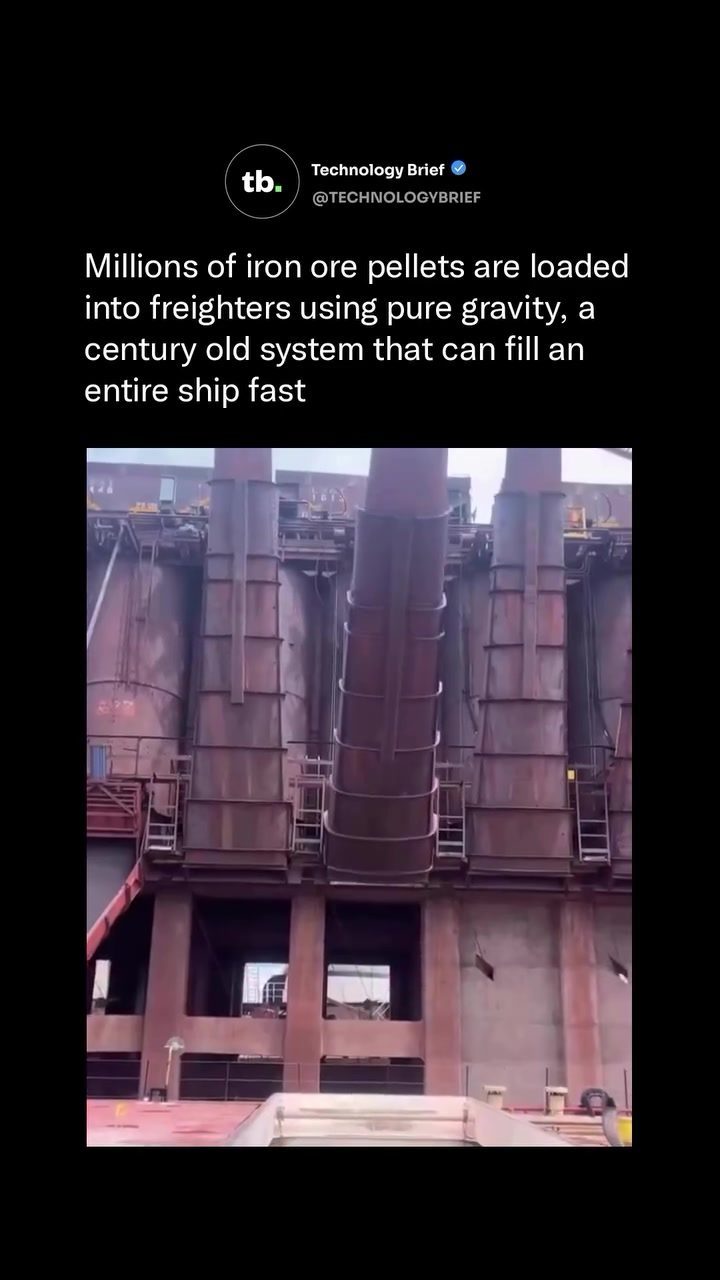
Iron Ore Loading Systems
Ore docks utilize an efficient gravity-fed chute system designed to load millions of iron ore pellets directly into the holds of waiting freighters. These tall, imposing structures feature rows of storage pockets along their length. Each pocket is fitted with a hinged steel chute that extends down into the ship’s open hatch. The chutes are meticulously spaced at 12-foot intervals, a design that has evolved in tandem with the ships themselves to ensure perfect alignment with every hatch.
Why This Matters
The loading of iron ore pellets is a critical process in the mining and shipping industries, particularly in regions rich with iron ore deposits, such as those around Lake Superior. This century-old system, which has been in use since the late 1800s, remains one of the most efficient and cost-effective methods for bulk loading.
The Gravity-Fed System
Historical Context
The gravity-fed chute system for loading iron ore pellets has a rich history. It was developed during the late 19th century when rich iron ore deposits were discovered around Lake Superior. The system was designed to handle the massive quantities of taconite pellets — a type of iron ore — that needed to be transported efficiently. The design of the system has remained largely unchanged over the years, a testament to its effectiveness.
Design and Functionality
The design of the ore docks is both simple and brilliant. The tall structures hold rows of storage pockets, each fitted with a hinged steel chute. These chutes are lowered into the ship’s open hatch, allowing the iron ore pellets to cascade down directly into the hold. The chutes are spaced at 12-foot intervals, ensuring that they align perfectly with the hatches of the freighters. This precise design allows for quick and efficient loading, minimizing the time each ship spends at the dock.
Efficiency and Speed
One of the most impressive aspects of this system is its speed. Because the system relies entirely on gravity to move the iron ore pellets, it can fill an entire ship much faster than other methods, such as cranes or conveyor belts. This efficiency is crucial in the shipping industry, where time is a valuable commodity. Large freighters, capable of carrying over 68,000 tons of taconite pellets in a single run, are built specifically to match the design of the ore docks.
The Great Lakes Fleet
The Great Lakes fleet of freighters is uniquely designed to work with this system. The hatch sizes and spacing on these ships are matched exactly to the layout of the dock’s chutes. This synchronization ensures a seamless loading process, further enhancing the efficiency of the system. The interplay between the docks and the ships is a harmonious example of industrial engineering.
Advantages of the Gravity-Fed System
Cost-Effectiveness
The gravity-fed system is extremely cost-effective. There are no pumps, lifts, or other mechanical devices required to move the pellets. The system simply relies on stored ore dropping straight down by its own weight, reducing the need for expensive machinery and maintenance.
Environmental Impact
The simplicity of the system also has environmental benefits. With fewer moving parts and less reliance on machinery, the system produces less waste and has a smaller carbon footprint compared to more mechanized methods.
Practical Tips
- Optimize Storage Pockets: Ensure that the storage pockets are well-maintained and capable of holding the maximum amount of pellets to minimize the need for frequent refills.
- Maintain Chute Alignment: Regularly inspect and adjust the chutes to ensure they align perfectly with the ship’s hatches. This alignment is crucial for the efficiency of the loading process.
- Monitor Freight Schedules: Coordinate the loading process with the arrival and departure schedules of the freighters to minimize downtime and maximize efficiency.
Important Takeaways
The gravity-fed chute system for loading iron ore pellets is a marvel of industrial engineering. Its simplicity and efficiency make it one of the most effective and economical methods for bulk loading in the shipping industry. The system’s design, which has evolved over a century, ensures that it remains relevant and useful in modern times.
Conclusion
The gravity-fed chute system used at ore docks is a testament to the enduring value of well-designed industrial solutions. From its historical roots to its modern applications, this system continues to play a vital role in the efficient transportation of iron ore pellets. As the demand for iron ore remains high, the importance of this system and the infrastructure that supports it will only continue to grow.
Watch the Reel
Questions readers ask
How does the gravity-fed system work for loading iron ore?
The gravity-fed system uses simple physics to load iron ore. Ore pellets are released from storage pockets and cascade through hinged steel chutes directly into the ships' holds, eliminating the need for complex machinery or power sources.
Why is the spacing of the chutes so important in iron ore loading?
The chutes are spaced precisely at 12-foot intervals to align perfectly with the hatches of the ships, ensuring efficient and rapid loading.
What makes this gravity-fed system so efficient for iron ore loading?
This system is highly efficient due to its simplicity and direct loading process. It minimizes handling and reduces the risk of spillage or damage to the iron ore pellets, making it a cost-effective solution.
Where is this gravity-fed system predominantly used?
The gravity-fed system is predominantly used in regions with significant iron ore deposits, such as around Lake Superior, where the mining and shipping industries thrive.
What role do ore loading docks play in the iron ore shipping process?
Ore loading docks are crucial in the iron ore shipping process as they house the gravity-fed system and facilitate the rapid, efficient loading of iron ore pellets into waiting freighters.
How has the ore chute design evolved to support efficient iron ore loading?
The ore chute design has evolved to ensure precise alignment with ship hatches. This includes the use of hinged steel chutes that extend into the ship's open hatches, allowing for smooth, uninterrupted flow of ore.
What are the benefits of using a gravity chute design for bulk ore loading?
The gravity chute design benefits bulk ore loading by providing a straightforward, low-maintenance method of transferring large volumes of iron ore. It also reduces the need for heavy machinery and ensures even distribution of the ore during loading.
Recent articles
Fresh deep dives from the latest Reels we unpacked.




Comments
Be the first to comment.