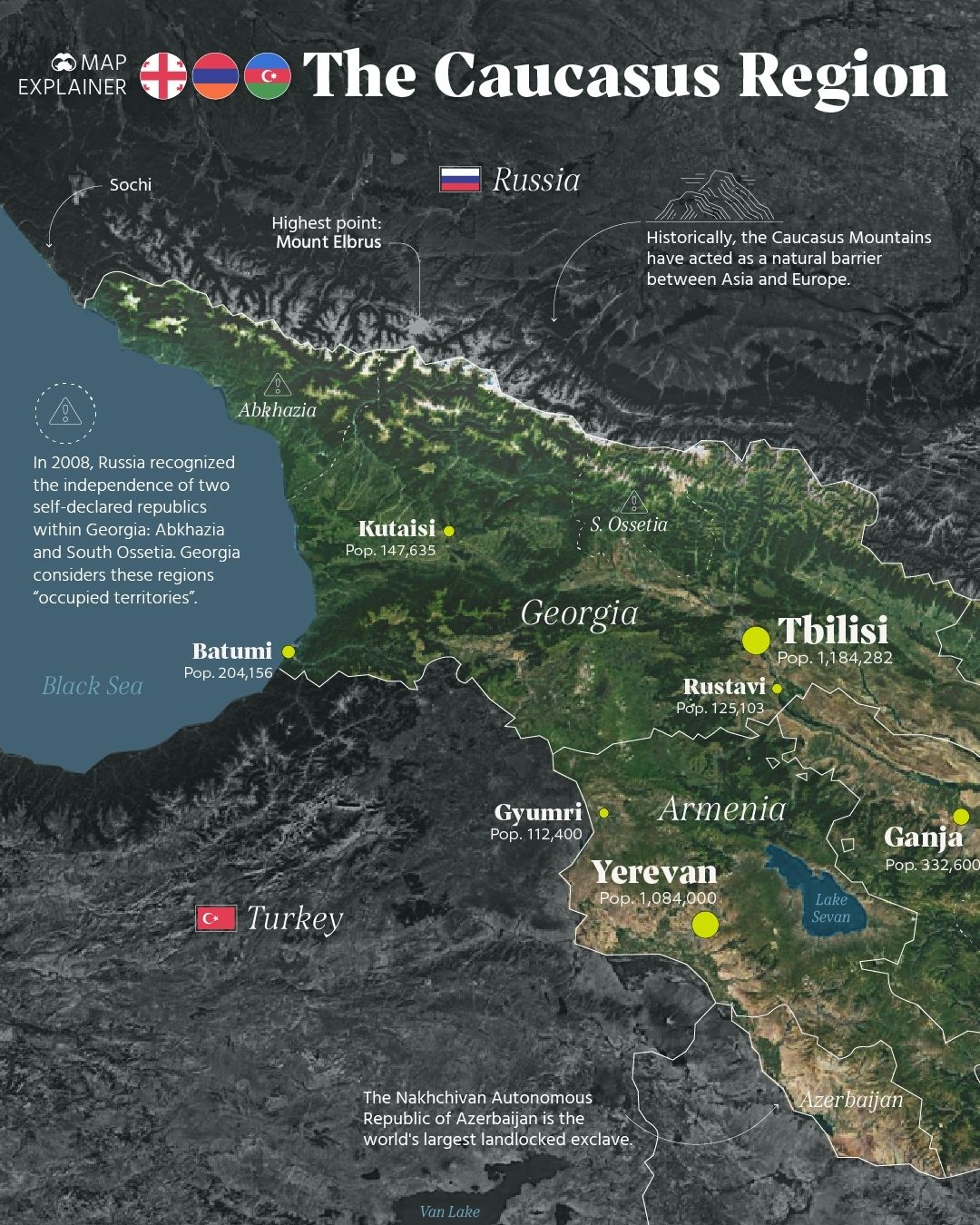
The Caucasus Region: A Comprehensive Overview
The Caucasus region, nestled between the Black Sea and the Caspian Sea, is a complex tapestry of diverse cultures, histories, and geopolitical dynamics. The area is bordered by major global players such as Russia, Iran, and Turkey, and includes countries like Georgia, Armenia, and Azerbaijan.
Context: Why This Matters
Understanding the Caucasus region is crucial for grasping the broader dynamics of Eurasia. The area's strategic location makes it a vital hub for trade, energy, and geopolitical influence. The ongoing territorial disputes, particularly the Nagorno-Karabakh conflict, highlight the region's importance in global security discussions.
Main Discussion
Geographical and Political Landscape
The Caucasus region is a geographical marvel, characterized by the massive Caucasus Mountains, which include the highest point in the region, Mount Elbrus. These mountains divide the region into distinct sub-regions, each with its unique cultural and political identity.
Major Countries in the Caucasus
-
Russia: The northern part of the Caucasus is dominated by Russia, which includes federal subjects like Chechnya and Dagestan. These regions play a significant role in Russia's internal politics and have faced numerous conflicts over the years.
-
Georgia: Located at the crossroads of Europe and Asia, Georgia is known for its rich history and vibrant culture. Key cities like Tbilisi and Kutaisi are pivotal in understanding the country's economic and political landscape.
-
Armenia: Armenia is situated at the intersection of Eastern Europe and Western Asia. With Yerevan as its capital, the country has historically faced territorial and cultural conflicts, particularly with Azerbaijan.
-
Azerbaijan: Positioned on the Caspian Sea, Azerbaijan is a significant player in the region's geopolitics. Baku, its capital, is a major oil and gas producer, contributing to the country's economic stability.
-
Turkey: Though predominantly in Asia, Turkey's westernmost part extends into the Caucasus region, bordering Georgia and Armenia. While primarily a crossroads for trade, it has a significant influence in the region's political affairs.
Key Cities and Geographical Features
-
Sochi, Russia: Known for hosting the 2014 Winter Olympics, Sochi is a major tourist destination on the Black Sea coast.
-
Mount Elbrus, Russia: As the highest peak in the Caucasus Mountains, Mount Elbrus is a significant geographical feature and a popular destination for mountaineers and adventurers.
-
Lake Sevan, Armenia: This is the largest lake in the Caucasus and a crucial source of fresh water for Armenia, playing a pivotal role in its ecology and agriculture.
-
Black Sea and Caspian Sea: These two seas border the region and are essential for maritime trade and fishing industries. They also influence the weather and climate of the surrounding areas.
Economic Activities
The Caucasus region is rich in natural resources, particularly oil and gas, making it a hub for significant economic activities. Oilfields like the Azeri-Chirag-Gunashli are key components of this industry.
- Azerbaijan: Known for its oil and gas reserves, particularly in the Azeri-Chirag-Gunashli oilfields, Azerbaijan is a major player in the global energy market.
Population Distribution
The region has a diverse population distribution, with each country and sub-region having its unique demographic makeup. Key cities like Yerevan, Tbilisi, and Baku serve as major population centers, each with its unique cultural and economic dynamics.
Practical Tips
When studying or visiting the Caucasus region, it is essential to understand the nuances of each country and sub-region.
-
Cultural Sensitivity: Be aware of the historical and cultural sensitivities, especially in areas affected by conflict, like Nagorno-Karabakh and Abkhazia.
-
Language: While Russian and local languages are predominant, English is widely spoken, especially in tourist areas and big cities.
-
Safety: Always check the latest travel advisories for the specific regions you plan to visit, as security conditions can change rapidly.
Important Takeaways
-
Geopolitical Significance: The Caucasus region is a critical geopolitical hub, influencing global trade, energy, and security dynamics.
-
Cultural Diversity: The region is a melting pot of diverse cultures, each with its unique history and traditions.
-
Economic Potential: Rich in natural resources, the Caucasus offers significant economic opportunities, particularly in oil and gas.
-
Conflicts and Stability: Understanding the ongoing conflicts, such as the Nagorno-Karabakh dispute, is crucial for navigating the region's complex political landscape.
Conclusion
The Caucasus region is a fascinating and complex area that offers a wealth of cultural, historical, and economic insights. Whether you are a traveler, a historian, or a geopolitical analyst, understanding this region provides a deeper appreciation of its significance in the broader global context. From the towering peaks of Mount Elbrus to the bustling cities of Baku and Yerevan, the Caucasus is a region that continues to shape and be shaped by the forces of history, culture, and geopolitics.
Watch the Reel
Questions readers ask
What countries are included in the Caucasus region map?
The Caucasus region map typically includes Russia, Georgia, Armenia, and Azerbaijan. Additionally, it may encompass parts of Turkey and Iran, given their significant influence and geographical proximity.
What makes the Caucasus region a key player in geopolitics?
The Caucasus region's strategic location between the Black and Caspian Seas makes it a crucial hub for international trade and energy routes. Its proximity to major global powers like Russia, Turkey, and Iran adds to its geopolitical significance.
What is the Nagorno-Karabakh conflict, and why is it important?
The Nagorno-Karabakh conflict is a territorial dispute between Armenia and Azerbaijan over the Nagorno-Karabakh region. It is important because it highlights the complex geopolitical dynamics and potential for wider regional instability in the Caucasus.
What is the cultural diversity of the Caucasus like?
The Caucasus region is renowned for its rich cultural diversity, with a mix of various ethnic groups, languages, and traditions. This diversity is reflected in the region's architecture, cuisine, and cultural practices, each with its own unique characteristics.
Which countries border the Caucasus region?
The Caucasus region is bordered by several countries, including Russia to the north, Turkey to the south, and Iran to the south-east. These borders significantly influence the region's geopolitical dynamics and cultural exchange.
What are the main conflict zones in the Caucasus?
The main conflict zones in the Caucasus include the Nagorno-Karabakh region, which is disputed between Armenia and Azerbaijan, and the regions of Abkhazia and South Ossetia, which are contested between Georgia and Russia.
What is the significance of the Caucasus population?
The Caucasus population is diverse, with each country having its own unique demographic composition. Understanding these demographics is essential for appreciating the region's political, social, and economic dynamics, as they influence governance, resource allocation, and cultural practices.
Related deep dives
Similar reads based on topic and creator.

Recent articles
Fresh deep dives from the latest Reels we unpacked.




Comments
Be the first to comment.