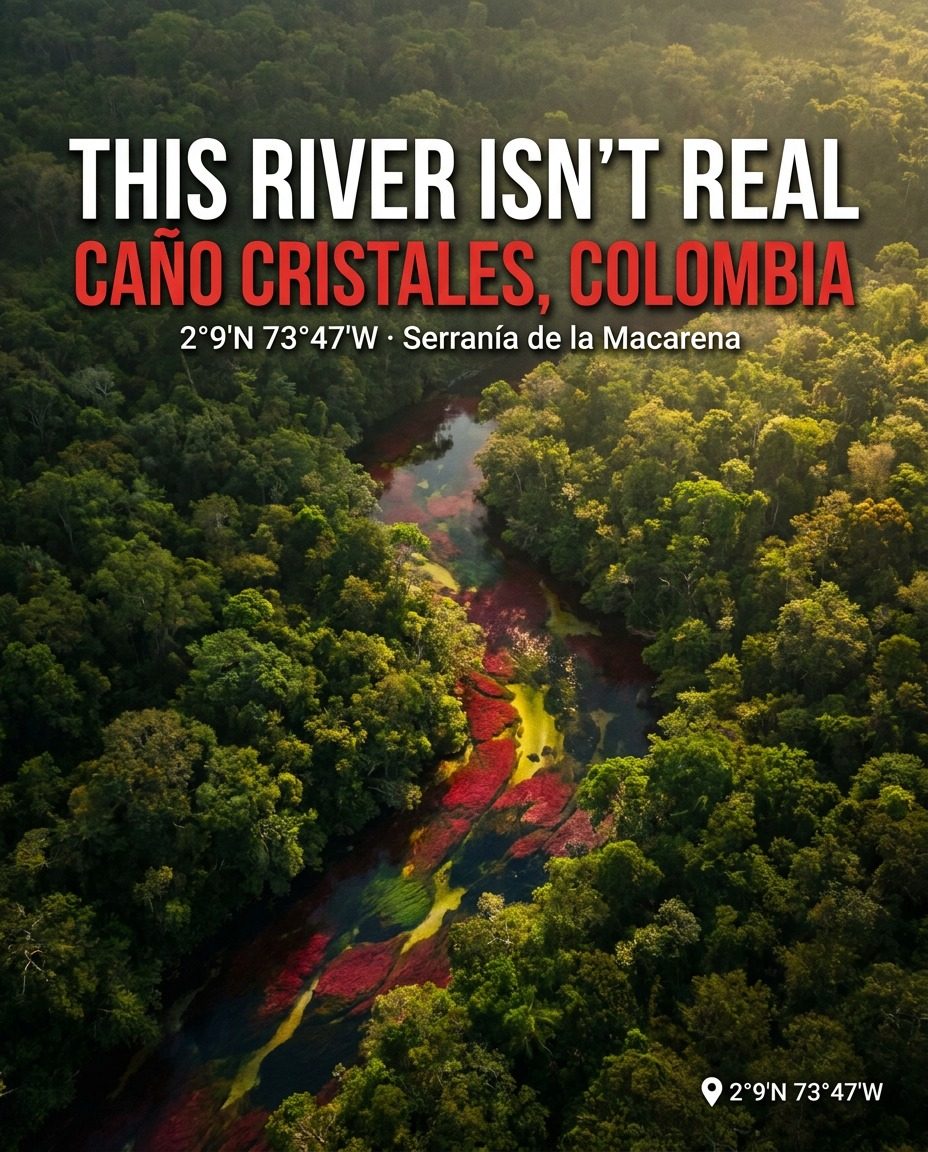
The Possible Magic of Colombia’s Colored River
Color is a powerful force in nature. For visitors of the Serranía de la Macarena National Natural Park in Colombia, the vanguard Schege (Macarenia clavigera) swiftly converts the water of the Caño Cristales river. In the heart of Colombia, the river teems with vibrant arrangements of red, green, and blue. This impossibility — the ruthless force of color in nature — shapes the river. The name Caño Cristales translates to "Crystal Stream". People call it "the river of five colors" or “the liquid rainbow.” The colors aren't always present, though. Peak blooming typically occurs between June and November, coinciding with the dry season. “This river isn't real,” the on-screen text at the beginning reads, but don’t be fooled. This river is very real, and the extraordinary sight is an optical phenomenon called chromaticism. The vibrant colors are not dyed, nor are they an optical illusion. They are the result of a bed of aquatic plants that line the river bottom. The vibrant colors of the plant are a result of Macarenia clavigera, an understudied aquatic plant. When the plant is fully grown, it colors the river and creates an incredible spectacle. But the stunning sight is only possible as consequence of a confluence of factors.
Biochemistry Fails the Visitor
Most people believe the vibrant colored water is due to dye added to entice tourists. Yet schematically, the vivid colors are caused by the water plant, Macarenia clavigera. This plant is the source of all colors in the river, and minimal concentrations of the plant can cause the water to turn red, green or blue. People believe this is a result of dye being added to the water. But how does plant life change the chemical composition of the river? When the river is flooded with rainwater, it can lead to the decay of plants. As the plants decay, they release chemicals and nutrients into the river. These nutrients are then absorbed by the bed of aquatic plants, causing them to produce the vibrant colors that we see. When the bed of aquatic plants blooms, it changes the pH of the water, which affects the color. The color of the water is also influenced by the temperature of the water. The beauty is temporary, dependent on the chemical balance of the river. The magic does not always present itself on demand. In the faces of those who witness the vibrant yet inert river, tourists are often confronted with their own mortality. At moments, the vibrant colors may be replaced with a murky brown. But the color shift is not due to pollution. As the coloring and blooming plant life dies, the water returns to a pristine, clear crystal stream.
The Colored River’s Ecosystem
Knowledge of the Caño Cristales river ecosystem is limited. Little is known about the the plant Macarenia clavigera: what causes it to bloom, exactly? Its cause of death? These factors all bloom in the liquid rainbow, but science is suppressing understanding. The plant Macarenia clavigera, which lines the riverbed, propels the color of the river. The bed of this plant can grow to 20 meters deep and can cover the riverbed. It is thought that the plants use the river as a food source and rely on the nutrient-rich water to survive. The plant is believed to be a form of algae, but it is not clear if it is a true plant.
Watch the Reel
Related deep dives
Similar reads based on topic and creator.



Recent articles
Fresh deep dives from the latest Reels we unpacked.




Comments
Be the first to comment.