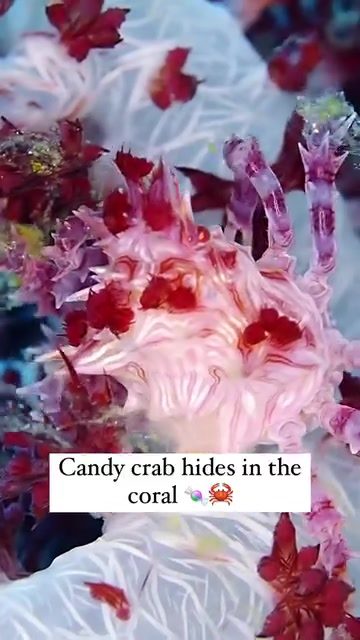
Candy Crabs and Coral Camouflage
The vibrant colors of candy crabs are a true spectacle, especially when seen against the backdrop of coral reefs. These crabs are known for their ability to blend seamlessly into their surroundings, a skill that is both fascinating and essential for their survival.
Why This Matters
Coral reefs are bustling ecosystems teeming with a variety of marine life. They provide shelter, food, and breeding grounds for countless species. Crabs, particularly candy crabs, play a significant role in maintaining the balance of these ecosystems. Their camouflage techniques are not just a visual marvel but also a critical survival mechanism.
Key Points
The Art of Camouflage
Candy crabs are masters of camouflage. Their bodies change color to match the coral they inhabit, making them almost invisible to predators. This adaptation is a result of millions of years of evolution, allowing them to coexist with other marine life without being easily detected. The vibrant colors of the coral reefs serve as both a home and a disguise for these crabs.
Coral Reefs: A Habitat of Rich Diversity
Coral reefs are some of the most biodiverse ecosystems on the planet. They support a vast array of organisms, including fish, mollusks, sponges, and crustaceans. The intricate structure of coral reefs provides ample hiding spots and breeding grounds, making them ideal habitats for candy crabs. The vibrant colors and textures of the coral also help the crabs in their camouflage efforts, allowing them to blend in perfectly.
The Candy Crab’s Camouflage Technique
The candy crab's camouflage technique is quite remarkable. They can change the color of their exoskeleton to match the coral they inhabit, making them nearly indistinguishable from their surroundings. This adaptation is crucial for their survival, as it helps them avoid predators and hunt for food more effectively. Close-up shots reveal how the crab's colors and patterns mimic the coral's intricate structure, making them almost invisible.
Practical Tips for Observing Candy Crabs
If you're a nature enthusiast or a marine life admirer, observing candy crabs in their natural habitat can be an enlightening experience. Here are some practical tips to help you get the most out of your observation:
Choose the Right Time
The best time to observe candy crabs is during low tide or early morning. During these times, the crabs are more active and easier to spot. They often come out of their hiding spots to forage for food, making it the perfect opportunity to observe their camouflage techniques.
Know Where to Look
Coral reefs are the primary habitats for candy crabs. These reefs are often found in shallow waters, near the shore, or around islands. Look for vibrant, colorful coral structures, as these are the most likely places to find candy crabs.
Use the Right Equipment
A pair of binoculars or a underwater camera can be very helpful in spotting and observing candy crabs. These tools allow you to get a closer look at the crabs without disturbing their natural behavior. Remember to be patient and quiet, as sudden movements or noise can scare the crabs away.
Important Takeaways
The Importance of Coral Reefs
Coral reefs are not just beautiful; they are essential for the survival of many marine species, including candy crabs. Efforts to protect and preserve these ecosystems are crucial for maintaining marine biodiversity. By understanding and appreciating the role of coral reefs, we can contribute to their conservation.
The Fascinating Adaptations of Candy Crabs
Candy crabs showcase incredible adaptations that allow them to thrive in their natural habitats. Their ability to change color and blend into their surroundings is a testament to the wonders of nature. Observing these adaptations can deepen our appreciation for the intricate balance of marine life.
Conclusion
The candy crab and its camouflage technique within coral reefs offer a glimpse into the fascinating world of marine life. The vibrant colors of the coral serve as both a home and a disguise, allowing the crab to thrive. By understanding and appreciating these natural wonders, we can contribute to the conservation of coral reefs and the diverse species they support. Whether you're a marine biologist, a nature enthusiast, or simply curious about the intricate balance of marine life, the candy crab and its habitat are a wonder to behold.
Watch the Reel
Questions readers ask
How do candy crabs change their colors to match their surroundings?
Candy crabs possess specialized cells called chromatophores, which allow them to alter their color by expanding or contracting pigments. This adaptation enables them to seamlessly blend with the vibrant hues of coral reefs, making them nearly invisible to predators. This process is a key aspect of their survival strategy.
What role do coral reefs play in the survival of candy crabs?
Coral reefs serve as vital habitats for candy crabs, offering both shelter and a rich source of food. The intricate structures of coral reefs provide numerous hiding spots, while the diverse ecosystem ensures a steady supply of nourishment, enhancing the crabs' ability to thrive and survive.
Why is the camouflage of candy crabs crucial for coral reef biodiversity?
The ability of candy crabs to blend into their surroundings helps maintain the delicate balance of coral reef ecosystems. By evading predators, they ensure their survival and contribute to the overall health of the reef. Their presence also supports the food chain, as they feed on algae and other small organisms, thereby keeping the reef clean and promoting biodiversity.
What are the primary benefits of candy crabs' color adaptation?
Candy crabs' color adaptation primarily benefits their survival by helping them avoid predators. By matching the colors of the coral reef, they become less visible to threats. This adaptation also aids in hunting, as it allows them to sneak up on prey without being detected, further enhancing their chances of survival and reproduction.
How do candy crabs contribute to maintaining the balance of coral reef ecosystems?
Candy crabs play a significant role in maintaining the balance of coral reef ecosystems by controlling algae growth. They feed on algae, which helps prevent overgrowth that can smother coral. Additionally, their presence supports the food web, as they serve as a food source for larger predators, contributing to the overall health and sustainability of the reef.
What are some of the predators that candy crabs use their camouflage to evade?
Candy crabs use their camouflage to evade a variety of predators, including fish, other crustaceans, and even some marine mammals. Their ability to blend into the coral reefs helps them avoid being detected, increasing their chances of survival in the often-predatory underwater environment.
How does the camouflage of candy crabs benefit the entire coral reef ecosystem?
The camouflage of candy crabs benefits the entire coral reef ecosystem by helping to maintain the population of these important crustaceans. By avoiding predators, they can continue to play their role in the ecosystem, such as controlling algae growth and serving as a food source for larger animals. This interconnected web of life is crucial for the overall health and resilience of coral reefs.
Related deep dives
Similar reads based on topic and creator.




Recent articles
Fresh deep dives from the latest Reels we unpacked.




Comments
Be the first to comment.