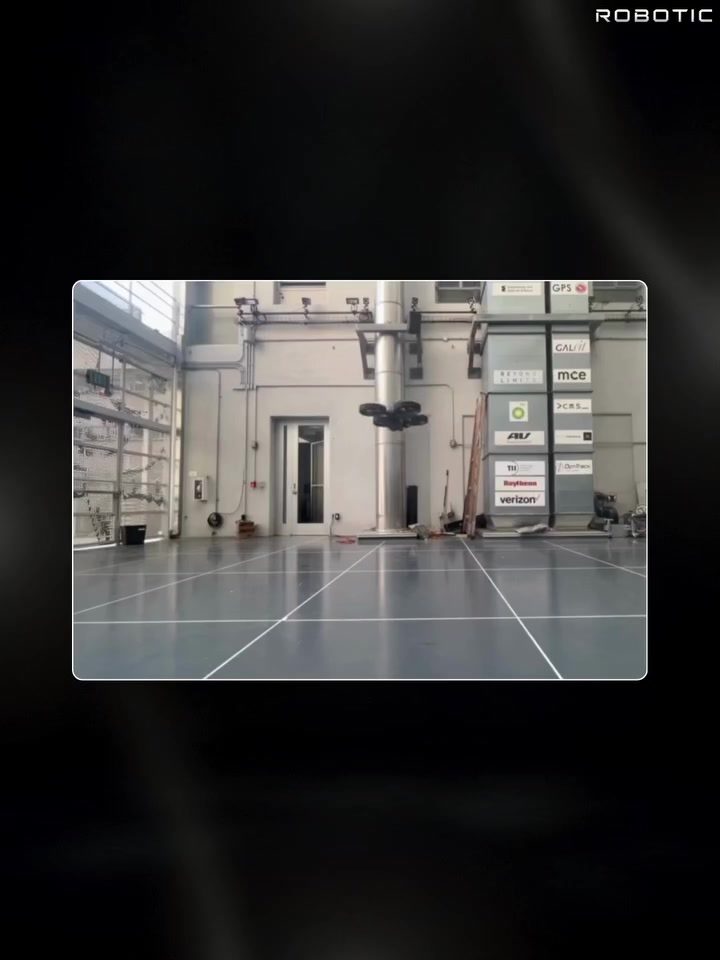
ATMO: The Transformable Robot Revolutionizing Mobility
Robotic engineers at Caltech have developed ATMO, a groundbreaking transformable robot that can seamlessly switch between flying like a drone and navigating as a ground rover. This innovative machine combines aerial flight and ground mobility, enabling it to take off, fly over obstacles, and then transition into a wheeled mode for efficient movement across various terrains. This dual-mode capability sets ATMO apart from conventional robots, which are typically designed for either aerial or ground navigation.
What is ATMO, and Why This Matters
ATMO is not your average robotic vehicle. Its unique design allows it to adapt to different environments, making it an invaluable tool for a variety of missions. The ability to switch between flying and ground modes provides greater flexibility and efficiency, reducing the need for separate flying and ground vehicles. This versatility is particularly useful in scenarios where terrain and obstacles can change rapidly, such as in search and rescue operations, exploration, and industrial inspections.
The Mechanics of ATMO
Aerial Flight
One of the standout features of ATMO is its aerial flight capability. Equipped with advanced drone technology, ATMO can take off, fly over obstacles, and reach areas that are otherwise inaccessible to ground-based robots. This aerial mode is ideal for surveying large areas, navigating through cluttered spaces, or accessing high-altitude locations.
Ground Mobility
In addition to its aerial capabilities, ATMO can transform into a ground rover. This wheeled mode allows the robot to move efficiently across the ground, making it suitable for detailed inspections, data collection, and other tasks that require precise ground-level navigation. The transition between aerial and ground modes is seamless, ensuring continuous operation without the need for manual intervention.
Transition Mechanism
The transition from drone to rover is a critical aspect of ATMO's design. The robot uses advanced algorithms and sensors to determine the optimal mode for its current environment. This intelligent decision-making process ensures that ATMO can adapt to changing conditions, whether it needs to fly over an obstacle or roll across a smooth surface. The transition mechanism is designed for reliability and efficiency, allowing the robot to switch modes quickly and smoothly.
Potential Applications of ATMO
Search and Rescue
ATMO's transformable capabilities make it an excellent tool for search and rescue missions. In disaster scenarios, debris and obstacles can quickly render ground vehicles ineffective. ATMO can fly over these obstacles, providing a bird's-eye view of the situation and identifying potential hazards. Once the area is deemed safe, the robot can transition to ground mode to navigate through the debris and reach victims.
Exploration
Exploration missions, whether in remote areas or hazardous environments, benefit significantly from ATMO's versatility. The robot can fly to locations that are difficult to access by ground vehicles, providing valuable data and visuals. Once on the ground, it can continue its exploration, gathering more detailed information and navigating through challenging terrain.
Industrial Inspections
Industrial inspections often involve navigating through complex environments with various obstacles. ATMO can fly over machinery and structures, providing detailed visual inspections and data collection. Once on the ground, it can inspect components and equipment more closely, ensuring thorough and efficient inspections.
Practical Tips for Utilizing ATMO
Integration with Existing Systems
To maximize the effectiveness of ATMO, it should be integrated with existing robotic systems and equipment. This integration ensures seamless operation and the ability to leverage ATMO's capabilities alongside other robots. For example, ATMO can work in tandem with stationary cameras and sensors to provide a comprehensive view of an area.
Training and Maintenance
Like any advanced technology, ATMO requires proper training and maintenance. Personnel should be trained in both the operational and maintenance aspects of the robot. Regular maintenance checks and updates are essential to ensure ATMO's reliability and functionality, especially in critical missions where its performance is crucial.
Data Collection and Analysis
ATMO is designed to collect and analyze data efficiently. Ensure that the robot's sensors and data collection tools are properly calibrated and maintained. Regular updates to the data analysis algorithms will also enhance ATMO's ability to provide valuable insights and actionable information.
Important Takeaways
Versatility and Efficiency
ATMO's ability to switch between aerial and ground modes provides unmatched versatility and efficiency. This dual-mode capability makes it ideal for a wide range of missions, from search and rescue to industrial inspections.
Adaptability to Diverse Environments
The robot's adaptability to diverse environments is a key advantage. Whether navigating through debris in a disaster area or inspecting complex industrial structures, ATMO can handle different terrains and obstacles with ease.
Advanced Technology and Innovation
ATMO's design showcases advanced technology and innovation in robotics. Its seamless transition between modes, intelligent decision-making, and data collection capabilities set a new standard for robotic vehicles.
Conclusion
ATMO represents a significant advancement in robotic technology. Its transformable design, combining aerial flight and ground mobility, offers unparalleled versatility and efficiency. Whether in search and rescue, exploration, or industrial inspections, ATMO's capabilities make it an invaluable tool for various missions. As the technology continues to evolve, we can expect to see even more innovative applications and enhancements, further solidifying ATMO's role in shaping the future of robotics.
Watch the Reel
Questions readers ask
What is the unique feature of the Caltech ATMO robot?
The unique feature of the Caltech ATMO robot is its dual-mode capability, allowing it to seamlessly switch between flying like a drone and driving like a ground rover. This transformable design enables it to navigate various terrains efficiently, adapting to different environments as needed.
How does ATMO's dual-mode capability benefit search and rescue missions?
ATMO's ability to fly over obstacles and then transition to a ground rover can significantly enhance search and rescue missions. It can quickly cover large areas from the air and then land to navigate complex or uneven terrains on the ground, making it easier to locate and assist individuals in need.
What are some practical applications of ATMO beyond search and rescue?
Beyond search and rescue, ATMO's versatility makes it suitable for various other applications such as exploration and industrial inspections. Its ability to switch between flying and driving allows it to access difficult-to-reach areas, which is beneficial for inspecting infrastructure, conducting surveys, and collecting data in challenging environments.
How does ATMO's design differ from conventional robots?
Unlike conventional robots that are typically designed for either aerial or ground navigation, ATMO combines both capabilities. This transformable design with its unique dual-mode capability allows ATMO to take off and fly over obstacles and then transition into a wheeled mode for efficient ground movement, providing greater flexibility and adaptability.
Can ATMO be used for industrial inspections, and if so, how?
Yes, ATMO can be used for industrial inspections. Its ability to fly and drive makes it an ideal tool for inspecting hard-to-reach areas in industrial settings, such as tall structures, narrow passages, or hazardous environments. By switching between aerial and ground modes, ATMO can efficiently collect data and perform inspections, ensuring safety and accuracy.
What kind of terrains can ATMO navigate effectively?
ATMO can navigate various terrains effectively due to its dual-mode capability. It can fly over obstacles and then transition to a wheeled mode for efficient movement across flat surfaces, rough terrains, and narrow pathways. This adaptability makes it a versatile tool for a wide range of missions and environments, from urban settings to remote landscapes.
What makes Caltech's ATMO robot stand out in the field of robotics?
Caltech's ATMO robot stands out due to its innovative dual-mode capability, which sets it apart from traditional robots. This unique feature allows ATMO to seamlessly transition between flying and driving, making it a versatile and adaptable tool for various missions. Its ability to navigate complex terrains and environments enhances its effectiveness in real-world applications, from search and rescue to industrial inspections.
Related deep dives
Similar reads based on topic and creator.


Recent articles
Fresh deep dives from the latest Reels we unpacked.




Comments
Be the first to comment.