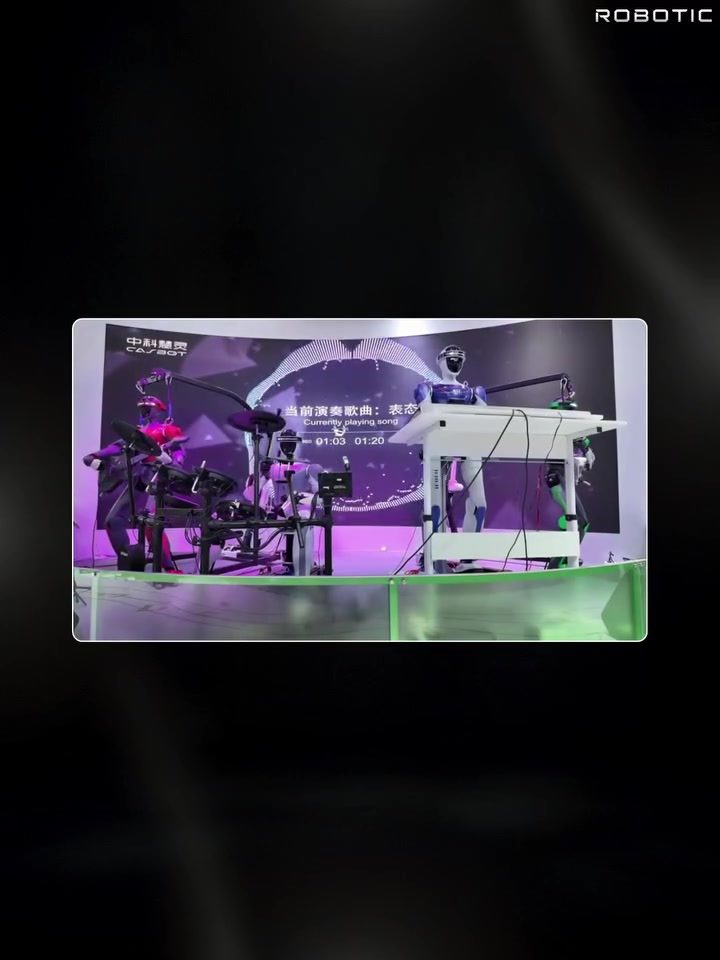
Humanoid robots are increasingly taking the stage, blending with musicians to create a new form of live entertainment. CA/BOT has pioneered this trend by introducing a humanoid robot band capable of performing alongside human musicians. These robots are not just mimicking human movements; they are playing instruments in real time, synchronizing with a human vocalist and fellow performers.
Why This Matters
The integration of robotics into live music performances signifies a shift in how technology is being utilized in creative fields. This evolution goes beyond the industrial applications that robots have been traditionally associated with, showcasing their potential for artistic expression and collaboration.
Main Discussion
The Technology Behind Robotic Music Performances
Achieving a seamless live performance with humanoid robots requires several advanced technologies:
Precision Motion Control
Humanoid robots must have precise motion control to accurately play instruments. This involves complex algorithms that ensure each movement is synchronized with the music, allowing the robot to play in real time alongside human musicians.
Timing and Synchronization
Timing is crucial in music. Robots must be programmed to stay perfectly in sync with the rhythm and tempo of the live performance, which requires advanced synchronization systems. This is especially challenging in a live setting where variables such as audience interaction and improvisation by human musicians can occur.
Advanced Robotics
The robots used in these performances are equipped with state-of-the-art sensors and actuators that allow them to mimic the delicate movements required to play instruments. These robots are not only mechanically advanced but also programmed with sophisticated software to interpret and respond to musical cues.
CA/BOT's Innovative Approach
CA/BOT has developed a unique approach to integrating robotics into live music. Their humanoid robots are designed to interact with human musicians, creating a collaborative performance that adds a new dimension to live shows. The robots are programmed to play various instruments, including keyboards and other multi-key instruments.
The Role of Human Musicians
While the robots handle the technical aspects of playing instruments, human musicians bring the emotional depth and creativity to the performance. The collaboration between robots and humans creates a dynamic that enhances the overall experience, making it more engaging for the audience.
Practical Tips
For Musicians Interested in Collaborating with Robots
If you're a musician considering collaborating with robots, here are some practical tips to get started:
Understand the Technology
Familiarize yourself with the capabilities and limitations of the robotic system. Knowing what the robot can and cannot do will help you plan your performance effectively.
Rehearse Thoroughly
Just like any other collaboration, rehearsals are crucial. Ensure that you and the robot are well-rehearsed to avoid any synchronization issues during the live performance.
Communicate Effectively
Clear communication with the technical team managing the robots is essential. Make sure they understand your performance requirements and any specific cues you need.
Important Takeaways
The introduction of humanoid robots into live music performances is a groundbreaking development. It pushes the boundaries of what is possible in the entertainment industry and showcases the potential of advanced robotics in creative fields.
The Future of Robotic Music
As humanoid technology continues to evolve, we can expect to see more sophisticated and integrated robotic performances. This could lead to entirely new genres of music and performance art, where robots and humans coexist and collaborate in unprecedented ways.
Beyond Music
The lessons learned from integrating robots into live music can be applied to other creative fields. Whether it's theater, dance, or visual arts, the principles of precision, timing, and synchronization can be adapted to enhance these mediums as well.
Conclusion
The convergence of robotics and live music is an exciting development that opens up new possibilities for artistic expression. CA/BOT's humanoid robot band exemplifies how advanced robotics can be utilized in creative collaboration, enhancing the live performance experience. As we move forward, the integration of robots in various creative fields will likely continue to grow, pushing the boundaries of what is possible in the realm of entertainment and artistic collaboration.
Watch the Reel
Questions readers ask
How do humanoid robots in a band like CA/BOT synchronize with human musicians during live performances?
CA/BOT's humanoid robots synchronize with human musicians using advanced algorithms and sensors that allow them to play instruments in real time. This synchronization is achieved through precise timing and responsiveness to the human musicians' cues, creating a seamless and dynamic musical experience.
What instruments can humanoid robots in a band like CA/BOT play?
Humanoid robots in a band like CA/BOT can play a variety of instruments, including guitars, drums, and keyboards. These robots are designed to mimic the movements and techniques of human musicians, allowing them to perform complex musical pieces with precision and skill.
How does the integration of robotics in live music performances impact the overall experience for the audience?
The integration of robotics in live music performances adds a unique and futuristic element to the live experience. Audiences are captivated by the precision and novelty of robots playing instruments alongside human musicians, creating a visually stunning and sonically rich performance.
What role does AI play in the performance of a humanoid robot band?
AI is crucial in the performance of a humanoid robot band as it enables the robots to respond to live musical cues, adjust their performance in real-time, and maintain synchronization with human musicians. AI algorithms also help in fine-tuning the robots' movements and instrument handling to achieve a high level of musical accuracy.
What are the benefits of having robots perform alongside human musicians in live music settings?
Having robots perform alongside human musicians brings several benefits, including enhanced creativity, increased precision in performances, and the ability to experiment with new sounds and styles. These robots can also take on roles that might be physically demanding or risky for human performers, adding to the overall versatility of live shows.
Can robots in a band like CA/BOT be programmed to learn and adapt to new musical styles over time?
Yes, robots in a band like CA/BOT can be programmed to learn and adapt to new musical styles. Through machine learning and AI, these robots can analyze and replicate various musical genres, allowing them to expand their repertoire and collaborate with a wider range of human musicians.
What kind of technology is involved in the robotic music revolution, especially in bands like CA/BOT?
The robotic music revolution, particularly in bands like CA/BOT, involves a combination of robotics, AI, and advanced sensors. These technologies work together to enable robots to play instruments with precision, synchronize with human musicians, and respond to live performances in real-time, creating a harmonious and innovative musical experience.
Related deep dives
Similar reads based on topic and creator.



Recent articles
Fresh deep dives from the latest Reels we unpacked.




Comments
Be the first to comment.