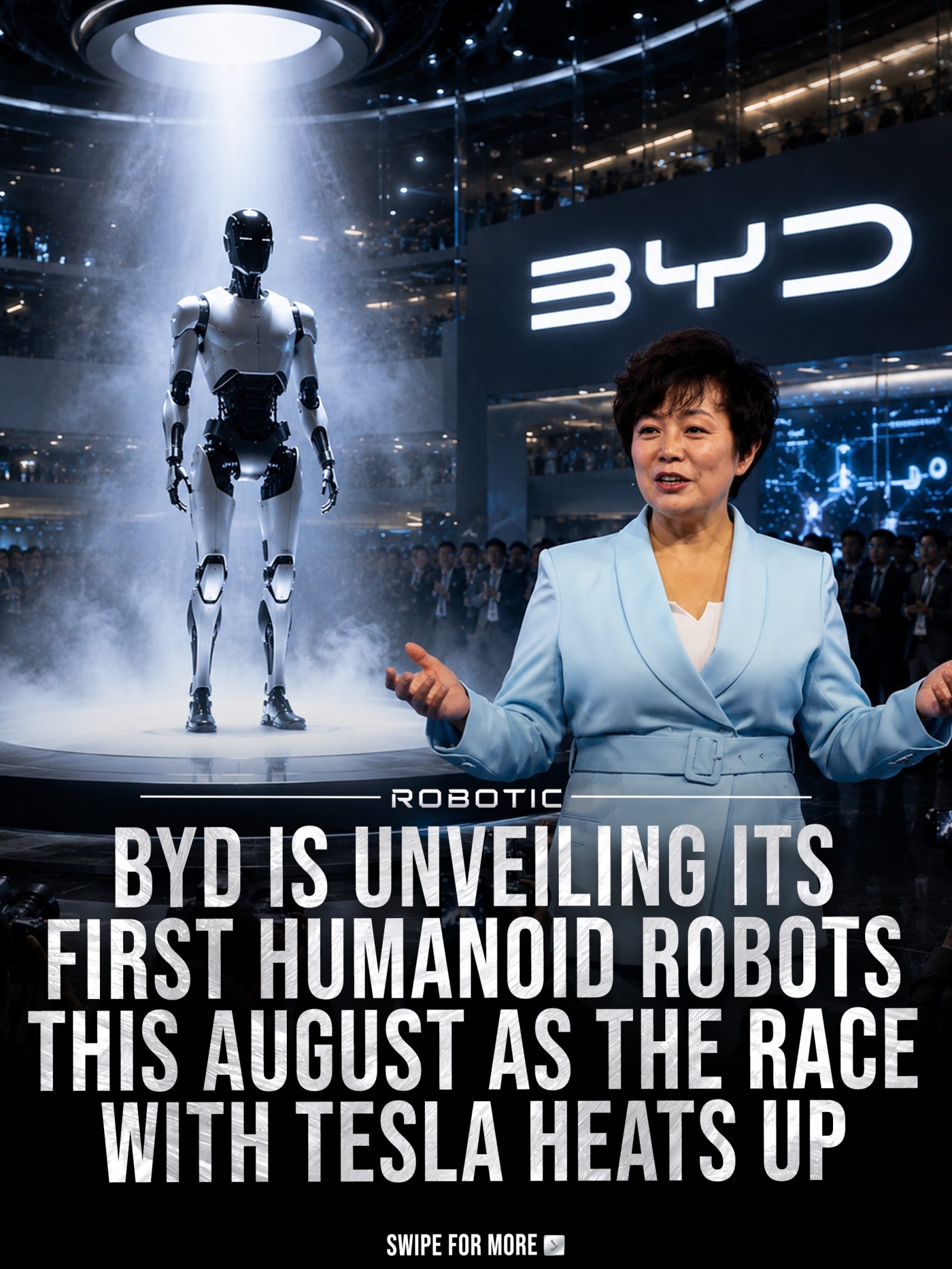
BYD's Entry into the Humanoid Robot Race
BYD is making a significant leap beyond its electric vehicle roots by entering the humanoid robot market. The company plans to unveil its first humanoid robots this August at their Di Space experience centers in China. These robots are designed to greet visitors and interact with customers, marking a new chapter in BYD’s technological advancements and their commitment to the growing field of physical AI.
Why This Matters
The launch of humanoid robots by BYD is part of a broader trend among automakers and tech companies investing heavily in humanoid robotics. This move underscores the accelerating competition in the physical AI race. Companies are striving to transition intelligent robots from research labs to real-world environments. This shift could revolutionize various industries, from customer service to manufacturing, by integrating advanced AI capabilities into everyday settings.
Humanoid Robots: The Next Frontier
The Competitive Landscape
BYD is not alone in this endeavor. The company joins a growing list of competitors, including Tesla, Xpeng, Xiaomi, and Li Auto, all vying to be at the forefront of humanoid robot technology. This intense competition is driving rapid advancements in robotics, making it a key area of focus for technological innovation.
The Role of BYD’s Humanoid Robots
The humanoid robots showcased by BYD are designed to interact with customers, offering a glimpse into the future of customer service and engagement. These robots are expected to perform a range of tasks, from welcoming visitors to providing information, making the customer experience more seamless and efficient.
Real-World Applications
Humanoid robots have the potential to revolutionize various sectors. In retail, for example, these robots can assist customers with product information, offer personalized recommendations, and even handle basic transactions. In healthcare, they can aid in patient monitoring, providing real-time updates to medical staff. Additionally, in manufacturing, humanoid robots can enhance productivity by taking on repetitive tasks, allowing human workers to focus on more complex duties.
Practical Tips for Engaging with Humanoid Robots
As humanoid robots become more prevalent, understanding how to interact with them effectively will be crucial. Here are some tips to help you get the most out of your encounters with these advanced machines:
Be Clear and Concise
When interacting with humanoid robots, it's important to be clear and concise in your requests. Just as you would with a human assistant, articulate your needs in a straightforward manner to ensure the robot understands and responds accurately.
Ask for Clarification
If you don't understand the robot's response, don't hesitate to ask for clarification. Many humanoid robots are equipped with natural language processing capabilities, allowing them to provide explanations and rephrase answers if needed.
Provide Feedback
Humanoid robots are continuously learning and improving. Providing feedback on your interactions can help refine their performance and make future encounters even more productive. Always let the robot know if it correctly understood your request.
Stay Patient and Flexible
Remember that while humanoid robots are designed to simulate human-like interactions, they are still machines. There may be instances where the robot does not fully understand your request or responds incorrectly. Stay patient and flexible, and be prepared to try alternative approaches to achieve your goal.
Important Takeaways
The Future of Human-Robot Interaction
The introduction of humanoid robots by BYD marks a significant step in the evolution of human-robot interaction. These robots represent the next frontier in AI, bringing intelligent machines into everyday environments and changing how we interact with technology.
The Evolution of Physical AI
As more companies invest in humanoid robotics, the physical AI landscape is set to transform. The competition among automakers and tech giants is driving rapid advancements, pushing the boundaries of what is possible in robotics.
Embracing the Change
The integration of humanoid robots into various sectors presents both opportunities and challenges. Embracing this change and understanding how to interact with these advanced machines will be essential for individuals and businesses alike.
Staying Ahead of the Curve
To stay ahead of the curve, it's important to keep an eye on the latest developments in humanoid robotics. Whether you're a consumer, a business owner, or a technology enthusiast, staying informed about the advancements in this field will help you navigate the evolving landscape of AI and robotics.
Conclusion
BYD's entry into the humanoid robot race is a testament to the accelerating competition in the field of physical AI. As companies race to bring intelligent robots into real-world environments, the potential for innovation and transformation is immense. Whether it's enhancing customer service, revolutionizing healthcare, or improving manufacturing processes, humanoid robots are poised to play a crucial role in shaping the future.
Watch the Reel
Questions readers ask
What is the significance of BYD's entry into the humanoid robot market?
BYD's entry into the humanoid robot market signifies a major shift in the company's focus, moving beyond electric vehicles to embrace advanced AI capabilities. This move also indicates a broader trend among automakers and tech companies investing in humanoid robotics, highlighting the growing competition in the physical AI sector.
When and where will BYD unveil its first humanoid robots?
BYD is set to unveil its first humanoid robots in August 2023 at their Di Space experience centers in China. These robots are designed to interact with customers, showcasing BYD's commitment to integrating AI into real-world customer service settings.
How do BYD's humanoid robots contribute to the physical AI race?
BYD's humanoid robots are a significant contribution to the physical AI race by transitioning advanced AI capabilities from research labs into real-world environments. The robots are designed to interact with customers, demonstrating a practical application of AI in public settings and advancing the technology’s integration into everyday life.
What are the key features of BYD's customer-interacting humanoid robots?
BYD's customer-interacting humanoid robots are equipped with AI capabilities that allow them to greet visitors and engage with customers. These robots are designed to provide a seamless and interactive experience, enhancing customer service and representing a new frontier in AI-assisted interactions.
How does BYD's humanoid robot launch compare to Tesla's efforts in the field?
BYD's humanoid robot launch positions the company as a direct competitor in the robotics field, similar to Tesla. Both companies are investing in advanced AI capabilities for humanoid robots, but BYD’s focus on customer-interacting models sets it apart in terms of real-world application and integration into customer service settings.
Related deep dives
Similar reads based on topic and creator.


Recent articles
Fresh deep dives from the latest Reels we unpacked.




Comments
Be the first to comment.