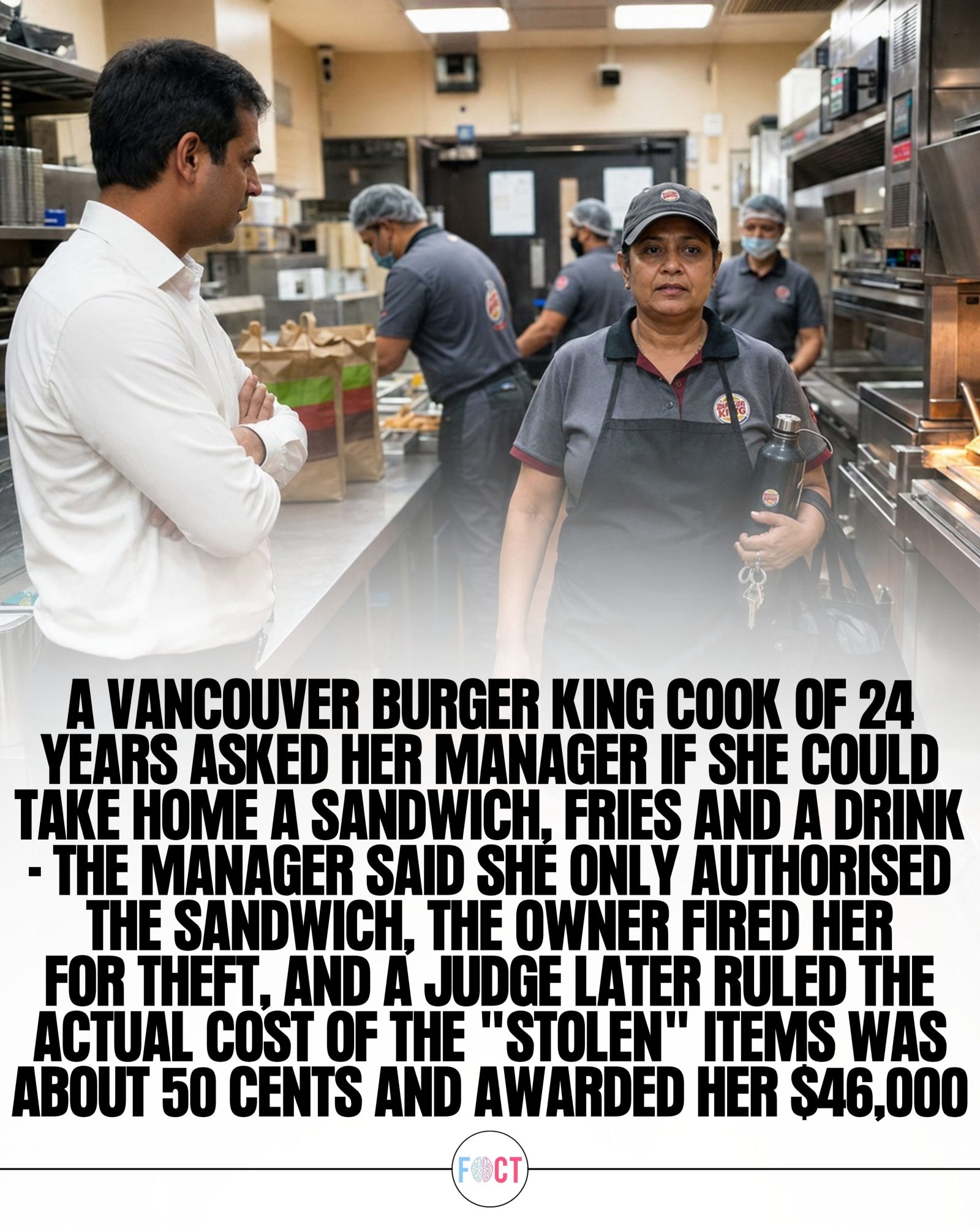
The Usha Ram Case: A Burger King Theft Allegation and Its Legal Aftermath
On December 27, 2013, Usha Ram, a 55-year-old cook who had worked at a Burger King in downtown Vancouver for 24 years, finished her shift and approached her manager with a simple request. Usha had forgotten her wallet, so she asked if she could take some food home. The manager, speaking in Hindi, agreed, and Usha packed a fish sandwich, an order of fries, and a fountain drink. This seemingly innocuous event would later escalate into a heated legal battle, culminating in Usha's wrongful dismissal and eventual compensation.
Why This Matters
The case of Usha Ram versus Burger King is a poignant reminder of the complexities within the workplace, where misunderstandings and miscommunications can lead to severe consequences. It underscores the necessity for fair and transparent workplace practices and the importance of considering individual circumstances when making disciplinary decisions. Furthermore, it highlights the intricacies of labor laws and how they can impact employees' lives.
The Incident and Its Escalation
Usha Ram's request for food was initially met with approval, but the situation took a dramatic turn. The manager later testified that she believed she had only authorized the sandwich, not the fries or the drink. Three days later, the manager reported the incident to the franchise owner, who concluded that Usha had stolen the items. Usha was fired on the spot in front of her coworkers, without being given the opportunity to explain her side of the story.
The Legal Battle
The dismissal sparked a legal battle that would draw attention to issues of workplace fairness and justice. Usha sued for wrongful dismissal, and the case went to B.C. Supreme Court. Justice Lisa Warren presided, and her ruling brought several key points to light. The judge found no evidence of premeditation or attempted concealment on Usha's part, noting that she had made no effort to hide the food and had packed it in full view. Justice Warren also considered Usha's clean 24-year disciplinary record, her position as a 55-year-old cook with limited English and education, and her economic vulnerability. These factors led the judge to conclude that summary dismissal was not a proportionate sanction.
The Court's Decision
The court's decision was groundbreaking in several ways. Firstly, Justice Warren ruled that the actual cost of the items Usha had taken was about 50 cents, a stark contrast to the severity of the punishment she had received. Usha was awarded $46,000, which included $21,000 for a year’s lost wages and $25,000 in aggravated damages for the manner of her dismissal. The judge highlighted the humiliation and economic impact Usha faced due to her abrupt dismissal.
The Impact of the Case
The Usha Ram case serves as a stark reminder of the potential pitfalls within the workplace, particularly in scenarios where miscommunications can lead to severe disciplinary actions. The incident and its legal aftermath have sparked discussions about workplace fairness and the necessity for employers to consider individual circumstances when making disciplinary decisions. It highlights the importance of clear communication and the potential for misunderstandings to escalate into legal battles.
Practical Tips for Employers and Employees
Communication and Understanding
Clear and open communication is essential in any workplace setting. Employers should ensure they communicate policies and procedures clearly to all employees, particularly in situations where language barriers might exist. Employees should feel comfortable approaching managers or supervisors with any questions or concerns they may have.
Fair Decision-Making
Employers must prioritize fairness and transparency in their decision-making processes. This includes considering individual circumstances and ensuring that disciplinary actions are proportionate to the alleged misconduct. Employees should be given the opportunity to explain their side of the story before any disciplinary actions are taken.
Legal Considerations
Both employers and employees should be aware of their rights and responsibilities under labor laws. Employers should ensure they are in compliance with all relevant labor laws and regulations, while employees should understand their rights and the recourse available to them in cases of unfair treatment or wrongful dismissal.
Important Takeaways
The Usha Ram case provides several important takeaways for both employers and employees:
- Clear communication and understanding are vital in preventing misunderstandings.
- Employers should ensure that disciplinary actions are proportionate and fair.
- Employees have the right to be heard and should be given the opportunity to explain their side of the story.
- The legal system plays a crucial role in protecting employees' rights and ensuring that justice is served.
- Workplace fairness is essential for maintaining a productive and positive work environment.
Conclusion
The Usha Ram case has left a lasting impact on workplace practices and labor law interpretations. It serves as a poignant reminder of the potential for miscommunications to escalate into legal battles and the importance of fairness and transparency in the workplace. By learning from this case, employers and employees can work together to create a more equitable and understanding work environment.
Watch the Reel
Questions readers ask
What led to Usha Ram's wrongful dismissal from Burger King?
Usha Ram was wrongfully dismissed after a misunderstanding over taking home food from work. She asked her manager for permission, which he allegedly gave, but this led to a theft accusation and her subsequent dismissal.
Why did Usha Ram's case escalate into a legal battle?
The case escalated into a legal battle because Usha Ram felt she was wrongfully terminated and sought compensation for her unjust dismissal. This led to a lawsuit against Burger King.
How much compensation did Usha Ram receive from Burger King?
Usha Ram received a total of $46,000 in compensation from Burger King as a result of her wrongful dismissal lawsuit, highlighting a need for fair disciplinary practices in the workplace.
What role did miscommunication play in Usha Ram's case?
Miscommunication played a significant role in Usha Ram's case. The misunderstanding arose from a conversation between Usha and her manager, where she asked to take food home and the manager agreed, but this was later disputed.
Where did the incident involving Usha Ram and Burger King occur?
The incident occurred at a Burger King location in downtown Vancouver. Usha Ram, a long-time cook, worked at this location for 24 years before her wrongful termination.
What kind of food did Usha Ram take from Burger King?
Usha Ram took a fish sandwich, an order of fries, and a fountain drink. This action, which she believed was permitted by her manager, led to a theft accusation and subsequent legal issues.
What does Usha Ram's case reveal about workplace disciplinary practices?
Usha Ram's case underscores the importance of clear communication and fair disciplinary practices in the workplace. Misunderstandings can lead to wrongful terminations, highlighting the need for better policy implementation and adherence.
Recent articles
Fresh deep dives from the latest Reels we unpacked.




Comments
Be the first to comment.