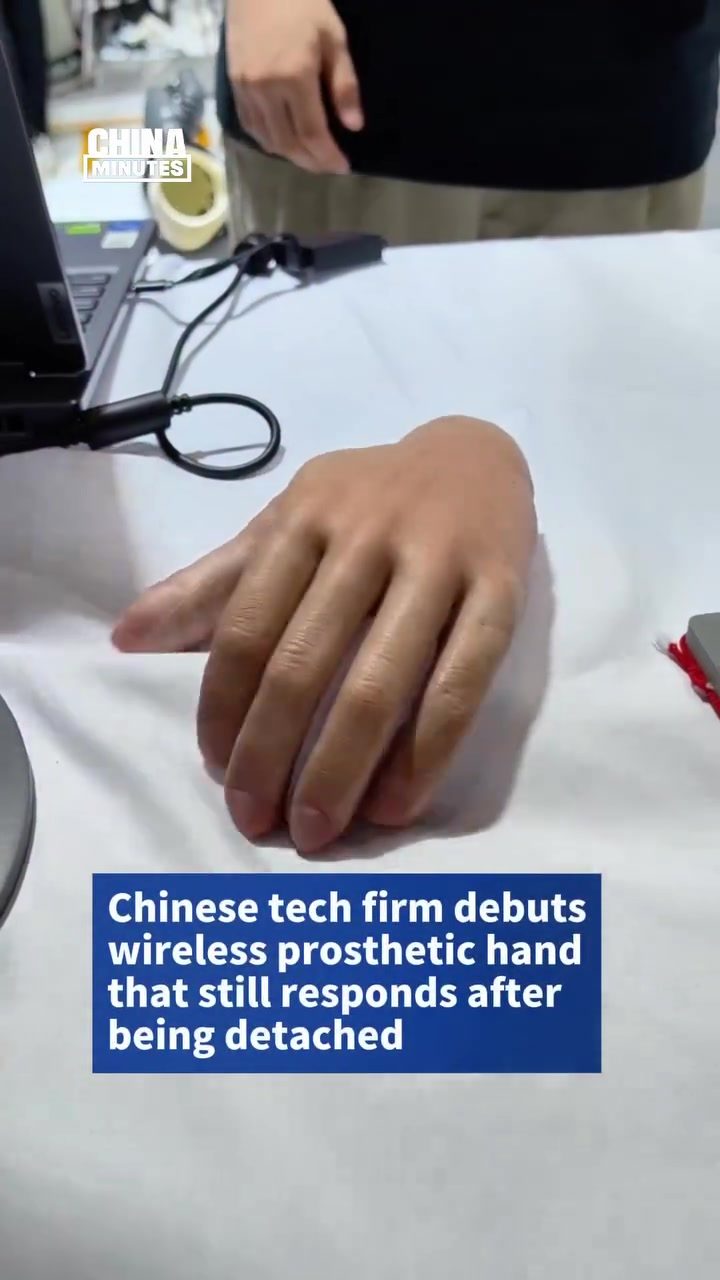
The Revolutionary BrainCo Wireless Prosthetic Hand
Bionic prosthetic hands have long been a symbol of hope for individuals with upper-limb amputations, and the latest innovation from Chinese neurotechnology company BrainCo is pushing the boundaries of what's possible. The newly unveiled intelligent bionic hand, showcased at the World Artificial Intelligence Conference (WAIC) in Shanghai, features a groundbreaking capability: it can be wirelessly controlled even after being detached from the user's arm. This remarkable advancement allows the prosthetic to move independently, offering a level of functionality that was previously unimaginable.
Why This Matters
The BrainCo wireless prosthetic hand represents a significant leap forward in the field of bionic prosthetics. For individuals who have experienced upper-limb amputations, regaining the ability to perform everyday tasks with a high degree of precision and control is life-changing. The hand's ability to interpret electrical signals from the wearer's muscles and nerves in real-time, and to execute movements with 21 degrees of freedom, means that users can experience a more natural and intuitive control over their prosthetic.
The Technology Behind the Hand
Signal Detection and Interpretation
The BrainCo prosthetic hand operates by detecting electrical signals generated by the wearer’s muscles and nerves. These signals are captured and interpreted by AI in real-time, translating them into precise movement commands. The hand's advanced sensors and algorithms ensure that even individual finger movements can be executed with high precision, allowing for detailed and delicate tasks.
Wireless Control
One of the most impressive features of the BrainCo prosthetic hand is its wireless control capability. Even when detached from the user’s arm, the hand can continue to move independently, controlled through the user's brain signals. This feature is particularly important for users who may need to detach the prosthetic for various reasons, such as bathing or sleeping, but still require mobility and functionality.
Design and Sensory Feedback
BrainCo has designed the hand with a lifelike silicone exterior, making it visually and functionally similar to a natural hand. The hand features full-palm tactile sensing, providing users with additional sensory feedback that enhances the overall user experience. This tactile sensing, combined with 21 degrees of freedom, allows for a wide range of movements and gestures, making the prosthetic hand more versatile and functional.
Main Discussion
How the Hand Works
The prosthetic hand works through a seamless integration of sensors, AI algorithms, and a responsive design. Here’s a breakdown of the process:
Electrical Signal Detection
When a user wishes to move a specific part of the hand, such as the index finger, their brain sends an electrical signal to the corresponding muscle. Sensors embedded in the prosthetic detect these signals.
AI Interpretation
The detected signals are then processed by AI algorithms, which interpret the signals in real-time. This interpretation ensures that the movement commands sent to the prosthetic are accurate and precise.
Movement Execution
The AI's interpreted commands are then transmitted wirelessly to the prosthetic hand, allowing it to execute the desired movements. This wireless communication ensures that the hand can move independently, even when not connected to the user's body.
The User Experience
The experience of using the BrainCo prosthetic hand is described as intuitive and natural. Users feel as if they are controlling the prosthetic hand just as they would their own hand. This seamless control is a testament to the precision and effectiveness of the BrainCo technology.
The Importance of Degrees of Freedom
The hand's 21 degrees of freedom allow for a wide range of movements, including individual finger control, which is essential for tasks that require a high level of precision. This feature is particularly important for activities that require fine motor skills, such as writing, typing, or handling small objects.
Practical Tips
Customizing the Prosthetic
BrainCo offers a range of customization options to ensure that the prosthetic hand meets the individual needs of each user. Users can adjust the hand's settings to better suit their specific requirements, enhancing the overall functionality and comfort of the device.
Maintenance and Care
Proper maintenance and care are essential for ensuring the longevity and reliability of the BrainCo prosthetic hand. Users should follow the manufacturer's guidelines for cleaning and maintaining the device, which includes regular checks of the sensors and ensuring that the silicone exterior remains in good condition.
Seeking Professional Guidance
For optimal use, users should seek professional guidance from healthcare providers and rehabilitation specialists. These professionals can provide valuable insights and training to help users get the most out of their prosthetic hand.
Important Takeaways
The BrainCo wireless prosthetic hand is a groundbreaking innovation in the field of bionic prosthetics. Its advanced features, including real-time signal detection, AI interpretation, and wireless control, offer users an unprecedented level of functionality and control. The hand's design, with its lifelike exterior and full-palm tactile sensing, further enhances the user experience, making it a remarkable advancement in prosthetic technology.
Conclusion
The BrainCo wireless prosthetic hand is more than just a technological marvel; it is a lifeline for individuals with upper-limb amputations. Its ability to move independently, even when detached from the body, and its high level of precision and control make it a game-changer in the world of prosthetics. This technology represents a significant step forward in helping individuals regain their everyday hand function, improving their quality of life in meaningful ways.
Watch the Reel
Questions readers ask
How does the BrainCo wireless prosthetic hand achieve independent movement?
The BrainCo prosthetic hand uses advanced neurotechnology to interpret muscular and neural signals in real-time. This allows the hand to move independently, even when detached from the user's arm, providing a level of functionality that sets it apart from traditional prosthetics.
What makes the BrainCo prosthetic hand different from other bionic hands?
The BrainCo prosthetic hand stands out due to its wireless control capability and ability to function independently. This is a significant advancement, as many other bionic hands require a physical connection to operate and rely on a more limited range of movements.
Can the BrainCo prosthetic hand be controlled without a direct connection to the user's body?
Yes, one of the key features of the BrainCo prosthetic hand is its wireless control. This means that the hand can be operated remotely, offering greater flexibility and convenience for users. This is particularly useful for users who need to perform tasks in a variety of environments.
How does the BrainCo prosthetic hand interpret neural signals?
The BrainCo prosthetic hand uses sophisticated algorithms to decode and interpret neural signals from the user's muscles and nerves. This real-time processing enables the hand to mimic natural hand movements with a high degree of precision and responsiveness.
What are the benefits of the BrainCo prosthetic hand's wireless functionality?
The wireless functionality of the BrainCo prosthetic hand offers several benefits, including increased mobility and convenience. Users can operate the hand without being tethered to a device, making daily tasks easier and more intuitive. Additionally, this feature supports more natural and seamless integration into daily life.
Who can benefit from the BrainCo wireless prosthetic hand?
Individuals with upper-limb amputations are the primary beneficiaries of the BrainCo wireless prosthetic hand. This advanced technology provides them with a prosthetic that offers unparalleled precision and functionality, significantly improving their quality of life and ability to perform daily tasks.
Related deep dives
Similar reads based on topic and creator.



Recent articles
Fresh deep dives from the latest Reels we unpacked.




Comments
Be the first to comment.