Atlas: Boston Dynamics' Latest Advances in Bipedal Robotics
Boston Dynamics' Atlas robot has long been a marvel of engineering, but recent developments show that it's evolving beyond mere command following. Through reinforcement learning, Atlas is now learning to move, balance, and handle heavy objects with unprecedented autonomy. This progression is poised to revolutionize how robots operate in real-world, unpredictable environments.
Context: Why This Matters
In the realm of robotics, the transition from controlled lab demonstrations to real-world applications is a significant leap. Boston Dynamics' latest advancements in Atlas show that robots are moving closer to practical, everyday use. This has wide-ranging implications for industries such as manufacturing, logistics, and search and rescue, where robots could handle heavy objects, navigate complex environments, and adapt to unpredictable situations in real time.
Main Discussion
Reinforcement Learning in Robotics
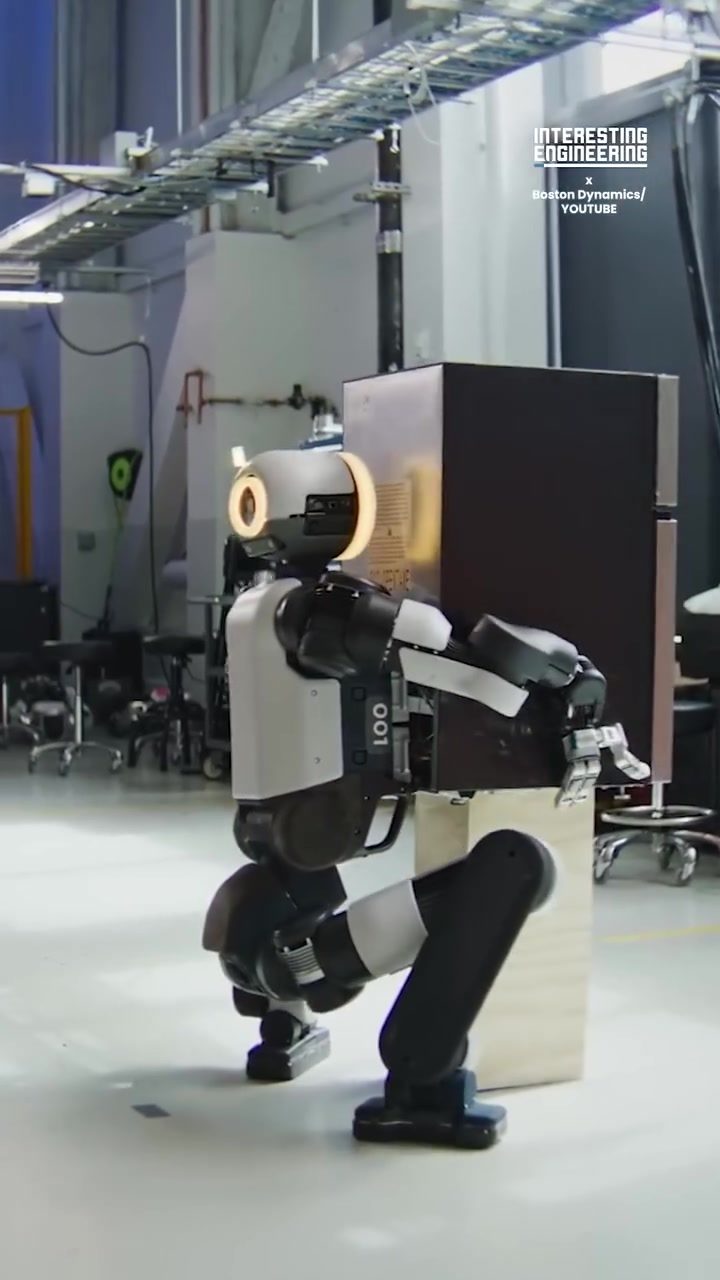
At the heart of Atlas's new capabilities is reinforcement learning. Unlike traditional programming, where a robot is given specific commands to follow, reinforcement learning allows robots to learn through trial and error. This means Atlas can improve its performance over time by experimenting with different movements and adjusting based on the outcomes. For example, when tasked with lifting a mini-fridge, Atlas must learn to distribute its weight, balance itself, and adjust for inertia—all in real time.
Navigating Real-World Environments
One of the most impressive aspects of Atlas's new capabilities is its ability to navigate real-world environments. Warehouses, for instance, are cluttered and unpredictable, with moving objects, obstacles, and varying surface conditions. Atlas's advanced bipedal locomotion and agility allow it to walk, jog, and even raise its arms to lift objects, all while maintaining balance. This level of adaptability and dexterity is crucial for robots to perform tasks in environments where conditions can change rapidly.
Handling Heavy Objects
Handling heavy objects is another area where Atlas's advancements shine. The ability to lift and maneuver heavy items, such as mini-fridges, is a significant step forward in robotics. This capability relies on Atlas's sophisticated sensors and actuators, which work together to assess the weight, inertia, and stability of the object it is handling. Though lifting a mini-fridge might seem like a simple task, the complexity of the precision motion and force control required to perform it safely is a testament to Boston Dynamics' engineering prowess.
Applications in Predictive Scenarios
The ultimate goal of these advancements is to prepare robots for unpredictable scenarios. Traditional robotics often relies on highly controlled environments where variables are minimized. However, real-world applications demand more. By training Atlas in unpredictable settings, Boston Dynamics is equipping it to handle tasks in dynamic environments, making it a versatile tool for a variety of industries. Think of a robot that can navigate a disaster zone, lift debris, and even assist in search and rescue operations without needing explicit commands for every action.
Practical Tips
If you're interested in exploring the capabilities of bipedal robots like Atlas, here are some practical tips to consider:
-
Understand the Technology: Familiarize yourself with the principles of reinforcement learning and how it differs from traditional programming. This will give you a better understanding of what these robots are capable of.
-
Explore Real-World Applications: Look for real-world examples of where these robots are being used. This can give you insights into how they operate in practical, unpredictable environments.
-
Engage with Industry Experts: Attend conferences, webinars, and other events where industry experts share their knowledge and experiences with advanced robotics. This can provide valuable insights and networking opportunities.
-
Join the Community: Join online forums and communities where enthusiasts and professionals discuss the latest developments in robotics. This can be a great way to stay updated and learn from others' experiences.
-
Stay Updated: Follow key players in the robotics industry, such as Boston Dynamics, to stay updated on the latest advancements and innovations in bipedal robotics.
Important Takeaways
Boston Dynamics' Atlas has stepped beyond mere command-following into a realm of self-learning and adaptive behavior. This transition represents a significant advancement in robotics, moving from controlled lab experiments to real-world applications. Reinforcement learning is a game-changer, allowing robots to learn and adapt through experience. The ability to navigate unpredictable environments and handle heavy objects marks a new era in robotics, opening doors to a wide range of practical, everyday applications.
Conclusion
The future of robotics is here, and it's more agile, adaptable, and capable than ever before. Boston Dynamics' Atlas robot stands as a testament to the advancements in bipedal robotics, showcasing how reinforcement learning can revolutionize the way robots operate in real-world environments. As these technologies continue to evolve, we can expect to see robots playing an increasingly integral role in various industries, from manufacturing to search and rescue. The journey from controlled lab demos to unpredictable real-world tasks is not only inspiring but also a critical step in the evolution of robotics.
Watch the Reel
Questions readers ask
What is reinforcement learning and how does it apply to the Boston Dynamics Atlas robot?
Reinforcement learning is a type of machine learning where an agent learns to make decisions by performing actions in an environment to maximize cumulative reward. In the context of the Atlas robot, reinforcement learning allows it to improve its movement, balance, and object handling skills by learning from trial and error, rather than being explicitly programmed for each task.
How does the Atlas robot handle heavy objects?
The Atlas robot uses its advanced sensors and algorithms to assess the weight, size, and distribution of an object's mass before lifting. It then applies precise control over its hydraulic actuators to stabilize its body and execute a safe and efficient lift, even in challenging environments.
Can the Atlas robot navigate unpredictable environments?
Yes, one of the key advancements in the Atlas robot is its ability to navigate and adapt to unpredictable environments. Using reinforcement learning, it can learn to anticipate and respond to changes in its surroundings, such as obstacles or uneven terrain, to maintain stability and continue moving towards its goal.
What are the potential real-world applications of the Atlas robot?
The Atlas robot's ability to handle heavy objects and navigate unpredictable environments opens up a range of potential real-world applications. These include assisting in search and rescue missions, performing tasks in hazardous environments, and supporting logistics and manufacturing processes by handling materials and navigating complex workspaces.
How does the Atlas robot's autonomy enhance its functionality?
The Atlas robot's autonomy, enabled by reinforcement learning, allows it to make real-time decisions and adapt to changes in its environment without constant human intervention. This makes it more efficient and effective in performing tasks, as it can learn and improve its skills over time, leading to better performance in complex, real-world situations.
What makes the Atlas robot's heavy lifting capabilities unique?
The Atlas robot's heavy lifting capabilities are unique due to its advanced sensors and control algorithms. These allow it to assess and handle objects with varying weights and shapes while maintaining stability and balance, even in challenging environments. This level of precision and control is not typically seen in other bipedal robots.
Related deep dives
Similar reads based on topic and creator.


Recent articles
Fresh deep dives from the latest Reels we unpacked.




Comments
Be the first to comment.