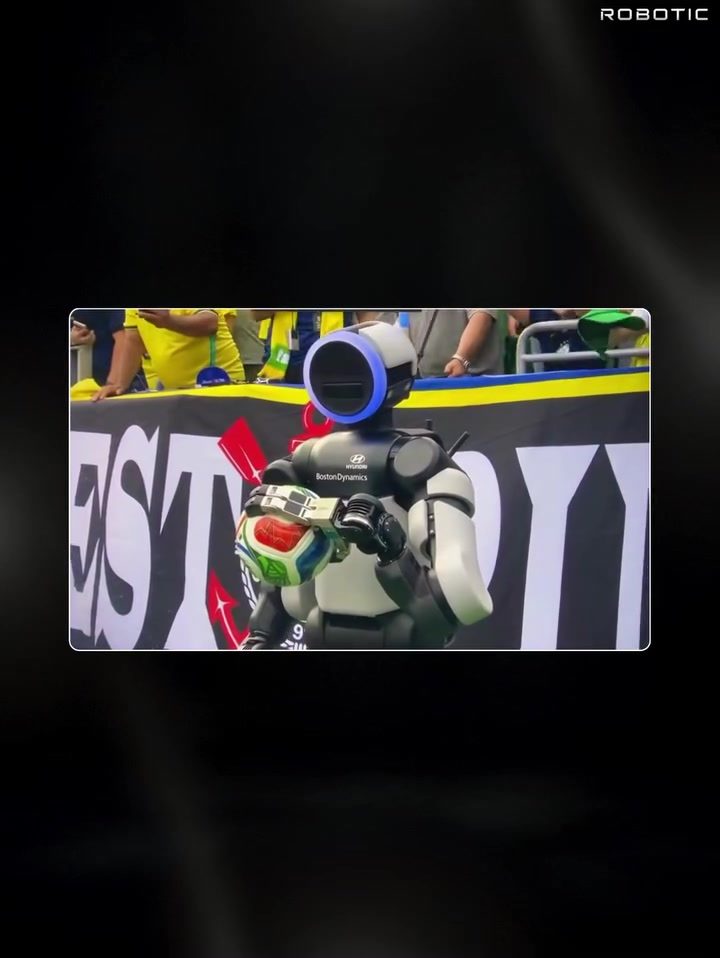
Robotic Innovation in Soccer: Boston Dynamics' Atlas at the FIFA World Cup
Boston Dynamics' Atlas robot has made a significant mark in the world of sports and technology by becoming the first humanoid robot to be integrated into a live FIFA World Cup match. This groundbreaking event showcased how advanced robotics can operate in complex, real-world environments, demonstrating the potential for future industrial applications.
Context /Why This Matters
The integration of robotics into high-profile events like the FIFA World Cup highlights the rapid advancements in AI and robotics. The showcase underscores how technology is becoming an integral part of various industries, enhancing both entertainment and industrial sectors. This event is a testament to the capabilities of humanoid robots and their potential to revolutionize how we interact with and utilize technology in everyday life.
Main Discussion
The Role of Boston Dynamics' Atlas
Boston Dynamics' Atlas robot made history by delivering the match ball during a live FIFA World Cup match. This demonstration wasn't just a showcase of the robot's technical capabilities, but also its potential for future industrial applications that Hyundai is developing.
The Technology Behind the Performance
Atlas performed football celebrations inspired by famous players, showcasing the robot's ability to execute intricate movements. The robot achieved these movements using a combination of retargeting technology, reinforcement learning, and whole-body control. These technologies, combined with thousands of simulated training sessions, allowed Atlas to navigate and perform complex actions on the soccer field.
The Industrial Implications
Beyond the performance, the demonstration highlighted Hyundai's vision of "Progress for Humanity." The company is leveraging the same AI and robotics technologies used in the Atlas for future industrial applications. This means that the capabilities shown during the World Cup match can be translated into industrial settings, enhancing efficiency and productivity.
Practical Tips
While the Atlas robot showcased its capabilities on a global stage, the technologies involved can provide valuable insights into how to approach robotics in various fields. Here are some practical tips inspired by this demonstration:
- Leverage AI and Robotics in Industrial Settings: The technologies used in the Atlas robot can be applied to industrial settings to enhance efficiency and productivity. Investing in AI and robotics can help businesses stay competitive and innovative.
- Utilize Simulation for Training: Simulation training, as demonstrated by the Atlas, can be an effective way to prepare robots for real-world tasks. This approach can help identify and address potential issues before the robot is deployed in an actual setting.
- Incorporate Whole-Body Control: Whole-body control, as seen in the Atlas, allows robots to execute complex movements with precision. This technology can be applied to various robotic systems to enhance their performance and capabilities.
- Invest in Reinforcement Learning: Reinforcement learning enables robots to learn from their experiences and improve their performance over time. This technology can be a valuable tool for developing intelligent robotic systems.
Important Takeaways
- Humanoid Robots are Capable of Operating in Complex Environments: The Atlas robot's performance at the FIFA World Cup demonstrated that humanoid robots can operate in complex, real-world environments. This capability has significant implications for various industries, including manufacturing, healthcare, and entertainment.
- Technology Enhances Sports and Entertainment: The integration of robotics into high-profile events adds a new dimension to sports and entertainment. This trend is likely to continue as technology advances, providing unique and engaging experiences for audiences.
- The Future of Robotics is Here: The technologies showcased during the Atlas robot's performance are already being developed for future industrial applications. This suggests that the future of robotics is here, and it will continue to evolve and transform various industries.
Conclusion
Boston Dynamics' Atlas robot has set a new benchmark in the world of robotics and sports by becoming the first humanoid robot to be integrated into a live FIFA World Cup match. The event showcased the advanced capabilities of humanoid robots and their potential for industrial applications. As AI and robotics continue to evolve, the future of technology looks promising, with endless possibilities for innovation and progress.
Watch the Reel
Questions readers ask
What makes the Boston Dynamics Atlas robot's performance at the FIFA World Cup significant?
The Atlas robot's performance at the FIFA World Cup is significant because it was the first time a humanoid robot participated in a live match. This demonstration highlighted the robot's advanced AI and robotics capabilities in a complex, real-world setting, opening up possibilities for future industrial uses.
What challenges did the Atlas robot overcome during its FIFA World Cup performance?
The Atlas robot had to navigate a dynamic and unpredictable environment, respond to real-time situations, and demonstrate agility and precision. It showcased the capability of advanced AI in handling high-pressure scenarios, which is crucial for industrial applications.
How does the Atlas robot's performance at the FIFA World Cup impact the field of robotics?
The performance showcased the potential for real-world applications of advanced robotics in various sectors. It highlighted the adaptability and capabilities of humanoid robots in performing complex tasks, inspiring further innovation and integration of robotics in diverse industries.
What industrial applications can be derived from the Atlas robot's FIFA World Cup demonstration?
The demonstration underscored the robot's ability to operate in dynamic environments, which is valuable for industries requiring precision and adaptability. Potential applications include manufacturing, logistics, and any sector needing advanced AI-driven automation.
How was the Atlas robot's performance at the FIFA World Cup a testament to the advancements in AI and robotics?
The successful performance highlighted the rapid advancements in AI and robotics, specifically in the areas of real-world adaptability, precision, and agility. This achievement underscores the growing integration of technology in various sectors, enhancing both entertainment and industrial processes.
What can we expect from future humanoid robots based on the Atlas robot's performance?
Future humanoid robots are likely to build on the capabilities demonstrated by the Atlas robot, focusing on improved AI, increased agility, and greater adaptability to real-world environments. This will lead to more sophisticated and versatile robots for various applications.
What are some of the Atlas robot's key skills demonstrated at the FIFA World Cup?
During the FIFA World Cup, the Atlas robot showcased its skills in real-time decision-making, agility, and precision in navigating a dynamic and unpredictable environment. These skills are crucial for future industrial applications, reflecting the robot's capability to handle complex tasks in real-world settings.
Related deep dives
Similar reads based on topic and creator.




Recent articles
Fresh deep dives from the latest Reels we unpacked.




Comments
Be the first to comment.