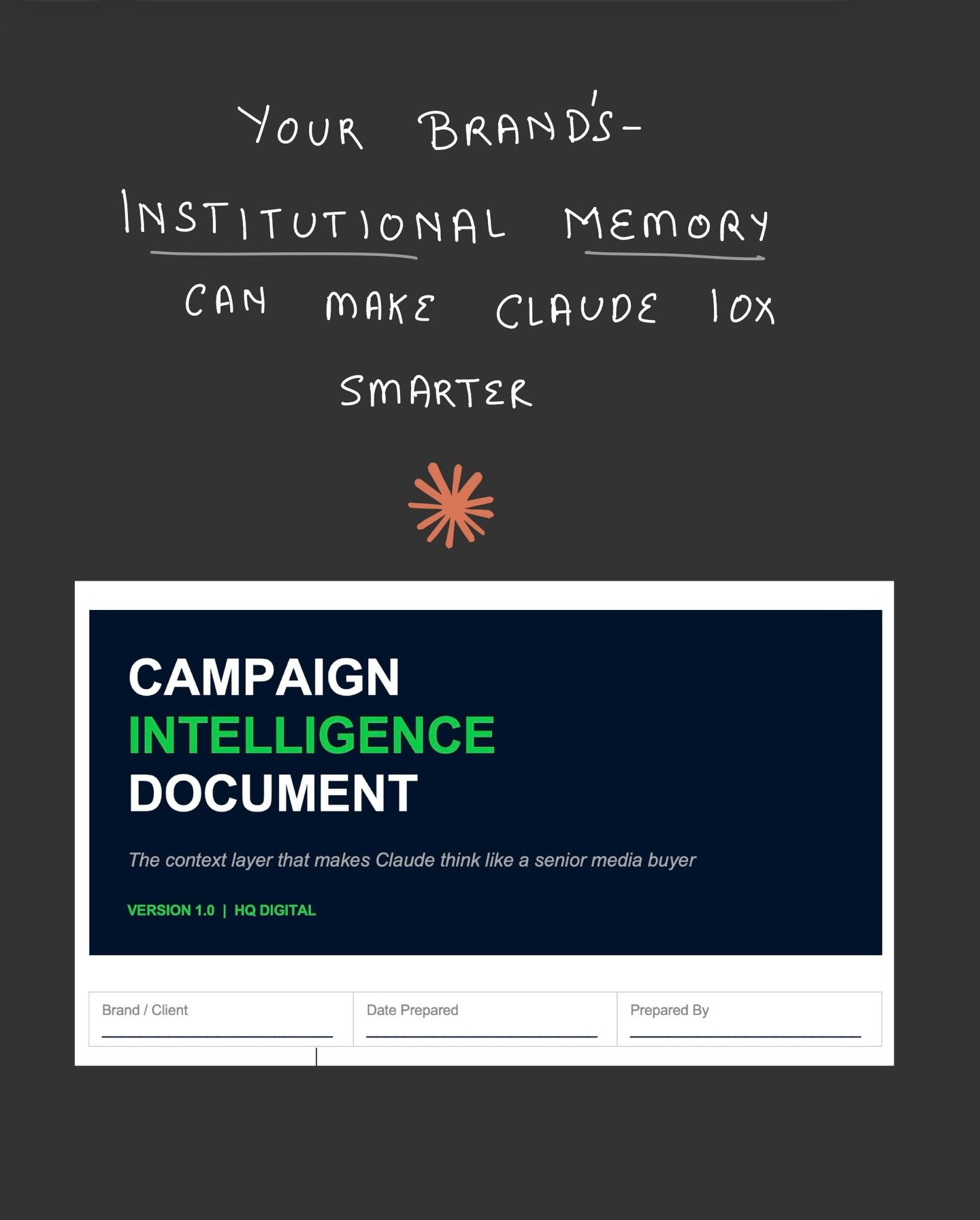
The Power of Context: Enhancing Claude with Institutional Memory
Campaign intelligence is the backbone of successful marketing initiatives. Claude, a versatile marketing tool, can elevate your campaigns significantly, but only when equipped with the right context. Here, we dive into the key documents that, when utilized effectively with Claude, can transform the way you approach marketing.
Why This Matters
Context is the key to unlocking Claude's full potential. Providing Claude with a well-structured institutional memory allows it to think like a seasoned media buyer. This means leveraging past buyer history, creative learnings, and founder intelligence—elements that brands often overlook. Without this context, Claude's output can sound generic and fail to deliver the desired impact.
Campaign Intelligence Framework
Institutional Memory: The Foundation
Your brand's institutional memory encompasses the collective knowledge that your best account managers possess. This includes customer language that converts, offer angles that drive volume, and common sales objections. By providing this context to Claude, you ensure that it doesn't just generate content but becomes a strategic partner that truly understands your brand. Structuring and uploading this information into a centralized document can help Claude evolve from a simple copywriting tool into a powerful thinking partner.
The Campaign Intelligence Document
The Campaign Intelligence Document is a comprehensive framework designed to provide Claude with the necessary context to function at its peak. This document is divided into key sections that cover various aspects of your campaign intelligence. These sections include:
-
Buyer Intelligence: Detailed insights about your target audience, including their preferences, behaviors, and pain points. This helps Claude tailor content that resonates better with your audience.
-
Creative History: A record of past creative efforts, including hooks that worked, formats that flopped, and offers that drove volume but destroyed margins. This historical data helps Claude make informed decisions and avoid past mistakes.
-
Customer Language: Utilizing 300-500 customer reviews to understand the language that converts. Claude uses this information to write hooks and content that sound more authentic and effective.
-
Budget Decision Rules: Clear guidelines on budget allocation and decision-making strategies. This ensures that Claude generates ideas and content that align with your financial constraints and objectives.
-
Weekly Prompts: Structured prompts that you can paste every Monday morning to keep Claude focused and aligned with your weekly goals and priorities.
Creative History Document
The Creative History Document is a plain language document that details your past creative efforts. It includes:
- Successful Hooks: List of hooks that have worked well in the past, providing a reference for future campaigns.
- Flooped Formats: Identification of creative formats that did not perform well, helping to avoid similar mistakes.
- Margin-Killing Offers: Offers that drove volume but had a negative impact on your margins, ensuring they are never repeated.
Practical Tips
To make the most of Claude as a campaign intelligence tool, follow these practical tips:
Structuring Your Institutional Memory
Start by creating a comprehensive document that includes all the institutional memory of your brand. This document should be detailed and cover all the necessary aspects, such as customer language, successful hooks, and budget decision rules. Ensure that the document is structured in a way that makes it easy for Claude to process and utilize the information.
Regular Updates
Regularly update your institutional memory with new insights and data. This ensures that Claude is always working with the most current information and can provide relevant and effective content.
Using Customer Reviews
Leverage customer reviews to understand the language that resonates with your audience. Incorporate this language into your content to make it more authentic and effective.
Weekly Prompts
Develop a system of weekly prompts that you can use to guide Claude. These prompts should be aligned with your weekly goals and priorities, ensuring that Claude stays focused and on track.
Important Takeaways
- Context is Key: Feeding Claude with relevant context, including institutional memory, can make it 10 times smarter and more effective.
- Comprehensive Framework: The Campaign Intelligence Document and Creative History Document provide a comprehensive framework for leveraging institutional memory with Claude.
- Regular Updates: Regularly update your institutional memory to ensure Claude is always working with the most current information.
- Customer Language: Utilize customer reviews to understand and incorporate the language that converts.
Conclusion
To truly leverage the power of Claude, it is essential to provide it with the right context. The Campaign Intelligence Document and Creative History Document offer a structured way to do this, ensuring that Claude can provide more effective and relevant content. By incorporating these documents into your marketing strategy, you can transform Claude from a simple content tool into a thinking partner that knows your brand inside out.
Watch the Reel
Questions readers ask
What is institutional memory in the context of marketing?
Institutional memory in marketing refers to the collective knowledge and insights gathered over time about a brand's past successes, customer interactions, and market trends. It includes data on buyer history, creative learnings, and founder intelligence, all of which can be used to enhance marketing strategies.
How does providing institutional memory help Claude generate better marketing campaigns?
By equipping Claude with institutional memory, you enable it to understand the nuances of your brand, such as past successful campaigns, customer language, and market insights. This allows Claude to generate more tailored and impactful campaigns that resonate with your target audience, rather than producing generic content.
What types of documents can be used to build institutional memory for Claude?
To build institutional memory for Claude, you can use a variety of documents including past campaign reports, customer review analyses, market research data, and historical brand documents. These materials provide the context needed for Claude to understand your brand's unique voice, customer preferences, and market positioning.
Why is leveraging past successes important for Claude's marketing outputs?
Leveraging past successes helps Claude identify what has worked well in the past and what hasn't. This historical data enables Claude to create more effective campaigns by building on proven strategies and avoiding mistakes, ultimately leading to better marketing outcomes.
How can Claude assist in digital marketing with institutional memory?
With institutional memory, Claude can optimize digital marketing efforts by tailoring campaigns to specific audience segments based on past interactions and preferences. This contextual understanding allows Claude to create more personalized and engaging digital content that drives better results.
How does understanding customer language benefit marketing campaigns through Claude?
Understanding customer language helps Claude craft messages that resonate with your audience. By analyzing customer reviews, feedback, and interactions, Claude can adapt the tone, messaging, and content to better align with what your customers are looking for, making the campaigns more effective and relatable.
Recent articles
Fresh deep dives from the latest Reels we unpacked.




Comments
Be the first to comment.