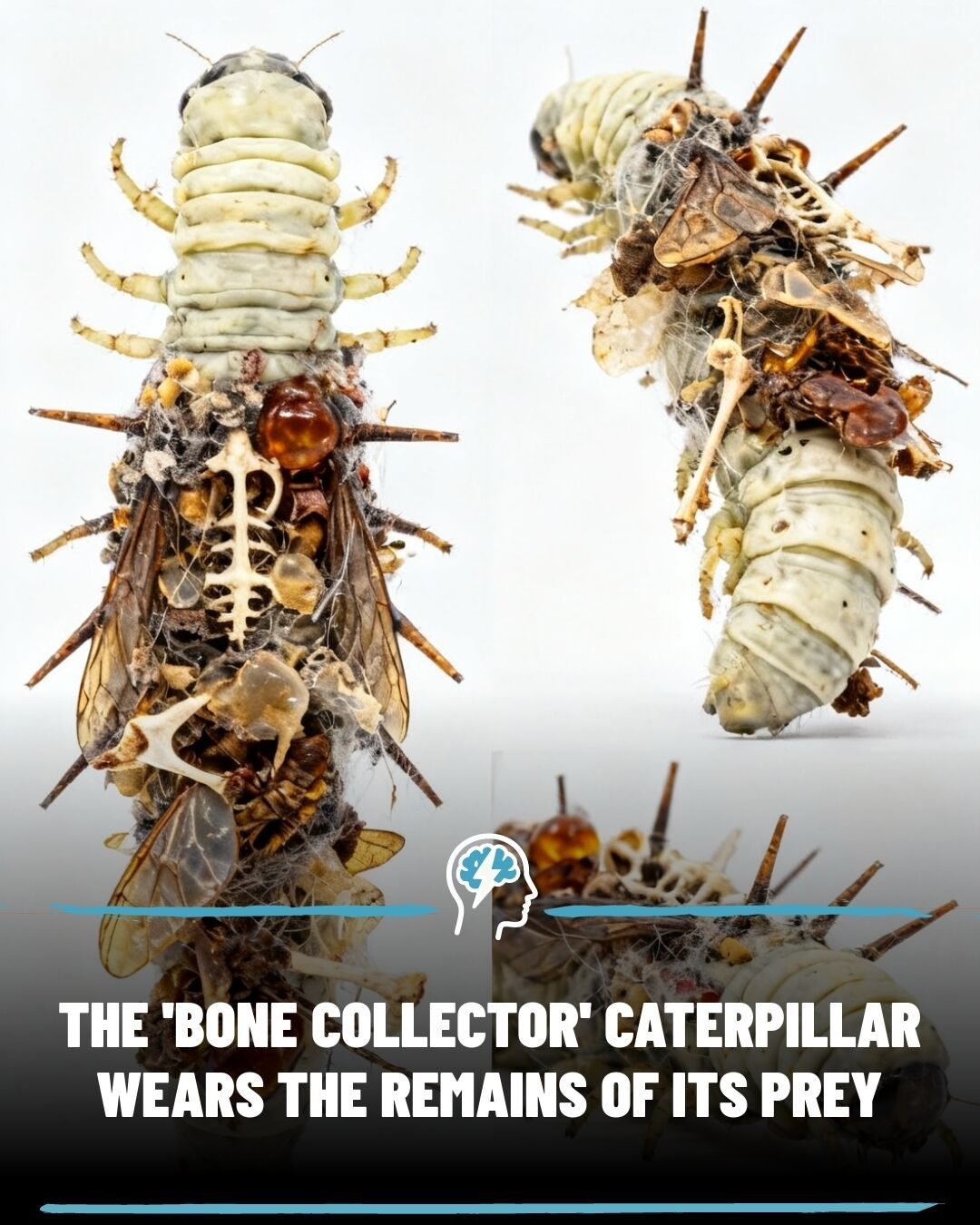
Bone Collector Caterpillar
Nestled within the spider webs of the Waiʻanae mountain range on Oʻahu lies a fascinating and somewhat unsettling creature known as the "Bone Collector" caterpillar. Unlike most of its leaf-munching counterparts, this caterpillar has developed a unique and extraordinary hunting strategy. It constructs a mobile disguise from the remains of its prey, creating a living armor that is both a defensive mechanism and a camouflage strategy.
Why This Matters
The Bone Collector caterpillar challenges our understanding of caterpillar behavior. Its unique adaptation of building armor from the remains of its prey is not only a fascinating example of nature's ingenuity but also a reminder of the vast biodiversity that still remains undiscovered. This caterpillar's behavior is a testament to the diverse survival strategies evolved by organisms.
Unique Behavior and Adaptations
Hunting in Spider Webs
The Bone Collector caterpillar lives within the intricate webs of spiders, where it has access to a variety of trapped insects. This environment offers a steady supply of prey, reducing the need for the caterpillar to venture out and find food. However, the caterpillar doesn't merely consume its trapped victims; it also collects and repurposes the remains for its own benefit.
Constructing a Mobile Disguise
The caterpillar's most distinctive feature is its method of camouflage. It meticulously attaches the remains of its prey—such as fly wings, weevil heads, and earwig abdomens—to silk threads on its back. Over time, this collection grows into an elaborate and mobile disguise, which the caterpillar uses to blend into its surroundings. This disguise serves a crucial purpose, allowing it to hide in plain sight by making it look like debris discarded by the spiders.
Survival Strategy
The strategy behind this behavior is incredibly clever. The caterpillar essentially wants to blend in with the remnants of a spider's meal, making predators less likely to notice it. By "looking like your last week's meal," it effectively camouflages itself in a way that is both ingenious and effective. This camouflage is part of a broader survival strategy that ensures the caterpillar's safety in its high-risk environment.
The Significance of the Bone Collector Caterpillar
The Bone Collector caterpillar is a rare example of a carnivorous caterpillar, making up approximately 0.13% of all known moth and butterfly species. Its behavior is not only unique but also critical to understanding how different species have adapted to their environments. Furthermore, the discovery of such a specialized and rare caterpillar highlights the importance of conservation efforts, as this species is already considered endangered.
Conservation and Future Research
Despite being discovered back in 2008, the Bone Collector caterpillar is found in only a 15 square kilometer patch of forest in the Waiʻanae mountain range on Oʻahu. Its limited habitat makes it highly vulnerable to environmental changes and potential threats. Conservation efforts are essential to ensure that this remarkable species does not disappear before we have a chance to learn more about it.
Future research may uncover additional details about the caterpillar's behavior, its genetic makeup, and its ecological role. Understanding this species could provide valuable insights into the broader field of entomology and conservation biology, offering new perspectives on how insects adapt to their environments.
Practical Tips
While the Bone Collector caterpillar may not have direct practical applications, its behavior offers several valuable lessons:
- Adaptability: Observe how the caterpillar adapts to its environment to enhance survival. This is a reminder that adaptability is crucial for survival in any context.
- Innovation: The caterpillar's unique camouflage strategy highlights the importance of innovative thinking. Even in nature, the most effective survival strategies often involve creative solutions.
- Conservation: The endangered status of the Bone Collector caterpillar underscores the need for conservation efforts. Protecting diverse ecosystems is crucial to preserving the vast array of species that inhabit them.
Important Takeaways
The Bone Collector caterpillar is a remarkable example of nature's adaptability and ingenuity. Its unique behavior, living within spider webs and building a mobile disguise from the remains of its prey, challenges our understanding of caterpillar behavior. The discovery of this species highlights the importance of continued research and conservation efforts, as each new discovery can reveal more about the intricate web of life on our planet.
Conclusion
The Bone Collector caterpillar is a fascinating and unique creature that offers a glimpse into the extraordinary adaptations found in nature. From its hunting strategy to its camouflage techniques, this caterpillar exemplifies the resourcefulness and adaptability of species in the wild. By studying and conserving such rare and remarkable species, we can gain a deeper appreciation for the vast and intricate world of biodiversity that surrounds us.
Watch the Reel
Questions readers ask
What makes the Bone Collector Caterpillar different from other caterpillars?
The Bone Collector Caterpillar stands out due to its unique hunting and defense strategies. Unlike typical caterpillars, it doesn't just feed on leaves; it hunts other insects and uses their remains to create a living armor, which also serves as camouflage. This behavior is quite distinctive and not commonly found in other caterpillar species.
Where can the Bone Collector Caterpillar be found?
The Bone Collector Caterpillar is native to the Waiʻanae mountains on the Hawaiian island of Oʻahu. It specifically resides within spider webs, utilizing these webs as both a hunting ground and a hiding place.
How does the Bone Collector Caterpillar create its armor?
The caterpillar constructs its armor from the remains of its prey. After hunting and consuming smaller insects, it incorporates the leftovers into its body, forming a protective layer that also acts as a disguise, helping it to blend into its surroundings.
What purpose does the armor serve for the Bone Collector Caterpillar?
The armor serves two primary purposes: defense and camouflage. It protects the caterpillar from potential predators and also helps it to blend in with its environment, making it less visible to both predators and prey.
What kinds of prey does the Bone Collector Caterpillar typically hunt?
The Bone Collector Caterpillar primarily hunts smaller insects that it can overpower. The exact species of prey can vary, but the caterpillar is known to feed on a range of small arthropods found within the spider webs of the Waiʻanae mountains.
Why is the Bone Collector Caterpillar important for understanding biodiversity?
The Bone Collector Caterpillar exemplifies the incredible diversity of behaviors and adaptations found in nature. Its unique hunting and camouflage tactics highlight the vast array of strategies that different species have developed to survive and thrive in their environments.
Related deep dives
Similar reads based on topic and creator.



Recent articles
Fresh deep dives from the latest Reels we unpacked.


Comments
Be the first to comment.