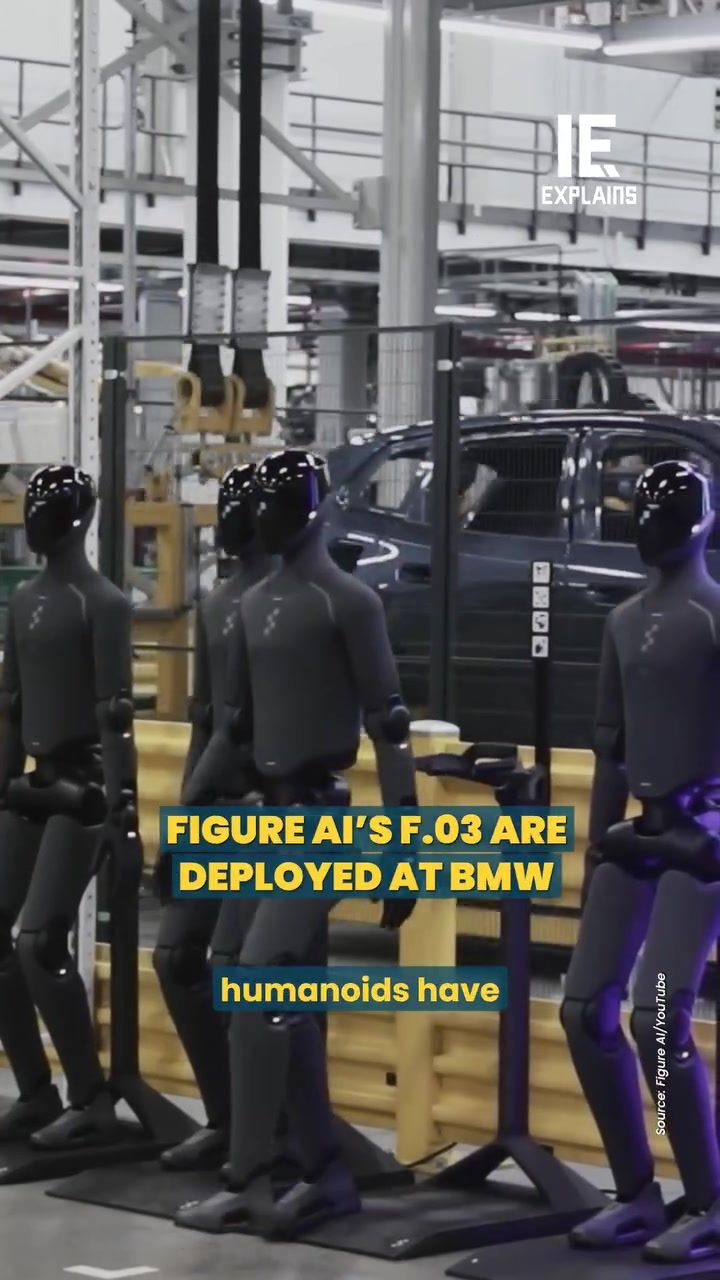
The Evolution of Industrial Automation: Figure 03 at BMW's Spartanburg Plant
The integration of humanoid robots in industrial settings marks a significant leap in manufacturing efficiency and precision. Figure 03, the latest humanoid robot from Figure AI, is now operational at BMW Group Plant Spartanburg. This advanced robot is taking over the sequencing tasks from its predecessor, Figure 02, which successfully contributed to the production of over 30,000 BMW X3s in 2025. The new challenge for Figure 03 involves sorting unordered parts and pulling loaded carts, showcasing the advanced capabilities of whole-body AI control through Figure's Helix 2 system.
Context / Why This Matters
The deployment of humanoid robots in automotive manufacturing represents a paradigm shift in industrial automation. These robots are designed to handle complex tasks that require not only precision but also adaptability. The transition from Figure 02 to Figure 03 at BMW's Spartanburg plant underscores the rapid evolution of robotic technology in the automotive industry. This technological advancement is crucial for enhancing productivity, ensuring quality control, and accommodating the increasing demand for customization in vehicle manufacturing.
Main Discussion
The Role of Figure 03 in BMW's Manufacturing Process
Figure 03 is tasked with a more challenging role compared to its predecessor. Its primary duties include sorting unordered parts, loading them into a trolley in the correct sequence, and pulling the loaded carts while balancing and stepping. This complex task requires real-time coordination of the robot's hands, arms, torso, and feet, all controlled by Figure's Helix 2 AI system. This advancement signifies a major leap in industrial automation, where robots are no longer limited to repetitive tasks but can handle intricate sequencing and logistics.
Enhanced Capabilities and Features
Figure 03 comes equipped with several advanced features designed to enhance its performance and safety in the factory environment. These include:
- Softer, Safer Components: The robot is built with safer materials, reducing the risk of damage to itself or its surroundings.
- Wireless Charging: This feature enables continuous operation without the need for frequent manual recharging, boosting efficiency.
- Tactile Hands with Palm Cameras: These hands provide precise manipulation and visual feedback, improving the robot's ability to handle and sort parts accurately.
- Voice-to-Voice Communication: This feature allows for seamless communication with other robots or human operators, facilitating better coordination and quicker problem-solving.
The Upgrade to BMW's Next Electric SUV
The deployment of Figure 03 is happening in Hall 52 of BMW's Spartanburg plant, which is also being upgraded to accommodate the production of BMW's next electric SUV, the iX5. This co-location of advanced robotics and electric vehicle manufacturing highlights BMW's commitment to integrating cutting-edge technology into its production processes. The presence of Figure 03 in this hall is a testament to the synergy between robotics and sustainable vehicle manufacturing.
Real-World Application and Future Prospects
The success of Figure 03 at BMW's Spartanburg plant demonstrates that humanoid robots are transitioning from experimental lab settings to real-world industrial use. This shift is not just about improving efficiency; it's about creating a more adaptable and flexible manufacturing environment. Figure AI's CEO emphasizes that these robots are no longer laboratory experiments but are becoming integral components of modern factories. This evolution is set to revolutionize the automotive industry and beyond, paving the way for more sophisticated and versatile robotic applications in various sectors.
Practical Tips
For Manufacturers Considering Robotic Integration
If you are a manufacturer looking to integrate humanoid robots into your production line, here are some practical tips:
- Assess Your Needs: Identify the specific tasks that robots can handle more efficiently than human workers.
- Invest in Advanced AI Systems: Ensure that your robotic systems are equipped with advanced AI capabilities for real-time control and adaptability.
- Train Your Workforce: Provide training for your employees to work effectively with robotic systems and understand their capabilities and limitations.
- Create a Flexible Work Environment: Design your factory layout to accommodate robotic movements and ensure smooth integration with existing processes.
For Robotics Companies
If you are developing humanoid robots for industrial use, consider the following:
- Focus on Safety: Prioritize the development of safer, more robust materials and components to minimize damage and operational risks.
- Enhance Communication: Incorporate advanced communication features, such as voice-to-voice communication, to facilitate better coordination between robots and human operators.
- Optimize Power Solutions: Develop wireless charging solutions to ensure continuous operation and reduce downtime.
- Leverage Real-Time Data: Utilize real-time data and AI to improve the precision and efficiency of robotic tasks, making them more adaptable to changing manufacturing demands.
Important Takeaways
- Advanced Capabilities: Figure 03 showcases advanced features such as real-time whole-body control, tactile hands, and voice-to-voice communication, making it a versatile tool in the factory.
- Integration with Industry 4.0: The deployment of Figure 03 aligns with the principles of Industry 4.0, where automation and AI are used to create smart, flexible, and efficient manufacturing processes.
- Sustainable Manufacturing: The integration of advanced robotics in electric vehicle manufacturing highlights a commitment to sustainable and technologically advanced production methods.
- Transition to Real-World Use: The success of Figure 03 marks a significant transition from experimental robotics to real-world applications, proving the viability of humanoid robots in industrial environments.
Conclusion
The deployment of Figure 03 at BMW's Spartanburg plant is a testament to the rapid advancements in industrial automation. This humanoid robot is not only capable of handling complex sequencing tasks but also represents a significant leap in the integration of AI and robotics in manufacturing. The transition from Figure 02 to Figure 03 signifies a shift towards more sophisticated and adaptable robotic systems, paving the way for a future where humanoid robots are integral components of industrial production. As manufacturers and robotics companies continue to innovate, the potential for enhanced efficiency, precision, and sustainability in manufacturing is boundless.
Watch the Reel
Questions readers ask
What specific tasks is Figure 03, the BMW humanoid robot, performing at the Spartanburg Plant?
Figure 03 is tasked with handling intricate duties such as sorting unordered parts and managing complex logistics on the assembly line. It is also involved in pulling loaded carts, demonstrating its versatility and advanced capabilities in whole-body AI control.
How does Figure 03 compare to its predecessor, Figure 02, in automotive manufacturing?
Figure 03 has taken over the sequencing tasks previously handled by Figure 02, which had contributed to the production of over 30,000 BMW X3s. Figure 03's advanced capabilities allow it to tackle more complex tasks, showcasing a significant leap in robotic technology.
What is the significance of BMW's adoption of humanoid robots in its manufacturing process?
The integration of humanoid robots like Figure 03 at BMW's Spartanburg Plant marks a significant advancement in manufacturing efficiency and precision. It represents a shift towards more adaptive and precise automation in the automotive industry.
What is the Helix 2 system mentioned in the article?
The Helix 2 system is Figure AI's advanced technology that enables whole-body AI control for humanoid robots. It allows robots like Figure 03 to perform complex tasks with high precision and adaptability, setting new standards for industrial automation.
How does the use of humanoid robots benefit BMW's production process?
Humanoid robots like Figure 03 enhance BMW's production process by increasing efficiency and precision. They can handle a wide range of tasks, from sorting parts to managing logistics, reducing the need for human intervention in repetitive and intricate tasks.
What are the future implications of humanoid robots in automotive manufacturing, as seen with Figure 03 at BMW's Plant?
The successful deployment of Figure 03 at BMW's Spartanburg Plant suggests a future where humanoid robots play a crucial role in automotive manufacturing. This could lead to increased productivity, improved product quality, and new possibilities for factory design and operation.
Related deep dives
Similar reads based on topic and creator.


Recent articles
Fresh deep dives from the latest Reels we unpacked.




Comments
Be the first to comment.