Biomimicry in Engineering
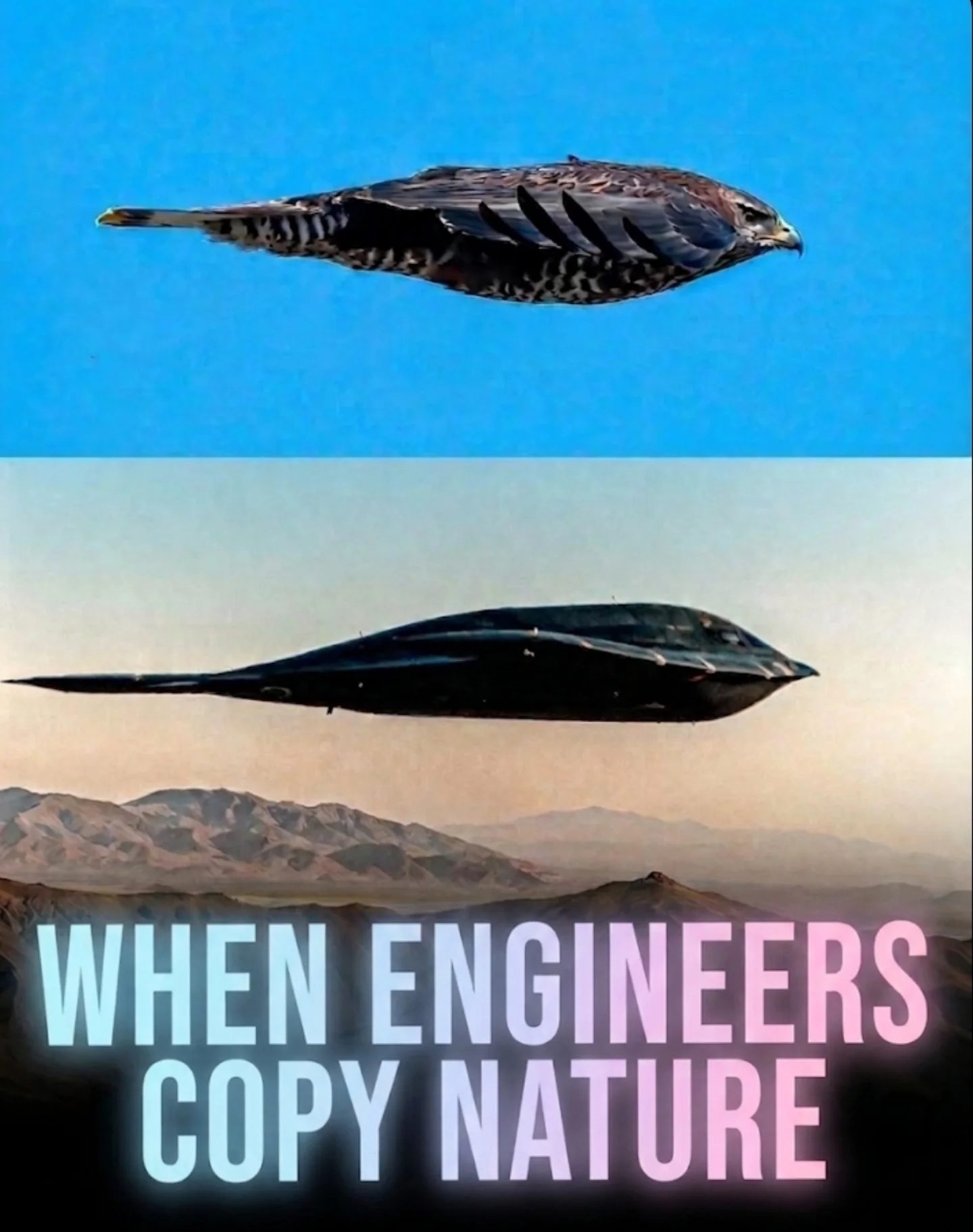
Biomimicry, or bionics, is the fascinating concept of emulating natural designs and processes to enhance engineering solutions. This approach is particularly evident in aviation, where engineers often draw inspiration from the aerodynamic efficiency of birds. One striking example of this is the resemblance between a bird of prey in a "tuck" dive and the Northrop Grumman B-2 Spirit stealth bomber.
Context / Why this matters
In the pursuit of creating more efficient and effective designs, engineers frequently turn to the natural world. Biology has already solved many of the challenges that engineers face, from reducing drag to optimizing heat distribution. Biomimicry leverages these solutions to improve engineering designs. This approach is particularly prominent in aviation, where the principles of flight have been honed by millions of years of evolution.
Main discussion
The Design: The Flying Wing
The B-2 Spirit stealth bomber is a prime example of a "flying wing" design. This design lacks vertical tail fins and a distinct fuselage. The flying wing's primary advantage is its stealth capabilities. The flat, smooth surfaces with few sharp angles reflect radar waves away from the source, making the aircraft less detectable by radar systems.
Birds, such as falcons or hawks, employ a similar tactic during high-speed dives. They pull their wings tight to their bodies, creating a seamless, aerodynamic shape that minimizes drag and maximizes speed. This natural design is mirrored in the B-2 Spirit's structure, demonstrating the practical application of biomimicry in engineering.
Biomicry in Aviation
Engineers often look to nature for inspiration because evolution has already optimized many biological systems for efficiency. For example, the Peregrine Falcon's diving speed of over 320 km/h has inspired the intake designs of some jet engines. The anatomical efficiency of these birds has been studied to improve the aerodynamics of aircraft.
Another example is the small upturned tips on the wings of many commercial airplanes, known as winglets. These winglets were inspired by the way eagles spread their terminal feathers to reduce turbulence and save fuel. This biomimicry results in significant fuel savings and increased efficiency for modern aircraft.
The B-2 Spirit Facts
The B-2 Spirit is a strategic, heavy-penetration stealth bomber capable of delivering both conventional and nuclear weapons. It is renowned for its advanced stealth technology, which allows it to evade radar detection. The aircraft's design eliminates the need for vertical fins or a fuselage, which greatly reduces the radar cross-section.
The B-2 is a highly complex aircraft, costing roughly $2.1 billion per unit (in 1997 dollars). Despite its high cost, the B-2 demonstrates the value of biomimicry in engineering. Its quadruple-redundant fly-by-wire computer system continually makes tiny adjustments to the flight flaps, much like a bird’s brain makes micro-adjustments during flight. This design ensures the aircraft remains stable while also maintaining its stealth capabilities.
Practical tips
Incorporating Biomimicry into Engineering Projects
Engineers interested in incorporating biomimicry into their designs can follow these steps:
-
Identify the Problem: Clearly define the engineering challenge you are trying to solve. This could be anything from improving aerodynamics to enhancing structural integrity.
-
Research Natural Solutions: Look to nature for solutions to the problem. For example, if you are working on aerodynamics, study the wing shapes and flight patterns of birds.
-
Analyze Biological Systems: Break down the biological systems you are studying to understand their underlying principles. This might involve studying the physical structure, material properties, and functional aspects.
-
Apply the Principles: Once you have a clear understanding of the natural solution, adapt these principles to your engineering design. This might involve mimicking the shape, structure, or mechanical properties of the biological system.
-
Test and Iterate: Implement the biomimicry solution in your design and test it. Make necessary adjustments based on the results and iterate the design as needed.
Important takeaways
Biomimicry offers a powerful approach to enhancing engineering designs by leveraging nature's time-tested solutions. The B-2 Spirit bomber is a prime example of how biomimicry can be applied to create highly efficient and effective designs. By studying natural systems, engineers can develop innovative solutions that improve performance, reduce costs, and enhance sustainability.
Conclusion
Biomimicry in engineering is more than a trend; it is a valuable approach that can lead to significant advancements in various fields, particularly in aviation. By emulating the natural world, engineers can create more efficient, effective, and sustainable designs. The B-2 Spirit bomber stands as a testament to the power of biomimicry, demonstrating how nature's solutions can inspire groundbreaking engineering innovations.
Watch the Reel
Questions readers ask
How did birds influence the design of the B-2 Spirit Stealth Bomber?
The B-2 Spirit Stealth Bomber's design was inspired by the aerodynamic efficiency of birds, particularly their ability to minimize drag during high-speed dives, also known as 'tuck' dives. This biomimicry approach helped engineers create a more efficient and stealthy aircraft.
What is biomimicry and how is it applied in aviation?
Biomimicry, also known as bionics, involves emulating natural designs and processes to enhance engineering solutions. In aviation, this means studying the aerodynamic efficiency of birds and other natural flyers to improve aircraft design, reduce drag, and optimize performance.
Which specific bird's maneuvers inspired the B-2 Spirit's design?
The B-2 Spirit's design was inspired by the 'tuck' dive maneuver of birds of prey. During this high-speed dive, birds minimize drag and maximize aerodynamic efficiency, providing a valuable model for engineers.
What are the benefits of using biomimicry in aircraft engineering?
Using biomimicry in aircraft engineering can lead to more efficient and effective designs. By emulating natural solutions, engineers can reduce drag, optimize heat distribution, and enhance overall aircraft performance.
Why is biomimicry important in the development of stealth aircraft?
Biomimicry is crucial in stealth aircraft design because it helps engineers create shapes that minimize radar signature, much like how birds minimize their visibility during flight. This approach enhances the aircraft's stealth capabilities, making it less detectable.
Are there any other examples of biomimicry in aviation besides the B-2 Spirit?
Yes, there are several examples of biomimicry in aviation. For instance, researchers have studied the wing design of birds and insects to create more efficient and maneuverable aircraft, and the unique flight mechanisms of birds like the swift have inspired the development of unmanned aerial vehicles (UAVs).
Recent articles
Fresh deep dives from the latest Reels we unpacked.




Comments
Be the first to comment.