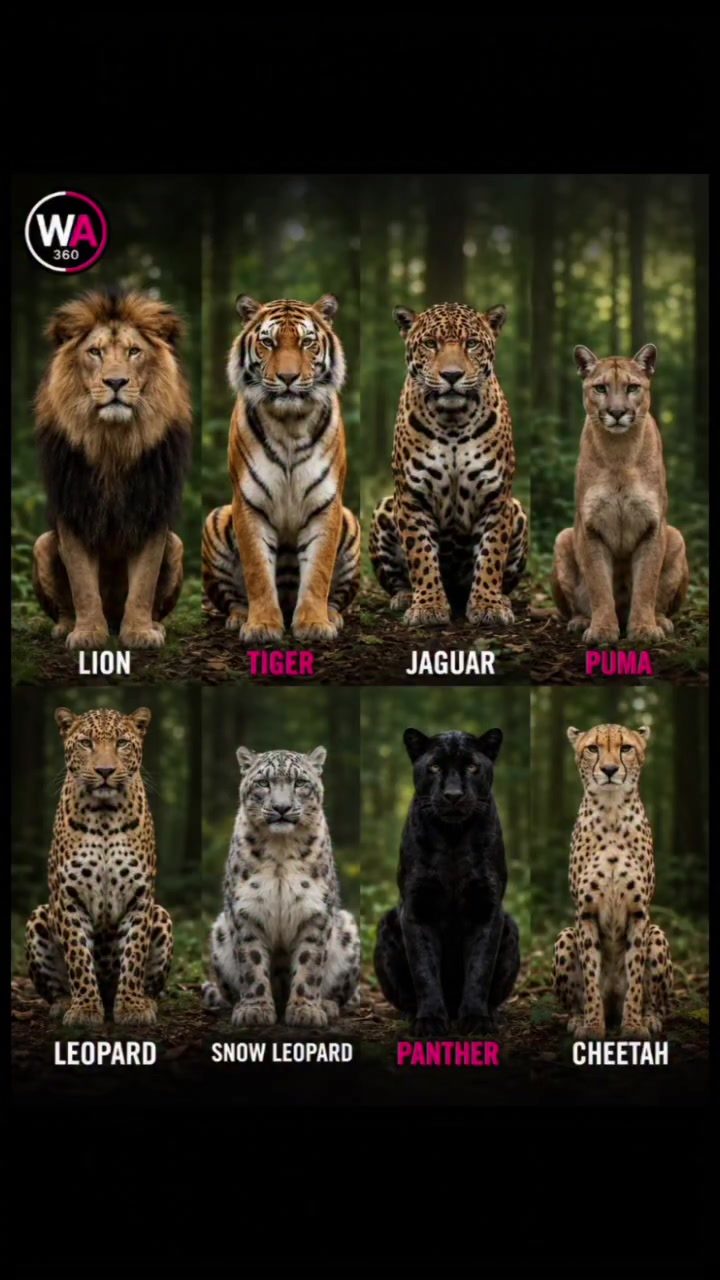
Big Cats of the Wild: Know the Difference
Big cats are some of the most fascinating and majestic creatures on Earth. From the powerful lion to the lightning-fast cheetah, each species has unique traits that set them apart. Understanding these differences helps us appreciate the diversity of wildlife and the importance of conservation efforts.
Why This Matters
Big cats play crucial roles in their respective ecosystems. They help control prey populations, which in turn affects the health of vegetation and other wildlife. By understanding the unique characteristics of each species, we can better advocate for their protection and the preservation of their habitats.
Main Discussion
The Mighty Lion
The lion is often referred to as the "king of the jungle," although it primarily inhabits savannas and grasslands. Lions are known for their social structure, living in prides that can consist of up to three males, a dozen or more females, and their young. This social structure allows them to hunt large prey more effectively. Lions are powerful and have a strong bite force, making them formidable predators.
The Tiger: The Largest Wild Cat
Tigers are the largest wild cat species, with some males weighing over 660 pounds. They are solitary animals, except for females with cubs, and are known for their stealth and strength. Tigers have a distinctive coat pattern that provides excellent camouflage in their habitats, which include dense forests, grasslands, and even mangroves. The Bengal tiger is the most common subspecies, but other varieties like the Siberian tiger and Sumatran tiger are also well-known.
The Jaguar: Power in the Bite
Jaguars possess one of the strongest bite forces in the big cat family. They are known for their stocky build and powerful jaws, which allow them to crush the skulls of their prey. Jaguars are found in a variety of habitats, including rainforests, savannas, and deserts. Their adaptability and versatility make them one of the most successful big cat species in the Americas.
The Leopard: Master of the Trees
Leopards are exceptional climbers and are often found high up in trees, where they drag their prey to avoid competition from other predators. They have a lightweight and agile body, which helps them climb trees and navigate through dense forests. Leopards are known for their spotted coat, which provides excellent camouflage in various environments, including forests, deserts, and mountainous regions.
The Snow Leopard: Adapted for the Cold
The snow leopard thrives in the icy mountain ranges of Central Asia. Their thick fur and stocky build help them survive in cold environments. Snow leopards are known for their long tails, which they use for balance while navigating rocky terrain. They are solitary animals and are rarely seen, making them one of the most elusive big cat species.
The Panther: A Melanistic Form
The term "panther" is often used to describe melanistic forms of leopards or jaguars, which have a black coat due to a genetic mutation. These big cats are found in various habitats, including forests, deserts, and grasslands. Their black coat provides excellent camouflage in shaded environments, making them stealthy hunters.
The Puma: Adaptable Predator
The puma, also known as the mountain lion or cougar, is an incredibly adaptable predator found across the Americas. They have a wide range of habitats, including forests, deserts, and grasslands. Pumas are known for their powerful build and agile movements, which allow them to hunt a variety of prey, from small mammals to large deer.
The Cheetah: The Fastest Big Cat
The cheetah is the fastest land animal, capable of reaching speeds up to 70 miles per hour in short bursts. Their long legs, flexible spine, and non-retractable claws help them achieve such incredible speeds. Cheetahs are found in savannas and grasslands, where they hunt smaller prey like gazelles and impalas. Their hunting style involves a high-speed chase, making them formidable hunters in open environments.
Practical Tips for Big Cat Conservation
Support Conservation Efforts
Supporting organizations that work on big cat conservation is crucial. Many of these groups focus on protecting habitats, reducing human-wildlife conflict, and implementing anti-poaching measures. Contributions can make a significant difference in the survival of these species.
Raise Awareness
Educating others about the importance of big cats and their habitats can inspire more people to take action. Share information on social media, participate in awareness campaigns, and support local conservation initiatives.
Visit Responsible Wildlife Sanctuaries
When visiting wildlife sanctuaries or reserves, ensure they prioritize animal welfare and conservation. Responsible tourism can support the protection of big cats and their habitats while providing valuable economic benefits to local communities.
Reduce Your Carbon Footprint
Big cats are affected by climate change, which alters their habitats and prey availability. Reducing your carbon footprint by using renewable energy, conserving water, and practicing sustainable living can help mitigate the effects of climate change on these species.
Support Sustainable Practices
Encourage sustainable farming and land-use practices that minimize habitat destruction. Supporting local farmers and businesses that prioritize biodiversity and conservation can help protect the habitats of big cats.
Important Takeaways
- Unique Traits: Each big cat species has evolved unique traits that make them exceptional in their own right. From the powerful jaws of the jaguar to the speed of the cheetah, these adaptations are crucial for their survival.
- Conservation Importance: Understanding the differences between these species highlights the importance of conservation efforts. Each species plays a vital role in maintaining the balance of its ecosystem.
- Diversity and Adaptability: Big cats are incredibly diverse and adaptable, found in a variety of habitats across the globe. This diversity is a testament to their resilience and the importance of preserving their habitats.
- Human Impact: Human activities, including habitat destruction and climate change, pose significant threats to big cats. Supporting conservation efforts and sustainable practices can help mitigate these threats.
Conclusion
Big cats are not only magnificent creatures but also crucial components of their ecosystems. By knowing the differences between these species, we can better understand their roles and the need for their conservation. Whether it's the powerful lion, the agile leopard, or the speedy cheetah, each big cat species deserves our attention and protection. Let's work together to ensure these incredible predators thrive for future generations.
Watch the Reel
Questions readers ask
What are the main differences between lions and tigers?
Lions and tigers differ in several ways. Lions are social animals that live in prides, while tigers are solitary creatures. Lions have a tuft of hair at the end of their tail, while tigers do not. Additionally, tigers have distinctive stripes that help them blend into their environment, whereas lions have a tawny coat with a lighter underside.
Where do jaguars typically inhabit?
Jaguars are primarily found in the Americas, with their habitats ranging from the southwestern United States to Central and South America. They prefer dense forests, grasslands, and wetlands, and are particularly known for their adaptability to various environments.
How do tigers compare to leopards?
Tigers and leopards have distinct physical features. Tigers have a heavier build, with stripes that are vertical on their body, and no spots. Leopards are more slender with rosettes on their coat, which have smaller spots inside.
What sets cheetahs apart from other big cats?
Cheetahs are renowned for their speed, capable of reaching up to 70 miles per hour in short bursts. Unlike jaguars and other big cats, cheetahs have a slender build and distinctive black 'tear marks' running from the corners of their eyes to their mouth, which help reduce glare from the sun.
What unique traits does the snow leopard possess?
Snow leopards are adapted for cold, mountainous environments. They have a thick, spotted coat that provides excellent camouflage in rocky terrains and helps them withstand temperatures as low as -40°F. Additionally, their long tails aid in balance and warm them as they sleep.
Are jaguars and panthers the same species?
The term 'panther' often refers to a black variant of species like jaguars or leopards. Jaguars are a specific species native to the Americas, while panthers can refer to black leopards found in Asia and Africa. Both have a solid black coat due to a genetic condition called melanism.
What are the key differences between tiger and lion habitats?
Tigers primarily inhabit dense forests, grasslands, and mangroves in Asia, with some subspecies adapted to cold climates while others are tropical. Lions, on the other hand, prefer savannas, grasslands, and scrublands in Africa and a small population in India.
Related deep dives
Similar reads based on topic and creator.




Recent articles
Fresh deep dives from the latest Reels we unpacked.




Comments
Be the first to comment.